
Sanibel Visitors: Avoid the $3 Pay By Plate Causeway Toll

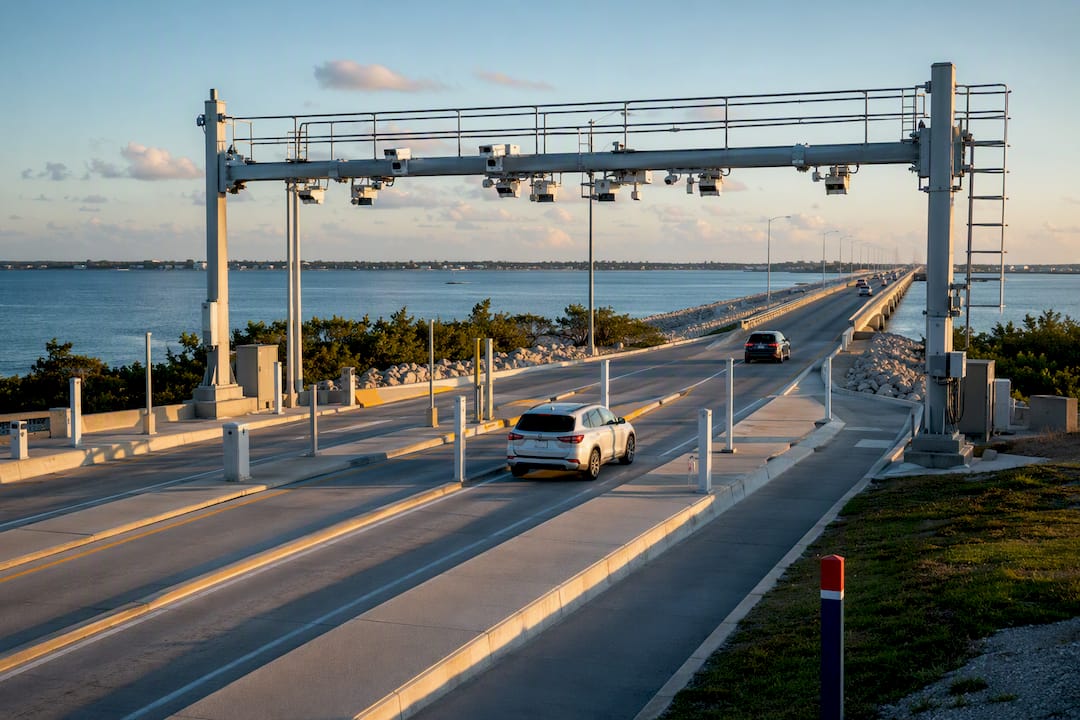
The Sanibel Causeway toll for a standard passenger car is $6 with a prepaid transponder or $9 through Pay-By-Plate billing. The plaza runs all-electronic, so cash is not accepted, and Pay-By-Plate invoices carry a $3 administrative fee built into that higher rate. The toll applies only when you’re driving onto the island, not leaving it.
TL;DR:
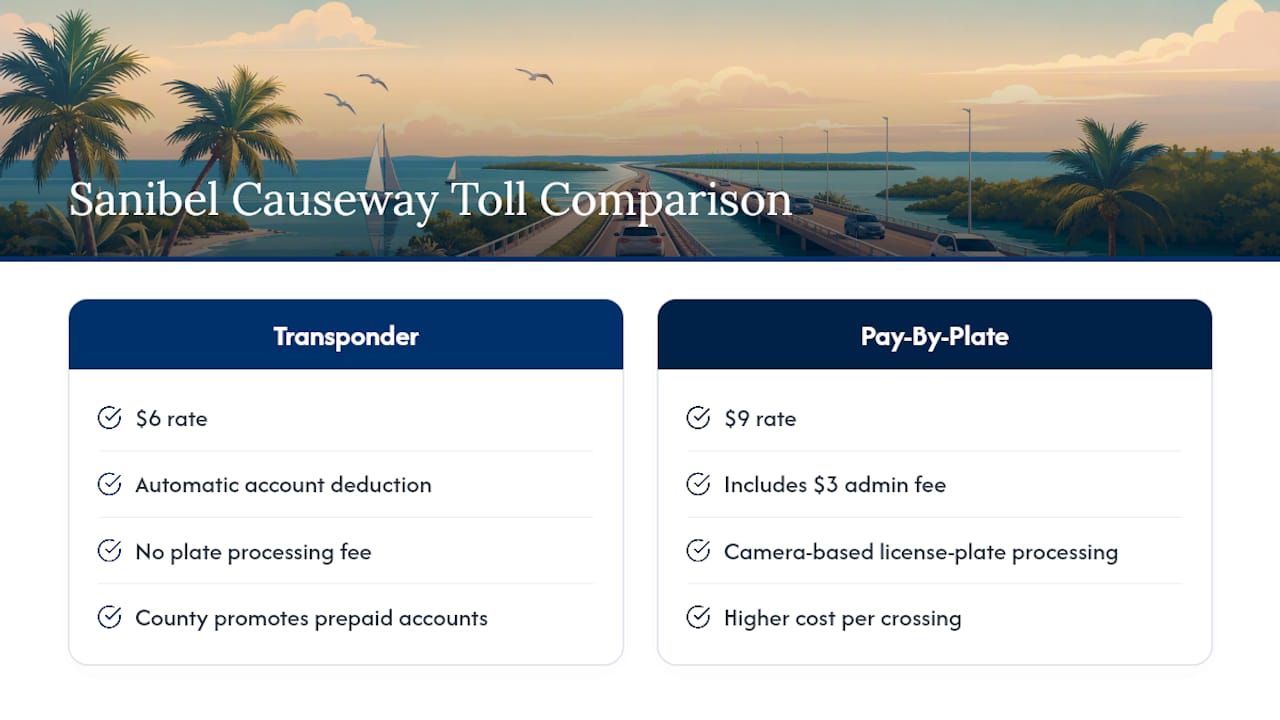
The transponder rate for a two-axle vehicle is $6, while Pay-By-Plate costs $9, with the $3 difference covering administrative fees.
Larger vehicles with more axles pay proportionally higher tolls, with the highest rate applying to six-axle vehicles.
Using an interoperable transponder and activating your account at least 24 hours before crossing reduces costs and helps avoid billing errors.
Tolls are only charged when entering Sanibel, not leaving, and unpaid bills can accrue late fees and additional rental company charges.
The toll system is fully electronic with no cash payments, and the flat rate applies 24/7 without discounts for time of day or season.
Table of Contents
Sanibel Causeway Toll Rates by Vehicle Type
The bridge charges by axle count, and the gap between transponder pricing and Pay-By-Plate pricing grows fast once you move past a standard car. For a 2-axle passenger vehicle or motorcycle, the transponder rate runs $6 and the Pay-By-Plate rate runs $9, with that $3 difference reflecting the administrative fee tacked onto every plate-billed trip.
Larger vehicles pay more per axle, and the increment applies similarly for both payment methods. Here’s how the published toll table breaks down:
2 axles (car, motorcycle, small SUV): $6 transponder / $9 Pay-By-Plate
3 axles (small truck with trailer, some RVs): higher per-axle rate applies, roughly $3 more than the 2-axle price for each pricing method
4 axles: another axle increment added to the 3-axle rate
5 axles: continues the same per-axle scaling
6 axles (larger commercial or towing rigs): the highest posted rate on the schedule
Motorcycles get transponder pricing only if the bike is actually carrying a working transponder mounted where the reader can pick up the signal. Show up without one, and the license-plate camera bills you at the Pay-By-Plate rate instead, same as a car.
One detail trips up a lot of first-time visitors: this toll charges you only when you’re heading onto Sanibel. Drive back toward Fort Myers and the mainland, and you won’t see a second charge. Budget for the crossing once per direction of travel, not once per round trip.
How to Pay the Toll: Transponders, Accounts, and Setup Steps
Lee County’s toll system doesn’t require a single specific brand of transponder. It accepts a wide roster of interoperable passes, including LeeWay, SunPass and SunPass Pro, E-Pass, Uni, Palmetto Pass, Peach Pass, TollTag, and EZ-Tag. If you already have a transponder from a toll system in another state, there’s a good chance it works here without you buying anything new.
Setting one up before you leave home saves both money and hassle at the plaza. Here’s the practical sequence:
Pick a transponder program. Florida residents and repeat visitors often go with SunPass or LeeWay directly; travelers coming from other states can usually stick with whatever pass they already carry (E-Pass, Peach Pass, TollTag, and similar options all work here).
Buy or activate the physical transponder. Sticker transponders ship for a small one-time cost through most of these programs, and some retail locations carry them too.
Load the prepaid account. Link a credit card or preload a cash balance so the toll deducts automatically each time you cross.
Mount it correctly. Stick it to the inside of your windshield exactly where the instructions say, usually behind the rearview mirror, so the reader at the plaza can pick up the signal cleanly.
Check your account balance and transaction history online a day or two before your trip, especially if the transponder has been sitting unused since your last Florida visit.
If you’re renting a car and it comes with a transponder already installed, do not add your own personal transponder to the same vehicle. Running two active transponders in one car is the single most common way visitors end up double charged, since both units can trigger a read at the same plaza. Deactivate or physically remove the extra one before you drive.
Pro Tip: If you’re staying more than a few days and expect to cross the causeway multiple times, activate your transponder account online at least 24 hours before arrival. That gives the system time to sync so your very first crossing gets billed at the discounted rate instead of defaulting to Pay-By-Plate.
Fees, Discounts, and Which Plan Fits Your Trip
That $3 gap between $6 and $9 sounds small until you run the math across a week of island hopping. A family making four round trips over a weeklong stay pays $24 with a transponder versus $36 through Pay-By-Plate. Over a month-long seasonal rental with daily errands into Fort Myers that gap turns into real money.
Lee County’s own guidance backs this up directly: prepaid transponder accounts avoid the $3 administrative fee that applies to every Pay-By-Plate transaction, making the transponder the cheaper option on every single crossing, not just in bulk.
Lee County also publishes unlimited-trip and reduced-fare programs for Sanibel that offer annual and six-month rate structures, which can lower your per-trip cost well below even the standard transponder rate if you cross often enough.
Here’s roughly who benefits from which setup:
Day-trippers making one or two crossings: Pay-By-Plate is fine. Setting up an account isn’t worth the effort for a single visit.
Weeklong renters: a basic prepaid transponder pays for itself within two or three crossings.
Seasonal residents or frequent repeat visitors: the annual or six-month reduced-fare program usually beats even the standard transponder rate on a per-trip basis.
What to Expect at the Plaza and With Billing
If you don’t have a transponder, a camera photographs your license plate and Lee County mails a Pay-By-Plate invoice to whoever the vehicle is registered to. For prepaid transponder holders, transactions on Lee County bridges typically post the same day, though a pass from an out-of-state toll system may take 24 to 36 hours to show up in your account.
Renting a car changes the picture. The invoice goes to the registered owner, which in a rental situation means the rental company, and most agencies pass that charge on to you along with their own service fee. Before you drive off the lot:
Ask the rental counter directly whether the car includes a toll package or an in-vehicle transponder.
Get written confirmation of how tolls get billed and what the service fee costs.
Photograph your rental agreement’s toll section in case a charge shows up later that doesn’t match what you were told.
If a Pay-By-Plate invoice looks wrong, you can pay or dispute it online, by phone at 239-533-9297, or in person at a LeeWay service center. Planning a broader trip? Our guide on getting to Captiva Island covers the rest of the route once you’re across.
Where to Verify Rates and Manage Your Account
Toll rates and discount programs do get updated, so it’s worth bookmarking a couple of official pages rather than relying on secondhand information from a blog or a rental agent.
Lee County DOT’s Tolls FAQ covers payment policy, invoicing, and the no-cash rule directly.
Lee County’s cost and discounts page lists current rates and the unlimited-trip and reduced-fare programs.
The LeeWay service center at 239-533-9297 handles account setup, balance questions, and disputes by phone.
Sanibel Causeway Toll Schedule and Rate Timing
The Sanibel Causeway toll applies around the clock. There’s no late-night discount, no weekday rush-hour surcharge, and no seasonal rate bump during snowbird season or spring break, even though those are the weeks when the plaza sees its heaviest traffic. Whether you cross at 7 a.m. on a Tuesday in February or 9 p.m. on a Saturday in July, the rate structure by axle count stays the same.
That flat pricing makes trip planning simpler than in toll systems that use peak and off-peak tiers. You don’t need to time your crossing to save money. What does change with timing is congestion, not cost. Traffic backs up hardest during the winter high season, especially on weekend mornings when day visitors from Fort Myers head over for the beach and again in late afternoon when everyone leaves at once.
If your goal is a smoother crossing rather than a cheaper one, aim for midmorning on a weekday or after dinner in the evening, when the camera lanes and transponder lanes both move without much of a backup. Since the toll itself won’t shift regardless of when you go, the only real strategy is picking a departure window that beats the crowd, not the price.
Enforcement, Unpaid Tolls, and What Happens if You Skip One
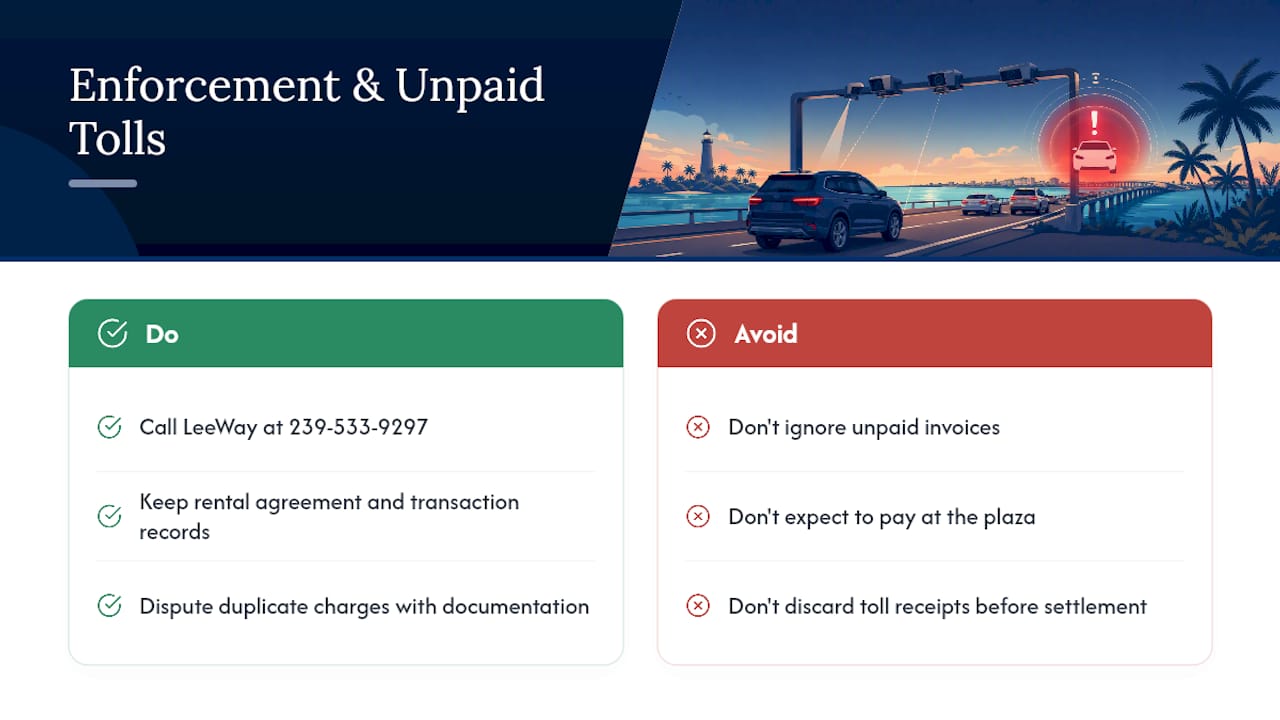
Unpaid Pay-By-Plate invoices don’t just disappear if you ignore them. Lee County mails the bill to the vehicle’s registered owner, and unpaid balances can accumulate late fees the longer they sit. For rental cars, that bill routes through the rental company first, which typically adds its own processing charge before passing the total to the renter’s card on file, sometimes weeks after the trip ends.
Because the crossing runs all-electronic, there’s no way to argue your way past the plaza without paying. Every vehicle gets either a transponder read or a plate photograph. There’s no attendant to negotiate with and no cash option to fall back on if you forgot to set up an account.
If you believe you were billed in error, perhaps because a rental transponder and your personal one both triggered a read, the fix is to contact the LeeWay service center directly at 239-533-9297 rather than letting the invoice sit unpaid. Disputing a genuine duplicate charge is usually straightforward when you have documentation, but an ignored bill is far harder to unwind once it’s moved to collections. Keep any rental agreement toll disclosures and account transaction histories until the trip is fully settled.
How Sanibel Causeway Tolls Have Changed Over Time
Toll rates on the Sanibel Causeway have shifted over the years alongside Lee County’s broader move toward electronic collection. The county eliminated manned toll booths and cash payment entirely, replacing them with the current transponder-and-camera system, a change that reshaped how every visitor budgets for the crossing. Where drivers once might have kept a roll of quarters in the glove box, that habit is now obsolete on this bridge.
The current $6 transponder and $9 Pay-By-Plate structure reflects that all-electronic model, with the $3 gap specifically covering the administrative cost of processing a license-plate transaction rather than an automatic account deduction. That fee structure is also why Lee County actively promotes prepaid transponder accounts and discount programs. It’s cheaper for the county to process, and it passes real savings to travelers who set one up.
For repeat visitors, the practical lesson is that toll infrastructure here keeps modernizing. What worked on your last trip, whether that was a cash lane or a different transponder brand, may not match what’s in place today. Checking Lee County’s current rate page before each visit, rather than relying on memory from a prior trip, avoids surprises at the plaza.
Traffic Patterns and Getting Around the Toll Question
The Sanibel Causeway is the only vehicle route onto the island, so there’s no alternative bridge or back road that avoids the toll entirely. Every car, motorcycle, and rental headed to Sanibel or on to Captiva crosses this same span and pays this same rate. That single-access setup is part of why traffic backs up hard during winter high season and holiday weekends, since there’s no second route to split the volume.
What travelers can control is timing and preparation, not the toll itself. A transponder account speeds up your pass through the plaza because you don’t need the camera system to process a plate image, which shaves a little time off every crossing during heavy traffic. Beyond that, spacing out your trips, running errands during midmorning lulls instead of weekend rush periods, cuts down on time stuck in the causeway backup far more than it affects what you pay.
Some visitors ask about parking on the mainland and taking a water taxi or ferry service instead of driving across. Those options exist for certain trip types, but for most travelers hauling luggage, groceries, or beach gear, driving across remains the simplest way onto the island despite the toll.
A Local Take on Getting the Toll Right the First Time
The biggest mistake visitors make isn’t the toll amount. It’s assuming the rental company handled it, or worse, assuming a booth attendant will take cash like most bridges outside Florida. Neither assumption holds here, and both lead to the same result: an invoice that shows up weeks later with fees nobody budgeted for.
Conventional trip-planning advice tends to treat tolls as an afterthought, something to sort out when you get there. That works on bridges with cash lanes. It doesn’t work on an all-electronic plaza where the only forgiving option is a transponder you set up before you leave your driveway.
If there’s one thing worth prioritizing over everything else in this guide, it’s matching your payment method to how many times you’ll actually cross. A single beach day calls for nothing more than letting Pay-By-Plate happen. A week at a rental property calls for a transponder. A season on the island calls for looking hard at Lee County’s reduced-fare program before you ever reach the plaza.
— Josh
Skip the Repeat Crossings With a Captiva-Island.com Stay
Every extra causeway crossing means another toll, another Pay-By-Plate risk, another line at the plaza during high season. Booking a home directly on Captiva can reduce daily toll trips to only those you actually want to make, rather than trips forced by a hotel location.
Browse the full collection of vacation homes for rent, or go straight to beachfront properties if waking up steps from the water is the whole point of the trip. Direct booking through specialized vacation rental platforms can help avoid third-party platform fees, potentially saving you money during your stay. Check current availability and lock in your dates before the season fills up.
Sources
FAQ
How do I pay my Sanibel Causeway toll?
Pay with a prepaid transponder mounted on your windshield, or let the license-plate camera bill you through Pay-By-Plate if you don’t have one. There’s no cash option at this plaza, so one of these two methods is required.
How much does it cost to pay the toll on the Sanibel Causeway?
A standard 2-axle vehicle pays $6 with a transponder or $9 through Pay-By-Plate, with the extra $3 covering the plate-billing administrative fee. Larger vehicles pay more per additional axle.
How do you pay the toll to get on Sanibel Island?
The toll charges only on the way onto the island, not leaving it, and it’s collected automatically through your transponder account or by mailing a Pay-By-Plate invoice to your vehicle’s registered owner. If you’re renting a car, ask the counter whether tolls route through their own billing system first.
Does Sanibel Causeway take SunPass?
Yes. SunPass and SunPass Pro both work at the Sanibel Causeway, along with LeeWay, E-Pass, Uni, Palmetto Pass, Peach Pass, TollTag, and EZ-Tag. Any of these interoperable transponders qualifies you for the lower transponder rate instead of Pay-By-Plate pricing.
Is there a discount for frequent Sanibel crossings?
Yes. Lee County offers unlimited-trip and reduced-fare programs with annual and six-month options that lower the per-trip cost for seasonal residents and frequent visitors. A quick way to reduce how often you need to cross at all is booking a stay directly on the island through a vacation rental instead of commuting from the mainland each day.
Recommended
Comments