
Pool Heating Costs on Captiva Island: A Real Budget Guide

Updated: Sep 20
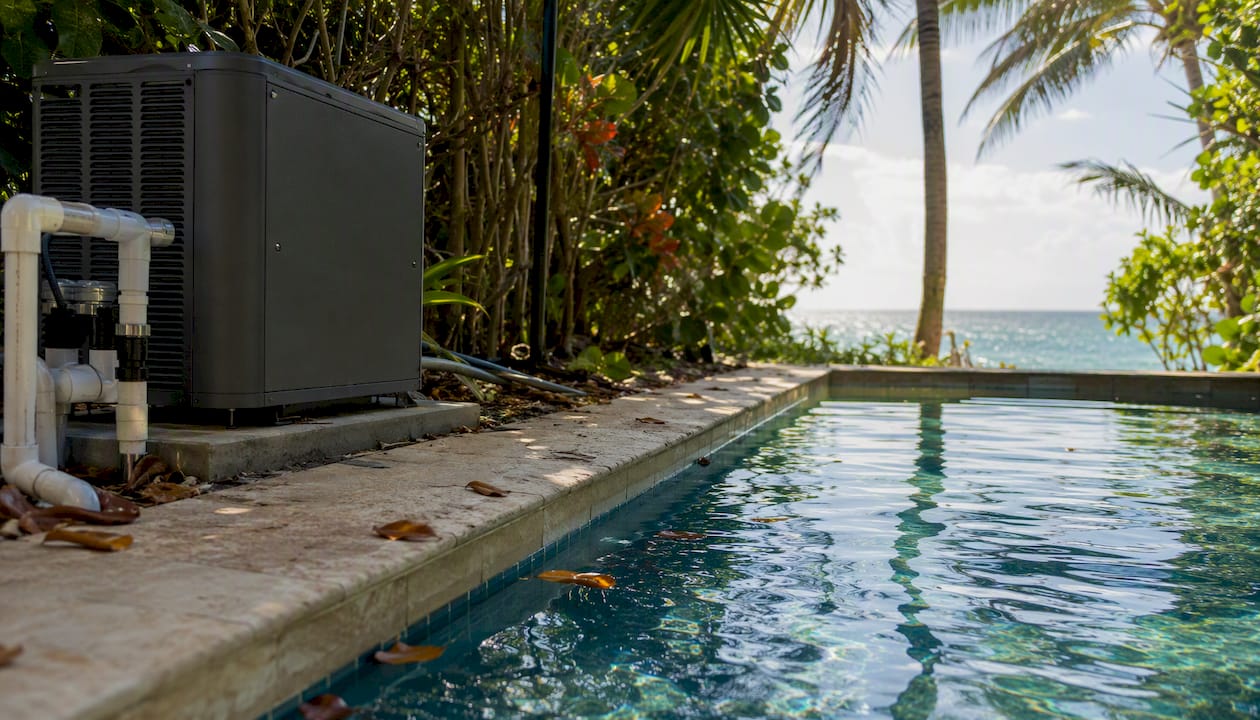
For most Captiva homeowners, a heat pump pool heater delivers the best balance of comfort and cost, with solar as a smart supplement, and gas reserved for occasional quick heats. Expect installed costs of roughly $2,800 to $7,000 for a heat pump, $1,500 to $6,000 for gas, and $4,000 to $8,000 for solar. Electric resistance heaters run about $1,400 to $4,500 installed but rarely make sense long term in Captiva’s climate.
Monthly running costs follow the same logic, with heat pumps generally costing less to operate seasonally than gas heaters, which can become expensive with heavy use. Solar, once installed, often costs little beyond your electric bill for the pump itself.
Heat pump: best year-round value in our mild winters
Solar: strong supplement, near-zero running cost
Gas: fast heat for occasional use, expensive if run often
Quick take: a Florida-specific calculator shows a single heat-up from 72°F to 86°F costs about $14 with a heat pump versus $38 with gas.
Keep reading for worked examples by pool size, what drives your quote up or down, and how to price heating into a Captiva rental.
Key Takeaways
Heat pumps offer the strongest year-round value for Captiva pools, with solar as a supplement and gas reserved for occasional fast heat.
Point | Details |
Choose a heat pump first | Installed cost runs $2,800 to $7,000 with the lowest typical running cost in Captiva’s mild climate. |
Use gas only for occasional heat | Installed cost runs $1,500 to $6,000 but gets expensive fast under regular use. |
Install a cover before anything else | Covers cut heat loss and evaporation, often the highest-return step available. |
Budget monthly costs by pool size | Typical pools incur noticeably lower monthly costs with a heat pump compared to gas, though exact figures depend on pool size and usage patterns. |
Compare real Captiva listings | Homes with pools on Captiva-island show how hosts pair heating amenities with nightly pricing in practice. |
Table of Contents
Pool Heating Costs Captiva Owners Should Know By Heater Type
Gas heaters: installed cost typically $1,500 to $6,000; heats water in hours; expensive to run continuously; lifespan around 5 to 10 years with regular maintenance.
Electric resistance: installed cost roughly $1,400 to $4,500; simple technology but among the most expensive to operate.
Captiva’s warm winters make heat pumps unusually efficient here compared to northern climates, since their COP improves as ambient air stays mild. Solar works well if your roof or pool deck gets consistent sun, though shade from mature vegetation near the water can limit output. Gas remains the right call if you only need heat for a handful of cool nights a year and don’t want the upfront investment.
What Drives Installed Cost, From Unit To Permits
The number on a quote rarely reflects just the heater itself. A base unit price gets adjusted by labor, site prep, and code requirements before you see a final total.
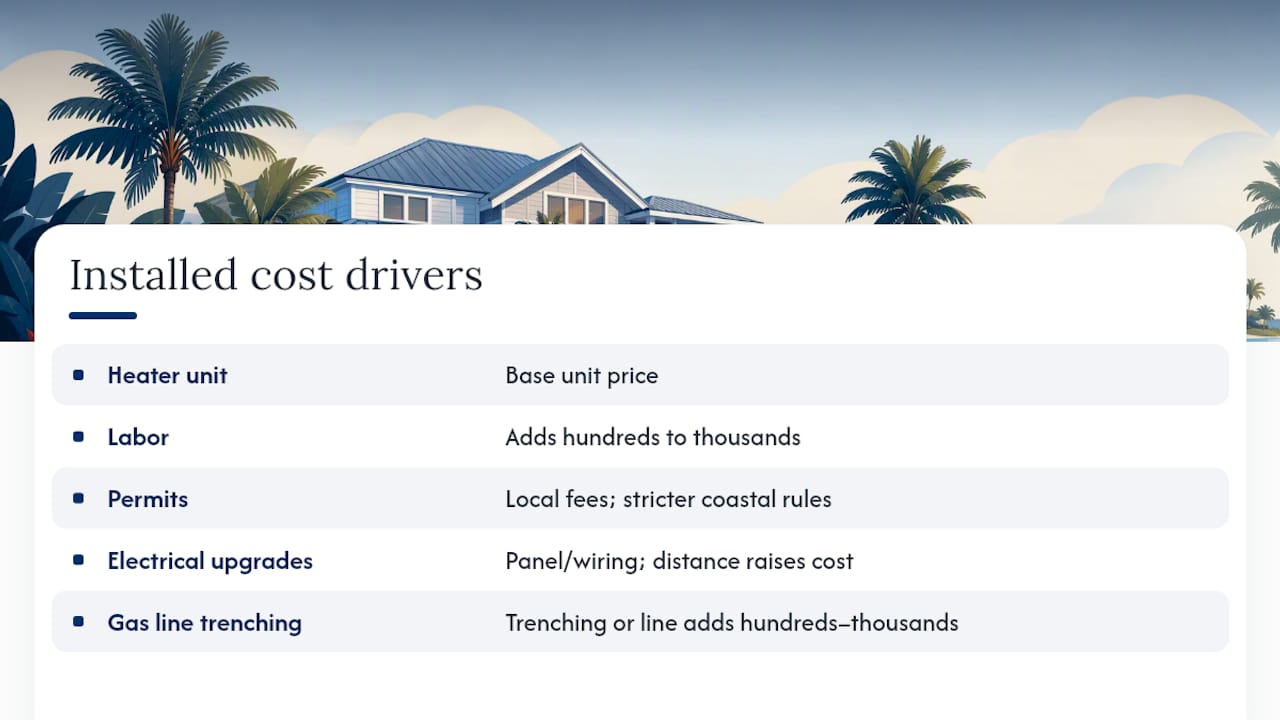
Beyond the unit itself, labor, permits, and electrical or gas line upgrades commonly add several hundred to a couple thousand dollars depending on how far your equipment pad sits from existing power or gas service. Trenching for a gas line, upgrading an electrical panel for a heat pump, or adding roof mounts for solar panels are the usual line items that separate a low quote from a high one.
Coastal Florida installs sometimes run higher than inland quotes because of hurricane-rated equipment pads, salt-air corrosion protection on components, and stricter local permitting. Ask your installer to itemize these separately.
Monthly Heating Costs By Pool Size, With The Math Shown
Monthly costs depend on pool volume, how many degrees you’re raising the water, and how many hours the system runs. Using Florida utility defaults and a heat pump COP around 5, here’s what typical Captiva pools cost to keep warm through a cooler stretch:
Small pool (about 10,000 gallons): A heat pump maintaining a 10°F rise over ambient runs roughly $35 to $60 a month in shoulder-season use; a gas heater doing the same job often runs $90 to $180.
Typical pool (about 18,000 gallons): Expect a heat pump in the $40 to $80 range for steady maintenance during cooler months, consistent with what owners across Florida commonly report. Gas for the same pool and temperature rise often lands between $150 and $350.
Large pool (about 30,000 gallons): Heat pump costs typically climb to $80 to $120 a month; gas can reach $300 to $600 if run daily through cooler weeks.
Solar shifts these numbers dramatically. Once installed, it can cover most or all of your heating need on sunny days, dropping your effective monthly cost toward the low end of these ranges or below it. A pool cover compounds the savings further by cutting the overnight heat loss that forces your system to work harder each morning.
What Actually Pushes Your Quote Toward The High End
Two pools of identical volume can carry very different heating bills depending on site conditions. A shallow, wide pool loses heat faster than a deeper one of the same volume because more surface area sits exposed to air and wind.
Wind and shade exposure: beachfront lots on Captiva often see steady onshore breezes that accelerate evaporative heat loss, while inland or heavily landscaped lots may hold warmth better.
Equipment pad distance: the farther your heater sits from the electrical panel or gas meter, the more trenching and wiring your installer bills.
Desired setpoint: every extra degree above ambient temperature increases run time and cost, especially for gas.
Hours of daily operation: running a heater continuously versus a scheduled window changes your monthly bill more than almost any other factor.
Pro Tip: Ask your installer to measure wind exposure at your actual equipment location, not just estimate from the home’s general orientation. A pad tucked behind a pool cage or privacy wall can perform meaningfully better than one facing open water.
How Pool Heating Changes The Rental Math On Captiva
Heating cost isn’t just a maintenance line item for Captiva rental hosts. It’s a pricing decision that affects occupancy, guest satisfaction, and margin.
Convert monthly cost into a nightly figure. If heating a typical pool runs $60 to $100 a month in shoulder season, that’s roughly $2 to $4 per night if spread across a full month’s bookings, less if you only heat for booked stays.
Schedule warm-up windows. Most systems can bring a pool to a comfortable 84 to 86°F within a few hours if the setpoint is programmed ahead of a guest’s arrival, rather than running continuously between stays.
Set a clear cover policy. Instructing cleaning crews or hosts to use a cover between stays cuts standby heat loss and keeps the next warm-up faster and cheaper.
Communicate the policy upfront. Whether heating is included, available for a flat fee, or billed by the stay, guests respond better to clarity than surprise charges.
Guests on Captiva increasingly expect a heated pool as part of the amenity package, not an upsell. Setting expectations before arrival, rather than explaining a surcharge afterward, keeps reviews positive and disputes rare.
Many properties handle this by offering heating windows tied to arrival dates rather than unlimited access, which controls cost while still meeting what guests expect from a premium beach stay.
Fast, Low-Cost Moves That Cut Your Bill This Month
Before spending on new equipment, a few operational changes pay for themselves quickly.
Add a pool cover. DOE guidance confirms covers meaningfully reduce evaporation and heat loss, often the single highest-return step available for under a few hundred dollars.
Install a programmable timer or smart controller. Scheduling heat only during use hours, rather than continuous operation, avoids paying to maintain temperature when nobody’s swimming.
Pair solar with a heat pump. Solar preheats water during the day; the heat pump only needs to top off the difference, which lowers electric use noticeably.
Set a firm setpoint policy. Every degree above 84 to 86°F adds real cost. Guests rarely notice the difference between 85°F and 88°F, but your bill does.
Pro Tip: A $300 to $500 cover often pays for itself within a single heating season on a typical Captiva pool, especially paired with a scheduled timer.
Permits, Timeline, And Questions To Ask Every Bidder
Florida installs generally require an electrical permit for heat pumps and resistance units, a gas permit and possibly a separate line inspection for gas heaters, and a structural or plumbing permit for solar panel mounts. Expect two to four weeks from signed contract to working system, factoring in permit approval, equipment delivery, and any electrical or plumbing rework.
Bring these questions to every bidder:
Is the quoted price a complete installed total, or does it exclude permits and electrical work?
What size unit are you specifying for my exact pool volume and desired temperature rise?
Who pulls the permit, and how long does local approval typically take?
What’s the warranty on the unit versus the labor?
Will my equipment pad or panel need upgrades to support this system?
The Bottom Line On Heating A Captiva Pool
For most owners, a heat pump remains the smartest primary investment, with solar as a low-cost supplement and gas reserved for occasional, fast heat needs. Before signing any contract:
Run the numbers yourself with a Florida-specific calculator
Get two to three itemized local quotes using the questions above
Install a pool cover first, regardless of which heater you choose
Factor your expected monthly heating cost directly into nightly rental pricing if you host guests
A Captiva Host’s Take On Guest Expectations
Guests booking a beachfront Captiva home rarely ask if the pool is heated. They assume it, especially between November and March. What actually earns five-star reviews isn’t the heater brand. It’s whether the water feels ready the moment a family walks in from a long drive, which almost always comes down to whether the host scheduled the warm-up window instead of relying on the system to catch up after check-in.
See How Captiva Rentals Handle Pool Heating In Practice
Plenty of Captiva homes list a heated pool as a standard amenity, but the details of setpoints, included hours, and seasonal availability vary property to property. That variation is exactly why comparing real listings beats guessing at a number. Browse homes with pools to see how heating options and nightly rates actually pair up across different properties, or check the full rental listings to compare inventory by location and amenity.
If you’re weighing whether a heated pool changes what you should charge, or what you should expect to pay as a guest, the clearest answer comes from comparing actual properties rather than averages. Guests researching what’s typical for extras like heated pools may also find this guide to common vacation-rental fees useful for context. When you’re ready to see current availability, browse Captiva rentals and reach out to a property manager for the exact heating setup and seasonal costs on any home that catches your eye.
Sources
Recommended
Comments