
Travel Insurance for Hurricanes: What Coastal Trips Need

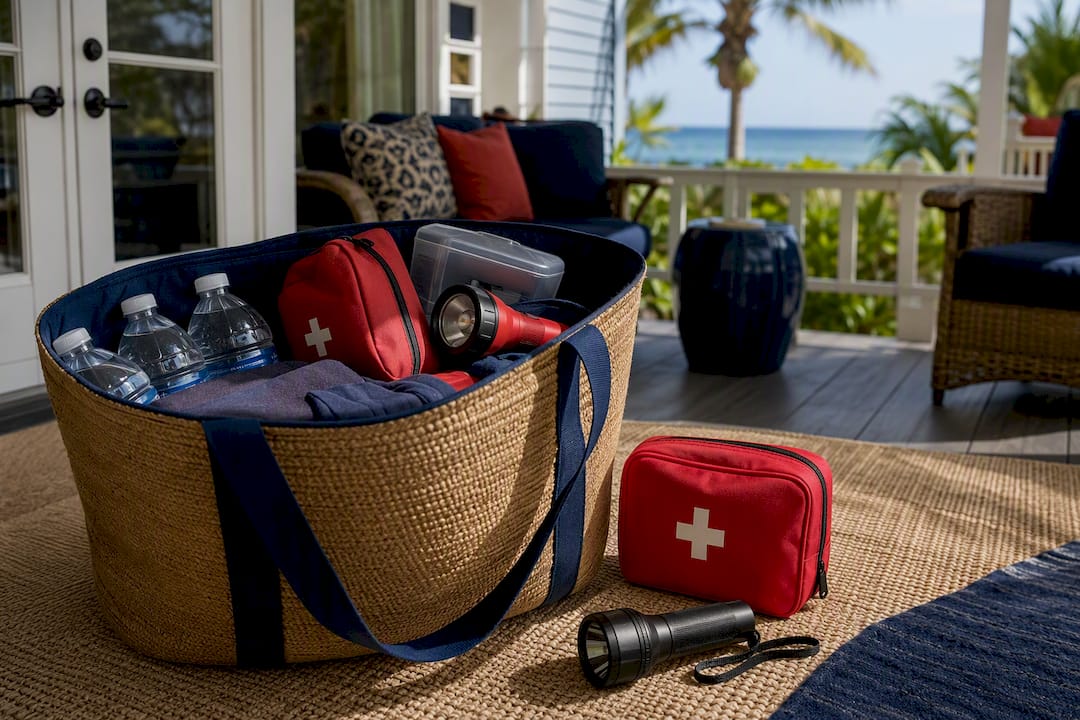
Yes, travel insurance for hurricanes can cover cancellations, interruptions, delays, and evacuations, but only if you buy the right comprehensive plan before the storm gets a name. Coverage depends on timing above all else, plus a handful of common benefits that most affected travelers rely on: trip cancellation, trip interruption, trip delay, and emergency medical or evacuation protection. Miss the timing window, and even the best policy on paper may deny your claim.
TL;DR:
Buying travel insurance early, ideally on the same day as your deposit, ensures coverage for storm-related cancellations and pre-existing condition waivers.
Claims are likely to be denied if you purchase a policy after a storm is named, due to strict storm-exclusion clauses.
Trip delay benefits typically require delays of at least 6 to 24 hours, making timing critical to receiving reimbursements.
Medical evacuation coverage can reach hundreds of thousands of dollars, especially for international trips from remote locations or over water.
CFAR coverage, which covers any reason for trip cancellation including fear or unforecasted storms, must be purchased within three weeks and usually increases your premium by 40-50 percent.
Table of Contents
When Is Hurricane Season, and What Does the 2026 Outlook Say?
How Do Cancellation, Interruption, Delay, and Missed Connections Actually Work?
What Happens if You Need Medical Care or Evacuation During a Storm?
Why Florida Vacation Rentals Make Travel Insurance Non-Negotiable
Does Domestic vs. International Travel Change Your Hurricane Coverage?
When Is Hurricane Season, and What Does the 2026 Outlook Say?
Atlantic hurricane season runs from June 1 through November 30, with the sharpest spike in activity landing between August and October. If you’re booking a coastal or Caribbean trip anywhere near that window, your insurance timing matters more than the premium you pay.
NOAA’s 2026 seasonal outlook points to below-normal activity for the Atlantic basin this year. That’s encouraging, but a quieter forecast doesn’t mean a quieter trip. One storm forming near your travel dates still puts a nonrefundable vacation rental at risk, and outlooks shift as the season progresses.
A few dates worth marking on your calendar before you book:
June 1: official start of Atlantic hurricane season
August through October: historical peak for named storms and landfalls
November 30: season closes, though late-season systems do happen
Booking window: the earlier you purchase insurance relative to any forecast activity, the more coverage options stay open to you
Does Travel Insurance Cover Hurricanes?
Hurricane protection isn’t a standalone product. It’s a set of benefits woven into comprehensive travel insurance plans, and it rarely shows up in medical-only or bare-bones policies. If you’re shopping by price alone, you may end up with a plan that never mentions weather at all.
A comprehensive plan built for hurricane season typically bundles:
Trip cancellation for covered reasons, including mandatory evacuation orders
Trip interruption if you have to cut a trip short or delay your return
Trip delay for expenses piling up while you wait out a storm
Emergency medical and evacuation benefits if you’re hurt or stranded
Missed connection coverage when a storm disrupts your flight chain
The catch that trips up more travelers than any other clause is the named storm exclusion. Once the National Hurricane Center assigns a storm a name, insurers treat it as a foreseeable event. Buying a policy after that point usually means that specific storm gets carved out of your new coverage, even if it’s still days from landfall. This is the single rule that separates a paid-out claim from a denied one, and it’s why insurance agents keep repeating the same advice: buy early, and don’t wait for the forecast to firm up before you act.
How Do Cancellation, Interruption, Delay, and Missed Connections Actually Work?
Each benefit has its own trigger conditions, its own math, and its own paperwork trail. Knowing the mechanics before you’re standing in an airport helps you file a claim that actually gets paid.
Trip cancellation. This benefit activates when a covered reason, like a mandatory evacuation order for your destination or a rental home declared uninhabitable, forces you to cancel before departure. Comprehensive plans commonly reimburse the full amount of prepaid, nonrefundable costs, but only for the specific reasons listed in the policy wording. A vague sense that a storm “might” hit doesn’t qualify. An official evacuation order does.
Trip interruption. If the hurricane hits after you’ve already left home, this is the benefit that reimburses unused trip costs and often covers the added expense of getting back early or extending a stay you can’t leave. Some comprehensive plans reimburse up to 150% of the trip cost here, recognizing that last-minute flights and emergency lodging almost always cost more than the original booking.
Trip delay. This one hinges entirely on hours. Most plans require your flight or itinerary to be delayed a minimum threshold, commonly somewhere between 6 and 24 hours, before daily expense reimbursement kicks in for meals, hotels, and incidentals. A three-hour ground stop rarely triggers a payout. A canceled flight that leaves you stuck for a day and a half usually does.
Missed connections. If a storm delays your first flight and you miss a connecting one, this benefit can cover the cost of catching up with your trip, new tickets, an unplanned overnight, or a rebooked cruise embarkation. Keep in mind that when an airline cancels a flight outright, the carrier itself may owe you a refund before your insurer ever gets involved. Insurance often fills the gap the airline leaves behind, not the whole cost.
Pro Tip: Read the trip delay clause for its exact hour threshold before you buy. A plan with a 6 hour trigger is far more useful during hurricane season than one requiring 12 or more, and that single number can decide whether a delay claim gets paid at all.
What Happens if You Need Medical Care or Evacuation During a Storm?
Emergency medical and evacuation benefits matter most when a hurricane strands you somewhere without functioning hospitals or a clear way home. These are two different things, and travelers often confuse them.
Emergency medical evacuation covers transport to the nearest adequate medical facility after an injury or sudden illness, regardless of weather. Natural-disaster evacuation is a separate, sometimes narrower benefit that covers getting you out of a dangerous area when local authorities issue an evacuation order, even if you’re not hurt.
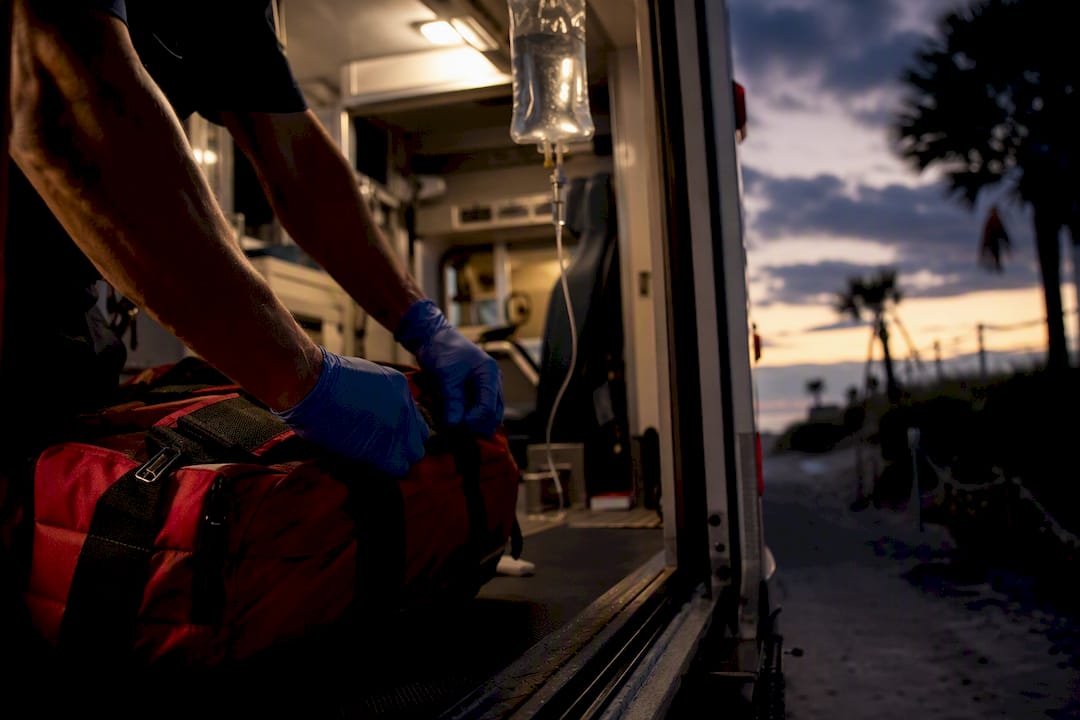
Policy limits vary widely by plan, but many comprehensive policies carry medical evacuation limits in the six-figure range, since air ambulance transport from a remote island or resort area can run extraordinarily high. Assistance companies contracted by your insurer coordinate the logistics directly: arranging transport, communicating with local hospitals, and pre-authorizing costs so you’re not paying out of pocket in the middle of a crisis.
If you do need care or evacuation:
Call the assistance hotline listed on your policy card immediately, before you arrange anything yourself
Keep every receipt, even small ones for transport or medication
Ask hospital staff for a written diagnosis and treatment summary before you leave
Photograph any evacuation notice or municipal order posted at your accommodation
The National Weather Service’s hurricane safety guidance explains how evacuation orders and warnings get issued, language your insurer will likely reference when reviewing a claim tied to a mandatory evacuation.
What Do Hurricane Policies Usually Exclude?
Every hurricane policy has boundaries, and the exclusions trip up more claimants than the covered benefits ever help. Knowing them before you buy saves you a frustrating call to a claims adjuster later.
Named storm exclusion. Once the National Hurricane Center names a system, most insurers won’t cover new claims tied to that specific storm on policies purchased afterward.
Fear of travel. Deciding not to go because you’re nervous about a forecast, without an official evacuation order or airline cancellation, isn’t a covered reason on a standard plan. Cancel For Any Reason coverage is the workaround, and it’s the only benefit built specifically for this scenario.
Pre-existing conditions. Standard policies exclude flare-ups of pre-existing medical conditions unless you buy within a set window of your initial deposit and meet the insurer’s health eligibility questions.
General weather anxiety. A rainy forecast, a tropical wave still forming, or a “could strengthen” advisory typically isn’t enough on its own to trigger cancellation coverage.
Borderline disputes tend to cluster around one question: was the reason for canceling specific and official, or was it a judgment call? An airport closure and a government evacuation order are concrete. A traveler’s decision that “it just didn’t seem safe” almost never qualifies without CFAR attached, and insurers lean on that distinction constantly when reviewing claims.
Is Cancel For Any Reason Worth the Extra Cost?
Cancel For Any Reason, known industry-wide as CFAR, is the one upgrade that gets you out from under every exclusion above. It lets you cancel for a reason your standard policy wouldn’t otherwise cover, including simple anxiety about an approaching storm that hasn’t been named yet.
The mechanics come with real constraints:
Purchase window: CFAR must typically be added within 14 to 21 days of your initial trip deposit, so it’s not something you can bolt on later once a system starts forming.
Reimbursement cap: most CFAR benefits reimburse around 75% of your trip cost, but never the full amount.
Cancellation deadline: you generally must cancel at least 48 hours before departure to qualify.
Premium impact: adding CFAR usually raises your total premium significantly over a standard comprehensive plan.
CFAR earns its cost on expensive, nonrefundable bookings during peak hurricane months, especially when a tropical disturbance is already on the map at the time you’re shopping for insurance. At that point, it may be your only realistic path to cancellation coverage at all.
Pro Tip: If you’re booking a Caribbean or Gulf Coast trip in August or September and a storm is already brewing somewhere in the basin, check whether standard cancellation coverage even applies before you buy. CFAR may be the only option left on the table.
When Should You Buy Insurance to Protect a Coastal Trip?
Timing decides more about your hurricane coverage than any other factor in the policy. Here’s the sequence that actually protects a booking:
Buy at the same time as your deposit. Purchasing insurance the day you put money down on a rental or cruise locks in your rate and starts the clock on any pre-existing condition waiver, which typically requires purchase within a short window of that first payment.
Check for existing tropical activity. If a disturbance is already being tracked in the region you’re headed to, standard cancellation coverage tied to that system may already be off the table. CFAR could be your only route to protection at that point.
Confirm your waiver window in writing. Ask the insurer directly how many days you have after your deposit to qualify for the pre-existing condition waiver, and get the answer in an email or chat transcript, not just a verbal confirmation.
Save your purchase confirmation. Keep the timestamped receipt showing exactly when you bought the policy relative to any storm naming. That single document can be the difference in a disputed claim.
What Should You Check Before You Buy a Policy?
Comparing hurricane policies by price alone is how travelers end up underinsured. A short checklist read against the actual policy wording, not the marketing page, tells you far more.
Covered reasons list. Does it name mandatory evacuation and uninhabitable lodging specifically, or just gesture at “severe weather”?
Purchase timing rules. How many days after your deposit do you need to buy to qualify for a pre-existing waiver?
Carrier delay hours. What’s the minimum delay, in hours, before trip delay benefits activate?
Reimbursement caps. Is trip cancellation capped at 100% and interruption at up to 150%, or lower?
Evacuation and medical-evac limits. What’s the dollar ceiling, and does it cover natural-disaster evacuation separately from medical transport?
CFAR availability and deadline. Is it offered at all, and within what window of your deposit?
Reading these clauses aloud to a customer service representative and taking a screenshot of the written answer gives you a paper trail if a claim gets disputed later. Guidance on evacuation and emergency expense provisions from independent travel insurance resources can help you frame the right questions before you call.
What to check | Why it matters |
Covered reasons | Determines if mandatory evacuation and uninhabitable lodging trigger cancellation |
Purchase timing | Sets your pre-existing waiver eligibility and named-storm exposure |
Carrier delay hours | Decides whether a delay claim is even eligible |
Reimbursement caps | Common maximums are 100% for cancellation, up to 150% for interruption |
CFAR window | Usually 14 to 21 days after your initial deposit |
For a Gulf Coast or Florida trip during peak season, the cheapest plan is rarely the one that pays out. Weigh the premium against what you’d actually lose if a storm forced a last-minute change.
What Documents Do You Need to File a Hurricane Claim?
A hurricane claim moves faster and pays out more reliably when you’ve built the paper trail before you need it, not after.
Proof of prepayment. Booking confirmations, receipts, and bank or card statements showing what you paid and when.
Official evacuation or closure notices. A government evacuation order, airport closure notice, or municipal advisory, saved as a screenshot or printout.
Carrier communications. Airline cancellation or rebooking emails and texts, since these establish the carrier’s own refund obligations separate from your insurance claim.
Property condition documentation. Photos of storm damage or an official uninhabitable declaration if a rental property was affected.
Medical records, if applicable, including diagnosis paperwork and evacuation transport receipts.
Most insurers expect notification within a set number of days of the triggering event, so don’t wait until you’re home to start the claim. Keep everything in one digital folder, backed up to cloud storage, from the moment your trip gets disrupted.
Pro Tip: Take photos of everything the day it happens, not after you’ve calmed down. A timestamped phone photo of a posted evacuation notice is worth more to a claims adjuster than a written recollection weeks later.
Why Florida Vacation Rentals Make Travel Insurance Non-Negotiable
Many Florida vacation-rental cancellation policies run 60 days nonrefundable, and few refund guests for evacuation alone. That gap is exactly what travel insurance exists to close. Property managers on barrier islands typically provide damage reports or uninhabitability certifications guests can submit with a claim, and a rental booked directly, with clear check-in records, gives you a cleaner documentation trail than a third-party listing ever will.

Does Domestic vs. International Travel Change Your Hurricane Coverage?
Coverage mechanics stay largely the same whether you’re headed to the Florida Keys or a Caribbean resort, but the practical risks shift once you cross a border. Domestic trips give you faster, cheaper return options if a storm forces an early exit; a delayed flight from Orlando to Chicago is an inconvenience, not a crisis.
International trips raise the stakes on every benefit. Medical evacuation from a remote Caribbean island or a Mexican resort town can cost tens of thousands of dollars, since air ambulance transport over water or across borders runs far higher than a domestic ground transfer. That’s why comprehensive plans built for international hurricane-season travel tend to carry higher medical evacuation limits than their domestic-only counterparts.
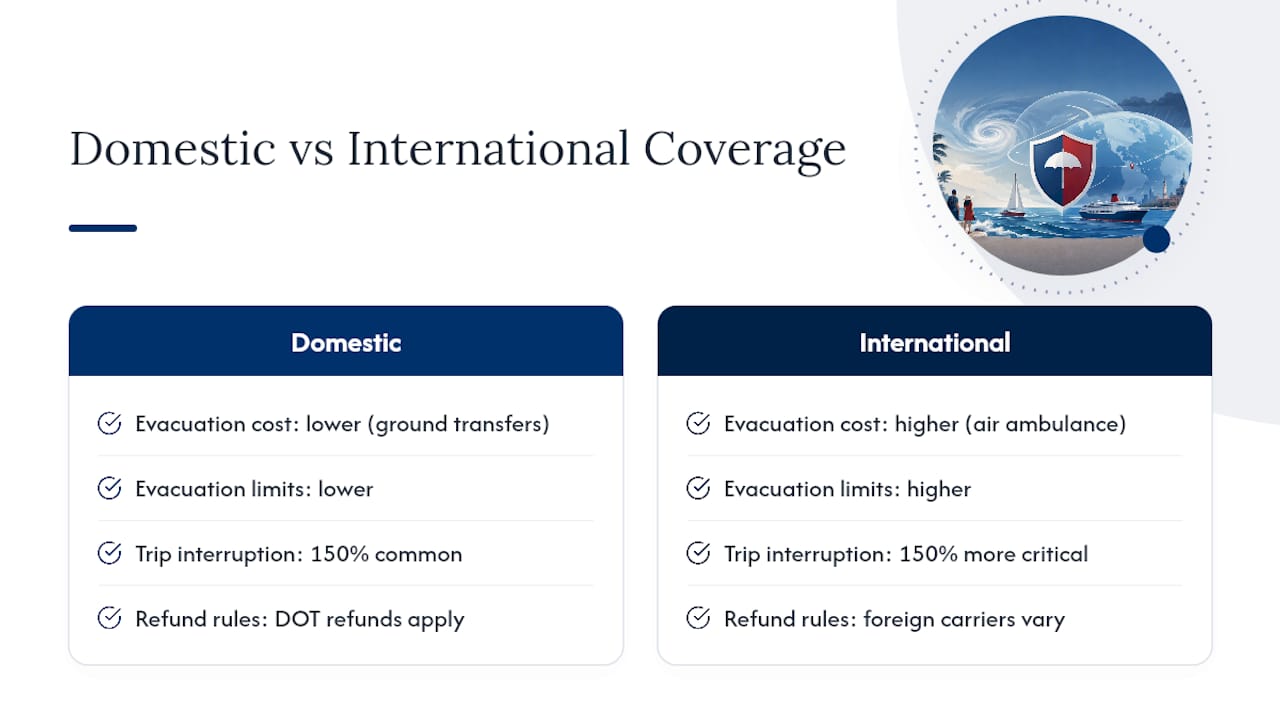
Trip interruption also plays out differently abroad. Getting home early from a storm-hit destination overseas often means last-minute international airfare, which can run several times the original ticket price, so the 150% interruption reimbursement common on comprehensive plans matters more on an international itinerary than a domestic one.
There’s also a practical logistics gap: U.S. carriers and the Department of Transportation’s refund rules apply cleanly to domestic flights, but a foreign carrier or a package tour operator abroad may follow different rules entirely, leaving your travel insurance policy as the more reliable backstop. If your trip involves multiple countries or a cruise itinerary through several ports, check that your policy’s evacuation and interruption benefits explicitly cover the full itinerary, not just your point of origin.
Do Hurricanes Push Travel Insurance Prices Higher?
Premiums for comprehensive travel insurance don’t spike the moment a storm forms, but availability tightens fast once a system gets named. Insurers stop selling new named-storm coverage for that specific event almost immediately, which is why the guidance to buy early isn’t just caution, it’s the actual mechanism that determines whether you can get covered at all.
Heading into a season NOAA has forecast as below-normal for 2026, pricing across the industry tends to stay closer to baseline than in years with an above-average outlook. But a quiet seasonal forecast doesn’t freeze prices for every booking window. Travelers purchasing insurance for trips deep in the August through October peak typically pay somewhat more for comprehensive plans with strong hurricane benefits than those insuring shoulder-season trips in June or late November, simply because insurers price risk against the calendar.
CFAR add-ons carry their own premium math separate from base hurricane risk, typically adding 40% to 50% to your total cost regardless of the season’s overall outlook. If you’re booking a high-value Gulf Coast or Caribbean trip in peak months, expect the CFAR upgrade to represent a larger dollar amount than it would on a shoulder-season booking, purely because it’s a percentage of a bigger trip cost. The lesson holds steady across every outlook NOAA has published in recent years: buy your policy early in the booking process, well before any system in the basin gets a name, and you’ll have more plans to choose from and a better shot at a fair rate.
A Practical Takeaway for Booking Coastal Trips
Buy insurance the day you book, not the day a storm shows up on the map. If you’re traveling deep into peak season, weigh CFAR seriously. Document everything as it happens, and use a direct-booking rental’s confirmation records as part of your claim evidence.
— Josh
Protecting a Captiva Booking Beyond the Insurance Policy
Travel insurance handles the financial risk of a canceled or interrupted trip, but the booking itself matters just as much. Captiva-island’s direct booking platform gives you a documented reservation record, a local point of contact, and clear rental policies you can read before you buy, all details a claims adjuster will eventually want to see.

Booking through a local, established rental company also means someone on the ground can confirm evacuation status, property conditions, or check-in changes if a storm approaches your travel dates. Before you finalize a hurricane season trip, review the beachfront properties available on Captiva Island, confirm the rental’s cancellation terms directly with the property team, and pair that booking with a comprehensive travel insurance policy purchased the same week. That combination, a documented direct booking plus the right coverage bought early, is the most reliable way to protect a coastal vacation before hurricane season gets underway.
Sources
Recommended
Comments