
Why Beachfront Over Inland Rental: The Real Difference


When you start weighing a beachfront vacation rental against an inland property, the price tag is usually the first thing that stops you. The gap can feel hard to justify. But understanding why beachfront over inland rental makes sense for most vacationers goes well beyond the view from the window. It comes down to how the location shapes every hour of your trip, from morning coffee to evening sunsets, and whether the property creates the kind of memory that brings you back next year.
Table of Contents
Key takeaways
Point | Details |
Direct access changes everything | Walking to the beach in seconds eliminates daily friction and redefines how relaxed your vacation feels. |
Beachfront commands a real premium | Ocean homes price roughly 29% higher than comparable inland homes due to constrained coastal supply. |
Hidden costs are real but manageable | Insurance, maintenance, and flood risk add to beachfront overhead, and that gets passed into rental rates. |
Occupancy tells the story | Peak-season beachfront markets regularly hit 90%+ occupancy, reflecting genuine demand over inland alternatives. |
Experience is the deciding factor | Properties with built-in destination appeal hold bookings where average inland rentals lose ground. |
Why beachfront over inland rental is about more than a view
The term “beachfront rental” refers specifically to vacation properties with direct or near-direct access to the shoreline, where the beach itself is part of the amenity package rather than a destination you drive to. That distinction matters more than most people realize before they book.
With a beachfront property, the beach is not an errand. You wake up, walk out, and you are there. No parking, no hauling gear through a parking lot, no timing your departure around traffic. That reduction in daily friction, the kind that quietly drains energy from a vacation, is one of the core benefits of beachfront rentals that rarely shows up in a listing description but defines how guests actually feel by day three.
The views add something harder to quantify. There is a psychological shift that happens when you sit facing open water. The horizon does not demand anything from you. It just asks you to look. Guests consistently report that oceanfront views are among the most memorable parts of their stay, and research backs this up. Properties with direct beach access and views attract premium bookings compared to similar inland homes that lack that same standout quality.
Coastal rentals also carry what the vacation rental industry calls “destination status.” When guests book a home on the water, they are not just booking a place to sleep. They are buying into a specific version of the trip, one that feels like it belongs somewhere, with a sense of place that an inland subdivision simply cannot replicate.
Pro Tip: When comparing listings, look at photos taken from outside the home, not just inside. A property with an unobstructed water view will almost always offer a richer daily experience than one where the ocean requires a five-minute walk, even a pleasant one.
What beachfront rentals actually cost
Honesty about cost is where many vacationers get caught off guard. Beachfront homes are priced at a 29% premium over comparable inland homes, driven by limited shoreline inventory and steady demand. That gap flows directly into rental rates, and it is not arbitrary.
The carrying costs for beachfront properties are genuinely higher. Owners face insurance premiums that reflect flood zone designations, storm exposure, and wind risk. They deal with maintenance cycles that are more frequent and more expensive than anything an inland property requires. All of that overhead gets built into what you pay per week. Vacationers often underestimate total costs when they see a beachfront rate for the first time, because the number looks steep without that context.
Here is a practical way to think about how those costs layer:
Nightly or weekly rental rate. This reflects location premium, demand, and amenity level. Expect to pay more per square foot than an inland home of equivalent size.
Cleaning and turnover fees. Salt air and sand accelerate surface wear, which means cleaning standards at coastal properties are higher and more frequent. That cost is often passed through.
Insurance and risk coverage. Beachfront owners in hurricane-prone states like Florida carry substantially higher insurance. This is a real cost folded into how properties are priced and managed.
Seasonal rate swings. In high-demand coastal markets like the Outer Banks, peak-to-trough revenue swings can reach 8x between summer and off-peak. Booking in shoulder season can significantly reduce what you pay without sacrificing the experience.
“Beachfront rental premiums are more than just views. They reflect genuine operational costs, constrained supply, and the kind of built-in guest experience that inland properties have to work hard to replicate.” — Vacation Rental Market Analysis, KeyCrew
Understanding this cost structure helps you budget more accurately and compare listings with the right frame of reference.
How beachfront rental markets actually perform
The market data on beachfront rentals tells a clear story. In competitive coastal markets, occupancy rates are not just higher. They are in a different category entirely.
In the Outer Banks of North Carolina, a market that closely mirrors the dynamics of Florida’s Gulf Coast, LTM occupancy sits at 76% with towns like Corolla hitting 100% occupancy during peak summer weeks. Oceanfront weekly rates regularly reach $5,000 to $8,000 in that market during the summer. That level of demand does not happen for inland properties, even well-appointed ones.
What drives this? Partly scarcity. You cannot manufacture more oceanfront land, so supply stays constrained while demand grows. But it is also about what guests are actually seeking. The short-term rental market is increasingly splitting into two tiers. Properties with a distinctive guest experience hold their occupancy and rates. Average homes in ordinary neighborhoods lose ground. Beachfront properties sit firmly in the high-performing tier by virtue of what they are, not just what they offer in terms of bedrooms and amenities.
For you as a vacationer, this performance data has a practical implication. High-demand beachfront properties book early. If you wait until two weeks before your trip to secure a home on the water, you are likely to find the best options already gone. Planning and booking beachfront rentals three to six months in advance is not excessive. It is realistic for the most desirable properties.
Pro Tip: Shoulder season at a top beachfront property often beats peak season at an inland rental, both in price and in the quality of the experience. Late April or early October on Florida’s Gulf Coast still gives you warm water and uncrowded beaches at meaningfully lower rates.
Maintenance realities that shape your stay
The environment a beachfront home sits in is not gentle. Salt air, humidity, wind, and sand work on a property continuously, and the materials and upkeep required to keep that home in excellent condition are significantly more demanding than what an inland rental needs.
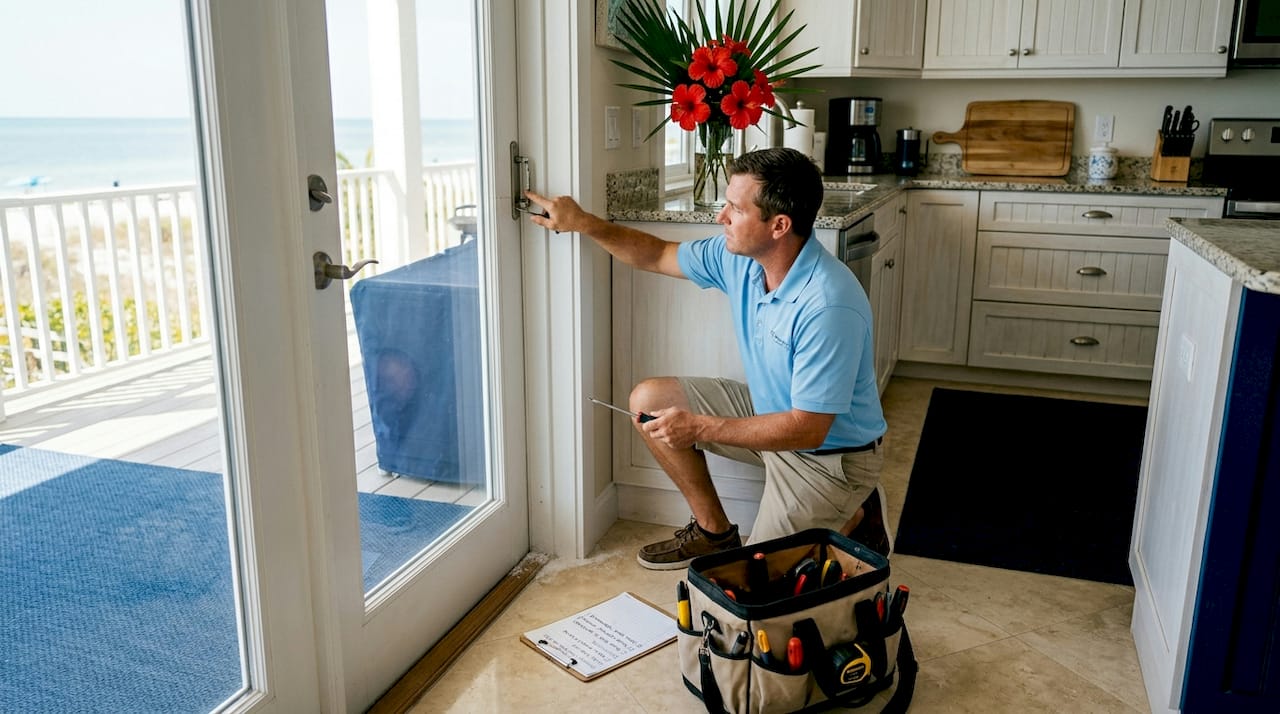
Beachfront properties require marine-grade metals and weather-resistant finishes throughout, from door hardware to outdoor furniture to window frames. Standard materials corrode faster at the coast. This is not a sign of poor ownership. It is a reflection of the environment. The best-managed properties address this with proactive inspection schedules, treating maintenance as a prevention program rather than a reaction to complaints.
Preventing deterioration in beachfront homes means catching corrosion and salt damage before it affects the guest experience. Properties managed by experienced coastal operators do this well. Properties that are not professionally managed can decline quickly between seasons, and you will notice it when you arrive.
What this means practically for your stay is that a well-managed beachfront home should feel pristine despite its demanding environment. Look for properties managed by teams with coastal experience, and pay attention to recent guest reviews that speak specifically to cleanliness and condition. A strong review pattern on those details is a reliable signal. Professional management, as industry guidance confirms, is the key variable separating a beachfront home that exceeds expectations from one that disappoints.
The honest trade-off: beachfront luxury vs. inland space
Choosing between coastal and inland rentals is not purely about prestige. It is about matching the property to what you actually want from a vacation.
Factor | Beachfront rental | Inland rental |
Beach access | Immediate, no driving | Requires travel, often 5 to 20 minutes |
Space per dollar | Smaller footprint | Often more square footage for the price |
Noise and activity | Livelier, ocean sounds, foot traffic | Quieter, more private setting |
Views | Panoramic water views | Garden, pool, or neighborhood views |
Seasonal pricing | Higher peak rates, significant off-peak savings | More stable pricing year-round |
Guest experience feel | Destination-level immersion | Home-away-from-home feel |
If your vacation priority is morning swims, watching the sun drop into the water, and letting the rhythm of the tides set your schedule, the advantage of beachfront living during a vacation is real and hard to replicate inland. If you are traveling with a large group that needs multiple living areas, a game room, and quiet surroundings, inland options genuinely deliver more per dollar.
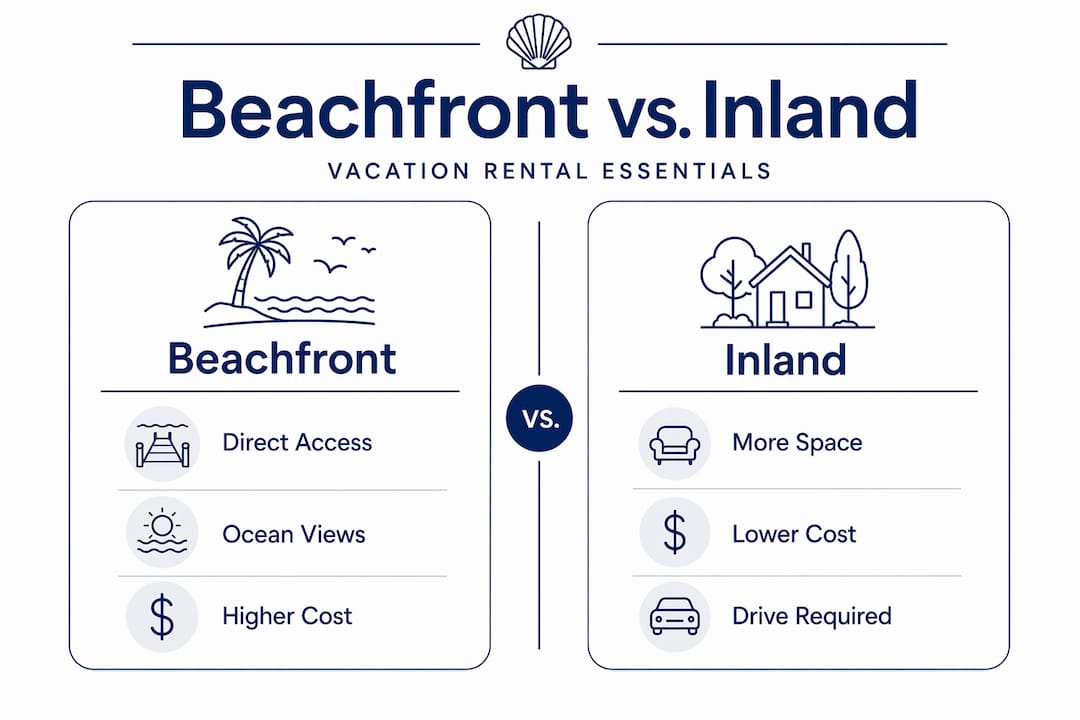
The honest answer for most vacationers is this: if the beach is why you are traveling, do not compromise on access to it. A slightly smaller home with open water out the window will feel better every single day than a spacious inland home where the beach feels like an outing.
My take on the beachfront premium
I have spent enough time around coastal vacation rentals to have formed a clear opinion on this. The debate over whether beachfront is worth it almost always resolves the same way once someone has actually stayed in both.
The thing people underestimate is how much location shapes the mood of a trip. I have seen guests in beautifully furnished inland homes who spent the first day slightly disappointed, not because anything was wrong, but because the beach felt just far enough away to require planning. That small friction changes how you use your time. You go less often. You stay shorter. The trips feel like events instead of just something you do because the water is right there.
Beachfront homes remove that decision entirely. The beach is not a destination from the rental. It is the rental’s front yard. I genuinely believe that for families traveling with children or for anyone whose idea of a real vacation includes reading on the sand by 8 a.m., the price premium reflects a real difference in how the week feels.
What I find most overlooked is the morning experience. Sitting with coffee while the water moves and the light changes over the Gulf is the kind of quiet that does not have a price comparison. It simply is what it is. And most people who have had it at least once will find a way to have it again.
— Josh
Find your beachfront home on Captiva Island
If you are ready to move from comparing options to actually booking, Captiva-island makes that step straightforward. American Realty of Captiva has more than 30 years of experience matching travelers with the right property on Captiva Island, Florida, one of the Gulf Coast’s most tranquil and private beach destinations.

Whether you are looking for a fully equipped beachfront vacation home with direct Gulf access or a property with a private pool steps from the shore, the Captiva-island platform lets you search by preference, view homes on a map, and book directly. The team knows this island in depth and can help you find the property that fits your group size, your budget, and the kind of vacation you are actually hoping to have. Explore the full rental collection and see what is available for your dates.
FAQ
Why is beachfront more expensive than inland rental?
Beachfront properties command a 29% price premium over inland homes due to limited shoreline supply, higher insurance and maintenance costs, and strong consistent demand. Those carrying costs flow directly into rental rates.
Is beachfront worth it for a short vacation?
Yes, especially if beach access is central to your plans. Direct access removes daily friction and makes spontaneous time at the water effortless, which meaningfully changes how a short trip feels compared to staying inland and driving to the beach.
How far in advance should I book a beachfront rental?
For peak summer weeks at top coastal destinations, booking three to six months ahead is realistic. Peak occupancy in high-demand beach markets regularly hits 90% or more, and the best properties fill well before the season starts.
What hidden costs should I expect with beachfront rentals?
Beyond the rental rate, budget for higher cleaning fees, and understand that insurance and flood risk overhead is baked into what owners charge. These are not surprises so much as honest reflections of what coastal property ownership requires.
How do I know if a beachfront rental is well maintained?
Look for recent guest reviews that mention cleanliness, working amenities, and property condition specifically. Well-managed coastal homes use marine-grade materials and proactive inspections to stay ahead of salt and weather damage, and that care shows in consistent positive feedback.
Recommended
Comments