
Family Beach House Rental Booking Tips That Save Money


Planning a family beach vacation sounds like pure joy. But the actual process of finding the right house, sorting through listings, comparing amenities, and figuring out what is real versus staged in photos? That part can wear you out before you ever touch the sand. These family beach house rental booking tips are built for families who want to do this right the first time, without overpaying, without arriving to surprises, and with enough left in the budget to actually enjoy the trip.
Table of Contents
Key takeaways
Point | Details |
Book 6 to 12 months early | Prime family-friendly properties fill fast; early booking secures the best amenities and locations. |
Direct booking saves real money | Skipping third-party platforms can save 10 to 17% in service fees on your total rental cost. |
Prioritize utility over aesthetics | Bathroom counts, noise levels, and beach access matter more than beautiful listing photos. |
Verify location with maps | Always confirm actual walking routes to the beach before committing to any rental. |
Bundled amenities cut trip costs | Rentals that include bikes and beach gear can save families $200 to $300 on daily rentals. |
1. Start with your family’s real must-haves
Before you search a single listing, sit down and write out what your family genuinely needs. Not what looks nice in photos. What you actually need to function comfortably for a week or more.
Think about bathroom-to-guest ratios first. A practical bathroom count matters far more than a gourmet kitchen when six people are trying to get to the beach by 9 a.m. Consider ground-floor bedrooms for grandparents or toddlers, fenced yards for young kids, and whether you genuinely need a pool or would prefer beachfront access instead.
Location relative to the beach is another area families underestimate. A five-minute walk sounds easy enough until you are carrying chairs, a cooler, and a toddler across uneven terrain in July heat. Think through parking logistics too, since some beach towns charge $30 to $55 per day for hotel-style parking, while a private rental driveway eliminates that cost entirely.
Pro Tip: Write your must-haves and your nice-to-haves as two separate lists before you start searching. This prevents you from overpaying for features your family does not actually use.
2. Book early. Much earlier than you think
The single most common mistake families make is waiting too long. Booking 6 to 12 months in advance is the standard for prime beach locations, and there is a real reason for that. The best homes with the best locations go first. What remains at the four-month mark is typically whatever did not sell in the first round.
Booking early also protects you when your family has specific accessibility needs. Ground-floor entries, elevators, or stair-free layouts for elderly relatives or families with strollers are limited in supply. Those features disappear quickly. If your family includes a pet, early booking is especially critical since pet-friendly rentals are far fewer in number and book out fast without premium-level rates if you get there first.
Decide your travel window by January for summer trips
Have your group’s headcount and must-haves confirmed before you start searching
Be prepared to pay a deposit quickly once you find the right home
Set calendar reminders to revisit pricing if flexible on dates
Pro Tip: If your dates have any flexibility at all, run searches on a Tuesday or Wednesday arrival rather than Saturday. Many rental platforms price weekly rates based on a Saturday-to-Saturday model, and mid-week arrivals on a per-night basis are often softer.
3. Book directly with the owner or a local agency
This is one of the most overlooked tips for booking beach houses, and the savings are not small. Booking directly saves travelers 10 to 17% in service fees. On a week at $300 per night, that is $210 to $357 back in your pocket.
Beyond the money, direct communication with a local host or local management company opens up conversations that platforms simply cannot facilitate. You can ask specific questions about noise from neighboring properties, which grocery store is closest, whether the beach chairs are actually in good condition, or whether the pool heater works reliably in April. Larger platforms do not always guarantee better protection or prices, and direct host relationships offer transparency that algorithms cannot replicate.
Booking directly also unlocks the ability to negotiate extended-stay discounts, request specific amenities before arrival, and build a relationship with someone who genuinely knows the property. That knowledge is worth more than a polished listing page.
To protect yourself when booking direct, always request a signed rental agreement, verify the property exists via Google Maps and Street View, and pay by credit card rather than wire transfer.
4. Travel during shoulder season for better value
Peak summer weeks come with peak summer pricing. Families willing to travel in May, early June, or after Labor Day in September often find the same homes at 20 to 30% lower rates, with fewer crowds at the beach and shorter lines everywhere else.
The weather along Florida’s Gulf Coast, for instance, remains genuinely warm through October. A family booking a Captiva Island home in late September gets the same turquoise water and white sand with noticeably more breathing room on the beach. Flexible dates also expand your pool of available properties, which gives you better options and stronger negotiating power on price.
Extended stays are another underused tactic. Many owners offer meaningful weekly rate discounts over nightly rates, and a 10-day stay sometimes costs less per night than a 7-day booking during a different window.
5. Build your beachfront vacation rental amenities checklist
What is included in the rental rate matters enormously to your actual trip budget. This is where a beachfront vacation rental amenities checklist pays off before you ever commit to a booking.
Amenity | Why it matters | Estimated savings |
Bikes or golf cart included | Avoids expensive daily rentals | $200 to $300 per week |
Full kitchen with cookware | Enables home-cooked meals | $50 to $100 per day |
In-unit washer and dryer | Eliminates laundromat trips | $20 to $40 per week |
Beach chairs and umbrella | No daily gear rental needed | $30 to $60 per day |
Private pool | Adds recreation without resort costs | Priceless for families with young kids |
Rentals that include bikes, beach gear, or golf cart access save families $200 to $300 on their overall trip cost. A full kitchen saves even more when you factor in how often a family of five or six can realistically afford to eat out for every meal. A home with a private pool also gives younger kids a place to play safely when the surf feels too strong, extending your usable vacation hours without adding cost.
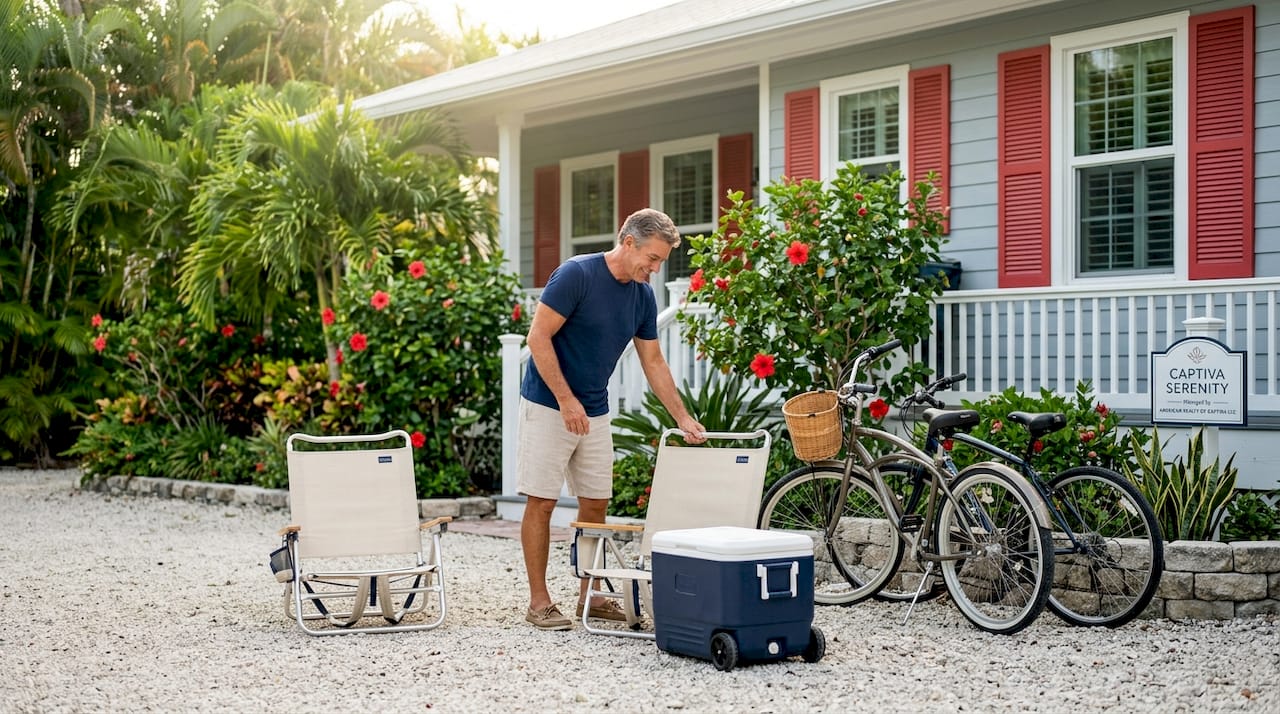
Renting bicycles weekly instead of daily cuts transportation costs dramatically and fits naturally into a relaxed beach town rhythm. When comparing two similarly priced homes, always calculate the full cost of what each one does not include. That gap often tells a clearer story than the nightly rate.
6. Read listings like a detective, not a tourist
Photographs are styled. Descriptions are optimized. Your job is to read between both.
Start with maps. Use mapping tools to trace the actual walking route from the rental to the beach. A listing that says “steps from the beach” might mean crossing a busy road or navigating a boardwalk that is difficult with a stroller. Satellite view often reveals parking lots, bars, or vacation rental clusters directly next to the property that photos conveniently avoid showing.
Read reviews for specifics. Positive reviews that say “great location” tell you very little. Reviews that mention noise at night, the host’s response time when something broke, or whether the photos matched reality give you real information. A pattern of noise complaints or maintenance issues is a firm warning sign.
Review the rental contract line by line. Hidden costs like cleaning fees, damage deposits, and weather-related cancellation terms matter. Look specifically for the hurricane or storm policy if you are traveling to a Gulf Coast or Atlantic destination, since some contracts leave families with no refund for weather events outside the owner’s control.
Pro Tip: Before signing, email the host three specific questions about the property and time their response. A host who answers thoroughly within 24 hours is almost always a reliable partner throughout your stay. A host who is vague or slow before booking will likely be worse after.
7. Understand what “beachfront” really means
This one trips up families more than almost anything else. “Beachfront,” “ocean view,” “beach access,” and “steps to the beach” are not the same thing, and listings use them interchangeably when they should not.
True beachfront means the property sits directly on the sand. Beachfront homes offer something that no amount of short walking can replicate: the sound of the water from your porch, the ability to step outside at sunrise without planning a trip. For families with young children, that proximity changes the entire dynamic of the vacation. Kids run back and forth freely. Parents can watch from the deck without packing up for each visit.
Ocean view or gulf view properties are often wonderful, but they may sit a block or two back. That is fine if the price reflects the difference. The problem is when listings blur the distinction and families pay beachfront prices for a home that requires a ten-minute walk.
My honest take on booking a family beach house
I have seen families plan these trips beautifully on paper and then spend the first day frustrated because the rental was not what they expected. And I have seen families who were methodical about the booking process arrive to a home that felt like it was waiting just for them.
In my experience, the families who get it right share one habit: they prioritize utility over aesthetics. They ask about bathroom counts, not countertop finishes. They verify the walking path on a map, not just the listing photos. They read the cancellation policy before they fall in love with the home.
What I have learned watching this play out year after year is that the booking process is where the vacation is either won or lost. A beautiful home with poor beach access, surprise fees, and an unresponsive host is a difficult week. A modest home with a generous amenity package, honest listing, and local management team who knows the area? That is a memory your family keeps.
Book early. Book direct when you can. Ask the specific questions. The details you nail down before you arrive are the ones that let you fully relax once you get there.
— Josh
Ready to find the right home on Captiva Island?
At Captiva-island, American Realty of Captiva has spent over 30 years helping families find exactly the right home for their beach vacation. The inventory covers everything from intimate cottages to spacious beachfront properties with private pools, and every listing is managed by a local team that knows Captiva inside and out.
When you browse vacation rentals on Captiva, you are working directly with people who can answer your real questions about noise, proximity, amenities, and what to expect on arrival. That kind of local knowledge is exactly what the booking tips above are pointing you toward. If a pool is on your list, the homes with pools collection is a natural starting point. If waking up to the sound of the Gulf is the whole point, the beachfront homes inventory is where your search belongs. Book early, book direct, and let the rest of the planning feel easy.
FAQ
How far in advance should families book a beach house?
For popular beach destinations, booking 6 to 12 months in advance gives families the best selection of amenities, locations, and pricing before prime inventory disappears.
Does booking directly with an owner actually save money?
Yes. Direct booking saves 10 to 17% compared to third-party platform fees, which can add hundreds of dollars to a week-long rental.
What amenities should families prioritize in a beach rental?
A full kitchen, in-unit laundry, included beach gear, and private parking are the amenities that reduce daily out-of-pocket costs the most for traveling families.
How do I verify a beach house listing is accurate?
Use Google Maps and Street View to confirm the walking route to the beach, and read reviews specifically for mentions of noise, cleanliness, and host responsiveness before booking.
Is shoulder season a good time for families to rent a beach house?
Traveling in May, early June, or September typically offers the same weather and scenery at lower rates, with fewer crowds and more property availability for families with flexible schedules.
Recommended
Comments