
What Is a Soft Season in Beach Rentals?
- Josh Wheeler
- 1 day ago
- 8 min read


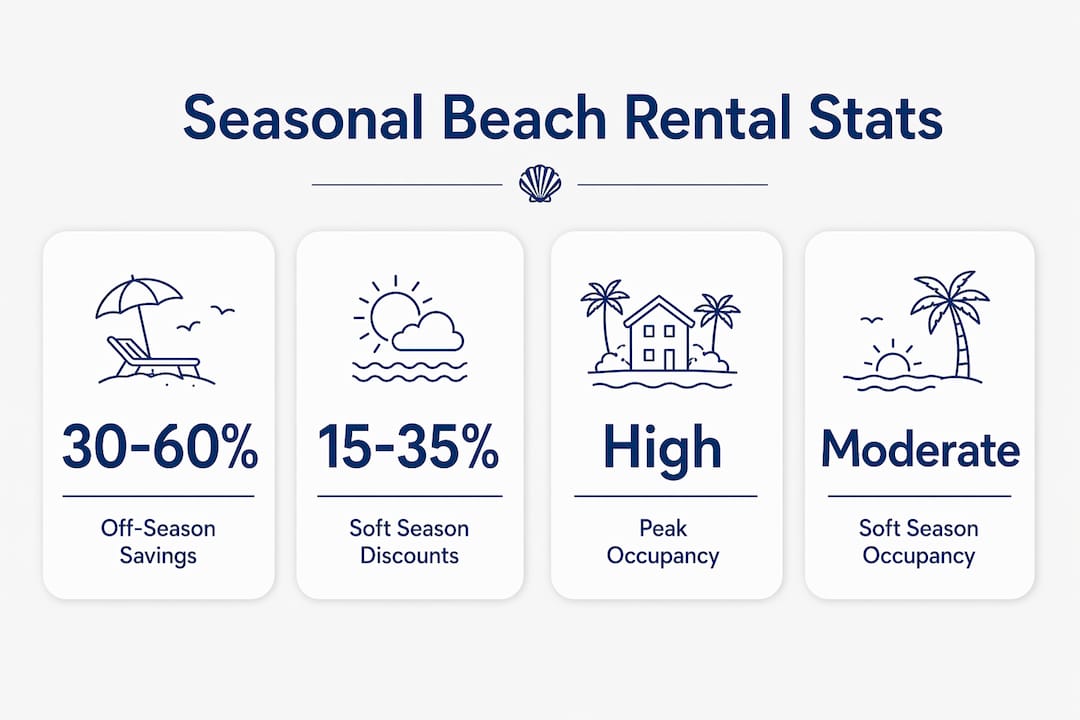
A soft season in beach rentals is the transitional period between peak and off-peak demand when nightly rates and occupancy sit at moderate levels, offering travelers a genuine middle ground between summer crowds and winter closures. The industry term for this period is the shoulder season, and understanding it gives you a real planning edge. Shoulder season for most beach markets falls in april–may and september–october, with revenue per available rental (RevPAR) running 15–35% below peak but 30–50% above off-season floors. That gap is where the value lives. Captiva-island sees this pattern clearly each year, and knowing how to read it can shape a smarter, more relaxed vacation.
What is a soft season in beach rentals, and when does it happen?
The soft season, or shoulder season, is the window on either side of peak demand when a beach destination is neither fully booked nor nearly empty. For most coastal markets in the United States, that means spring (april through may) and fall (september through october). These months sit between the summer rush and the quiet winter stretch that most travelers call the off-season.
The exact timing shifts by location. A Gulf Coast destination like Captiva Island, Florida, experiences its shoulder season differently than a New England beach town. Florida’s mild winters push the true off-season later, while northern beaches may see their soft period begin as early as late august. Climate, school calendars, and regional holidays all move the boundaries.

Weather is the most direct driver. When temperatures stay comfortable but unpredictable, families with school-age children tend to stay home, and demand softens naturally. That drop in family travel is what creates the pricing opportunity for flexible adults.
Local events also shape the edges of the soft season. A major fishing tournament, an art festival, or a holiday weekend can spike demand inside what would otherwise be a quiet month. The soft season is a general pattern, not a guaranteed discount on any given week.
Spring shoulder season: april and may, after spring break crowds thin and before summer bookings fill the calendar
Fall shoulder season: september and october, after Labor Day and before Thanksgiving travel picks up
Regional variation: Florida Gulf Coast soft periods often extend into november, while mid-Atlantic beaches may soften as early as late august
Event overlays: local events can spike prices during otherwise soft weeks, so always check the local calendar before assuming a discount
How do pricing and occupancy behave during the soft season?
Soft season pricing sits in a deliberate middle zone. Rental operators set rates with gradual slopes between peak and off-season levels, a practice that shoulder season pricing strategy research confirms as the most effective way to capture demand without leaving revenue on the table. You pay less than you would in July, but you are not getting the deep discounts of a January stay.
Occupancy during the shoulder season reflects that balance. Peak summer months on popular beach destinations can push occupancy to 80–90% or higher. Off-season months see that figure fall sharply. The soft season holds a middle range, which means you have real choice in properties without the frantic booking pressure of peak weeks.
The table below shows how the three seasons compare across the key metrics travelers care about most.
Metric | Peak season | Soft (shoulder) season | Off-season |
Typical months | June–August | April–May, September–October | November–March |
Occupancy level | Very high (80–90%+) | Moderate | Low (20–40% of peak) |
Nightly rate vs. peak | Baseline | 15–35% below peak | 30–60% below peak |
Service availability | Full | Mostly full | Reduced |
Booking lead time needed | Weeks to months | Days to weeks | Flexible |
Off-season nightly rates can drop 30–60% below peak depending on location. That sounds appealing, but the trade-off is real: fewer restaurants open, reduced beach services, and limited local activities.
Pro Tip: Book a soft season stay of five nights or more. Longer stays attract the best rate adjustments, and long-stay discounts of 20–50% are common during shoulder and off-peak windows.
One thing travelers often miss: rental rates never fall below the property’s operating cost floor. Operators will not price below cleaning fees and fixed costs even in the slowest weeks. That cost floor principle means you should not expect a luxury beachfront home to rent for a budget motel rate, no matter the season.
What are the advantages and drawbacks of booking during the soft season?
The soft season rewards travelers who have flexibility. Retirees, remote workers, and couples without school-age children are the biggest beneficiaries. They can choose dates based on value rather than the school calendar, and the soft season delivers on both price and experience.
The advantages are real and consistent across beach markets:
Lower nightly rates without the severe service reductions that come with deep off-season stays
Better property availability, giving you access to homes that would be booked months in advance during peak weeks
Fewer crowds on the beach, at restaurants, and on the water, which changes the feel of a vacation entirely
Higher service quality per dollar, since staff-to-guest ratios improve when occupancy drops
Shoulder season value is recognized by experienced travelers as the best balance of cost and experience
The drawbacks are worth knowing before you book. Some local restaurants and water sports operators reduce their hours or close entirely during slower months. A beach town that feels alive in July can feel quieter than expected in october. That quiet is peaceful to some travelers and disappointing to others.
Pro Tip: Call ahead to two or three local restaurants and activity providers before finalizing your dates. Verifying amenity availability takes ten minutes and prevents the most common soft season disappointment.
The soft season also suits travelers who want a more personal experience. When the beach is less crowded, you notice things you would miss in peak season: the color of the water at low tide, the sound of the shore without competing noise, the ease of getting a table at your favorite spot. That shift in pace is the real product of a shoulder season trip.
How to find the best value during beach rental off-peak periods
Getting the most from a soft season stay requires a few deliberate moves. The pricing is better, but it is not automatic. You need to approach booking with the same intention you would bring to any value-focused decision.
Search with flexible dates. Soft season rates are not uniform across every week. Shifting your arrival by three or four days can move you from a micro-peak caused by a local event into a genuinely quiet window with better pricing.
Prioritize longer stays. A five-night stay almost always unlocks better per-night pricing than a three-night weekend. Operators price longer stays more aggressively to fill their calendars during moderate-demand periods.
Check the local event calendar. A local event overlay can turn a soft week into a near-peak one. Art festivals, fishing tournaments, and regional holidays create demand spikes that push rates up even in october or april.
Book earlier than you think you need to. Soft season does not mean unlimited availability. The best properties at Captiva-island still fill up, especially for the most desirable weeks in may and september. Waiting until the last minute narrows your choices.
Read the peak vs. shoulder season patterns for your specific destination. What applies to a New England beach town may not apply to a Florida Gulf Coast island. Local knowledge matters more than general rules.
Factor in the full cost. A lower nightly rate with a high cleaning fee and limited nearby dining can cost more in practice than a slightly higher rate in a location where everything is open and walkable. Look at the total trip cost, not just the nightly number.
The fall beach vacation value on Captiva Island is a good example of how this plays out in practice. September and october bring warm water, lighter crowds, and some of the most pleasant weather of the year on the Gulf Coast.
Key Takeaways
The soft season is the single best window for travelers who want a real beach experience without peak season prices or off-season limitations.
Point | Details |
Soft season timing | Spring (april–may) and fall (september–october) are the core shoulder months for most beach markets. |
Pricing advantage | RevPAR runs 15–35% below peak but 30–50% above off-season floors, giving real savings without service trade-offs. |
Service availability | Amenities and local businesses stay mostly open during the soft season, unlike the deep off-season. |
Booking strategy | Longer stays and flexible dates unlock the best soft season rates; always check local event calendars first. |
Cost floor reality | Rental rates never drop below operating costs, so expect moderate discounts rather than dramatic price cuts. |
Why the soft season is the most underrated time to visit a beach
Most travelers I talk to think in two modes: peak season or off-season. They either book in July because that is what they have always done, or they wait for a January deal and accept that half the town is closed. The soft season sits between those two extremes, and it is consistently the better choice for anyone with a flexible schedule.
What surprises people most is how little they give up. The beach is still warm. The water is still clear. The rental home still has everything it had in July. What changes is the pace. You can actually hear the Gulf in the morning. You get a table without a wait. The property you wanted in peak season is suddenly available, and it costs noticeably less.
The rise of remote work has made this even more relevant. Travelers who can work from anywhere are increasingly choosing a ten-day soft season stay over a seven-day peak week. They get more time, more space, and a lower total cost. That shift is real, and it is changing how smart travelers think about beach vacation timing.
My honest advice: stop treating the shoulder season as a consolation prize. It is not what you settle for when peak season is too expensive. It is what you choose when you want the beach to feel like it belongs to you.
— Josh
Soft season rentals on Captiva Island worth considering
Captiva Island offers some of its most appealing rental conditions during the shoulder months. The Gulf water stays warm well into october, the beaches are quieter, and the island’s natural beauty is fully on display without the summer crowds.

Captiva-island lists a full range of properties available outside peak season, from private beachfront homes with direct Gulf access to spacious homes with pools that make a longer stay genuinely comfortable. The team at American Realty of Captiva has over 30 years of local experience and can help you identify the weeks that offer the best combination of weather, value, and availability. Browse all available Captiva Island rentals and filter by your preferred dates to see what the soft season looks like in practice.
FAQ
What months are considered the soft season for beach rentals?
The soft season for most beach rentals covers april–may and september–october. These shoulder months sit between peak summer demand and the quieter off-season that typically runs november through march.
How much cheaper are beach rentals during the soft season?
Soft season rates run roughly 15–35% below peak pricing. That is a meaningful saving, though rates never drop below the property’s operating cost floor, so expect moderate rather than dramatic discounts.
Is the soft season the same as the off-season?
No. The soft season (shoulder season) is a distinct middle period with moderate demand and mostly open local services. The off-season sees occupancy fall to 20–40% of peak levels and often brings reduced restaurant and activity availability.
Can prices spike during the soft season?
Yes. Local events like festivals, tournaments, or regional holidays can push rates up during otherwise soft weeks. Always check the local event calendar before assuming a quiet period will deliver lower prices.
Is it worth booking a beach rental during the soft season?
For flexible travelers, the soft season delivers the best balance of price, availability, and experience. You get lower rates than peak season and better services than the off-season, making it the most practical choice for anyone not tied to school-year schedules.
Recommended
Comments