
What Is Peak Beach Rental Season? A Traveler's Guide


Peak beach rental season is defined as the period when coastal vacation property demand, occupancy rates, and nightly prices reach their highest levels of the year. For most North American beach markets, that window runs from late may through early september. During this stretch, occupancy rates exceed 90% for prime properties in destinations like the Outer Banks and 30A. That kind of demand compression means fewer choices, higher prices, and less flexibility for travelers who wait too long to plan. Understanding what drives this season gives you a real advantage when booking your next beach vacation.
What is peak beach rental season and when does it happen?
Peak beach rental season is the industry term for the concentrated window of maximum demand in coastal rental markets. In North America, that window aligns tightly with summer school breaks, federal holidays, and warm weather patterns. The season typically opens around Memorial Day weekend and closes after Labor Day weekend, covering roughly 14 weeks of intense activity.
Three holidays anchor the season and shape its rhythm:
Memorial Day weekend signals the official start of summer and triggers the first major booking rush for beach houses.
Independence Day (July 4th) represents the single most competitive week of the year. Properties in popular markets sell out months in advance.
Labor Day weekend closes the season with one final surge before school resumes and demand drops sharply.
Regional variation matters more than most travelers realize. Northern beaches peak in summer months while tropical destinations like South Florida and the Florida Keys can see their busiest periods during the northern winter. Captiva Island, Florida, benefits from a long warm season, which extends desirable rental conditions well beyond the traditional summer window. Local events, fishing tournaments, and wildlife seasons also shift demand in ways that national calendars do not capture.
Pro Tip: Research the specific destination you are targeting, not just the general season. A beach town hosting a major festival in october can see peak-level pricing during what looks like off-season on paper.

How do occupancy, pricing, and rental income shift during peak season?
The financial reality of peak season is more concentrated than most travelers expect. Roughly 55% to 60% of total annual rental income for a typical beach property is generated during that 14-week summer window. Property owners and managers structure their entire year around protecting those weeks.
Nightly rates during peak season run approximately 20% higher than shoulder season prices. That premium reflects pure supply and demand. When every desirable property within a mile of the water is booked, owners have no reason to discount.
Factor | Peak Season | Shoulder Season |
Occupancy rate | Above 90% | 60%–75% |
Nightly rate premium | ~20% above shoulder | Baseline pricing |
Minimum stay | 7 nights (weekly) | 3–5 nights |
Cancellation policy | Strict, often non-refundable | More flexible |
Cleaning fees | Standard, non-negotiable | Sometimes waived or reduced |
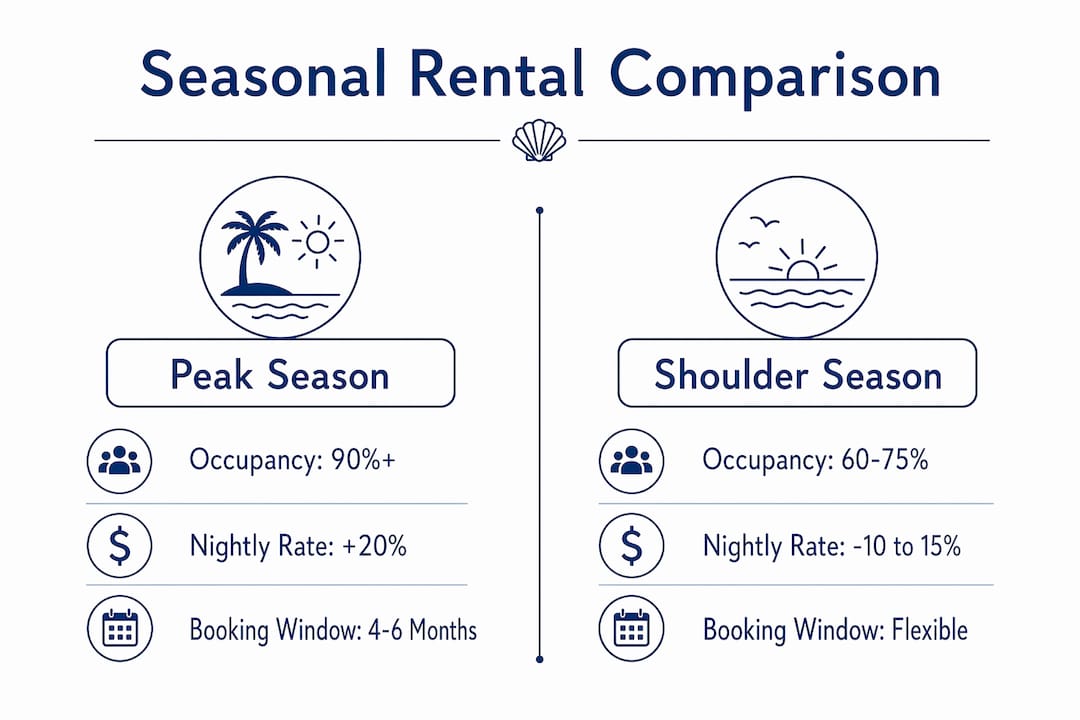
Beyond the nightly rate, non-negotiable fees and stricter policies during peak months add meaningfully to the total cost. Cleaning fees, mandatory travel insurance requirements, and rigid cancellation terms are standard practice. Many properties in markets like the Outer Banks require Saturday-to-Saturday rentals with no exceptions during the core summer weeks. That structure limits flexibility but maximizes occupancy for owners.
Pro Tip: When comparing peak season rentals, calculate the full cost including cleaning fees, taxes, and any required insurance before comparing properties. The nightly rate alone rarely tells the complete story.
What is the best time to book beach rentals for peak season?
Booking timing is the single most controllable factor in your peak season experience. The right window protects your choice of property, your budget, and your peace of mind.
Book 4 to 6 months ahead for most travelers. This window gives you access to the widest selection of available properties at reasonable prices. A family planning a july trip should have a rental secured by january or february at the latest.
Book 6 to 12 months ahead for larger homes and premium weeks. Larger multi-bedroom properties suitable for extended families become scarce quickly. If you need five or more bedrooms for a reunion or group trip, start searching the prior fall.
Avoid last-minute searches during peak weeks. Last-minute booking strategies may work during shoulder or off-season, but they rarely succeed during peak summer weeks. Inventory is sharply reduced and pricing is inflated. What remains available is often what other travelers passed on.
Lock in your dates before comparing properties. Groups that spend weeks debating dates lose their preferred properties to faster-moving renters. Agree on the week first, then choose the home.
Watch for early-bird incentives. Some property managers offer modest discounts for reservations made well in advance. Captiva-island, for example, features direct booking incentives that reward early planners with better terms. Checking the Captiva Island rental calendar early in the year gives you the clearest picture of what is still available.
The cost of waiting is real. Rental rates can rise 40% to 65% for late-stage bookings compared to reservations made months earlier. That gap often exceeds the cost of a round-trip flight for a family of four.
What are shoulder and off-season beach rental times?
Shoulder season occupies the weeks just outside the peak window. For most North American coastal markets, that means may and september. Off-season covers the remaining months, typically october through april, with some variation by region.
Shoulder season rates run 10% to 15% below peak pricing, and the savings compound when you factor in more flexible minimum stay requirements and relaxed cancellation policies. That combination gives travelers genuine breathing room that peak season simply does not offer.
The trade-offs are real but manageable:
Weather: September on most Gulf Coast beaches is still warm and sunny. May can be slightly cooler in northern markets but is often ideal in Florida.
Amenities: Some seasonal restaurants and water sports operators close after Labor Day. Research which local businesses stay open year-round before committing to a fall trip.
Crowds: Shoulder season crowds are noticeably thinner. You can walk the beach in the morning without navigating around umbrellas and chairs.
School schedules: Families with school-age children face the biggest constraint. Shoulder season works best for couples, retirees, and remote workers with schedule flexibility.
For travelers who value a fall beach vacation and are not tied to school calendars, shoulder season delivers most of the experience at a fraction of the cost. Captiva Island in september and october is genuinely beautiful. The water is warm, the sunsets are unhurried, and the island feels like it belongs to you.
Key Takeaways
Peak beach rental season runs from late may through early september, concentrates over 55% of annual rental income into 14 weeks, and rewards travelers who book early with better selection and lower total costs.
Point | Details |
Peak season window | Late may through early september in most North American coastal markets. |
Occupancy pressure | Prime properties exceed 90% occupancy, leaving little room for late planners. |
Revenue concentration | 55%–60% of annual rental income occurs in roughly 14 peak weeks. |
Optimal booking window | Book 4–6 months ahead for most trips; 6–12 months for large homes or top weeks. |
Shoulder season value | May and september offer rates 10%–15% lower with more flexible terms. |
Why I think most travelers misread peak season entirely
Most travelers treat peak beach rental season as a fixed calendar event. They assume that if they start looking in april for a july trip, they are being responsible. They are not. They are already late.
I have watched families spend weeks debating which week to go, which beach to choose, and which house has the best pool. By the time they commit, the best properties are gone. What remains is either overpriced or compromised in some way they did not expect. That experience is avoidable, and it almost always comes down to one thing: underestimating how early serious renters move.
The other mistake I see constantly is treating shoulder season as a consolation prize. It is not. September on Captiva Island is one of the most peaceful, beautiful times of year on the Gulf Coast. The water temperature is still perfect, the light in the late afternoon is extraordinary, and you can actually hear the waves from your porch. Families who discover shoulder season rarely go back to fighting peak crowds.
The deeper issue is that peak season is not just about price. It is about operational structure. Weekly turnovers, strict check-in days, and non-refundable deposits are not arbitrary rules. They are the mechanics of a market operating at full capacity. Understanding that structure helps you work with it instead of against it. Read up on beachfront rental realities before you book, and you will arrive with the right expectations.
My honest advice: decide your destination first, research its specific peak calendar, and book before the new year if you want july or august. For everyone else, september is waiting for you with open arms and lower rates.
— Josh
Captiva-island rentals for your peak season plans
Captiva Island sits at the southern tip of a barrier island chain on Florida’s Gulf Coast, and it earns its reputation every summer. The water is calm and clear, the beaches are wide and quiet, and the homes available through Captiva-island range from intimate bayfront cottages to sprawling beachfront estates with private pools.
Peak season on Captiva fills quickly, and the most desirable beachfront homes go first. Captiva-island’s team at American Realty of Captiva has over 30 years of local experience and can help you match the right property to your group size, budget, and preferred dates. Browse the full collection of available rentals and secure your dates before the summer calendar closes. Early planners get the best homes. It really is that simple.
FAQ
What months are considered peak beach rental season?
Peak beach rental season in North American coastal markets runs from late may through early september, anchored by Memorial Day, July 4th, and Labor Day weekends.
How far in advance should I book a beach rental for peak season?
Most travelers should book 4 to 6 months ahead. For large homes or premium holiday weeks, booking 6 to 12 months in advance is the safer approach.
Why are beach rental prices so much higher in summer?
Demand far exceeds supply during peak weeks, pushing occupancy above 90% for prime properties. Nightly rates run roughly 20% higher than shoulder season, and additional fees compound the total cost.
Is it worth booking a beach rental in shoulder season instead?
Shoulder season months like may and september offer rates 10% to 15% below peak pricing, more flexible cancellation terms, and thinner crowds. For travelers without school-schedule constraints, shoulder season delivers strong value.
What happens if I try to book a beach rental last minute in peak season?
Last-minute availability during peak summer weeks is severely limited. Rates for remaining properties can run 40% to 65% higher than early-year bookings, and the best homes are already gone.
Recommended
Comments