
Off-Season Beach Rental Discounts: Save 30–60% Now


An off-season beach rental discount is a price reduction on vacation rentals during a destination’s low-demand period, when rates drop 30–60% below peak season prices. Occupancy at coastal properties falls to 20–50% during these windows, which means property owners actively lower rates to fill empty homes. The result is real, meaningful savings for travelers who are flexible with their timing. Whether you are eyeing a quiet week on a Florida Gulf Coast beach or a longer stay as a remote worker, understanding how these discounts work puts you in a much stronger position to book well and spend less.
What is an off-season beach rental discount, and when does it apply?
Off-season is the industry term for the low-demand period at a given destination. The specific months vary by location, but for most temperate coastal markets in the United States, the off-season runs from november through february. Florida Gulf Coast destinations like Captiva Island see a different pattern: summer heat and humidity push some travelers away, creating a softer shoulder period in late summer, while the true off-season for some northern beach towns falls squarely in winter.
Off-season definitions differ by market. A tropical beach destination may define its off-season around a rainy season, while a New England coastal town goes quiet after Labor Day. This distinction matters because assuming a standard calendar window can cause you to miss the actual discount period at your chosen destination. Research the local market before you book.
Shoulder seasons, the weeks just before and after peak demand, offer a middle ground. Discounts in shoulder periods tend to be moderate rather than dramatic, but the weather is often more reliable and local businesses stay open. Late spring and early fall are classic shoulder windows for many American beach markets.
Local events also shift the definition of off-season. A major festival or sports event can spike prices even in a traditionally slow month. Checking the local events calendar before you book protects you from paying peak rates during what should be a discount period.
What types of discounts make up off-season rental deals?
Off-season pricing is not a single number. It is a layered structure of different discount types that stack depending on how and when you book.
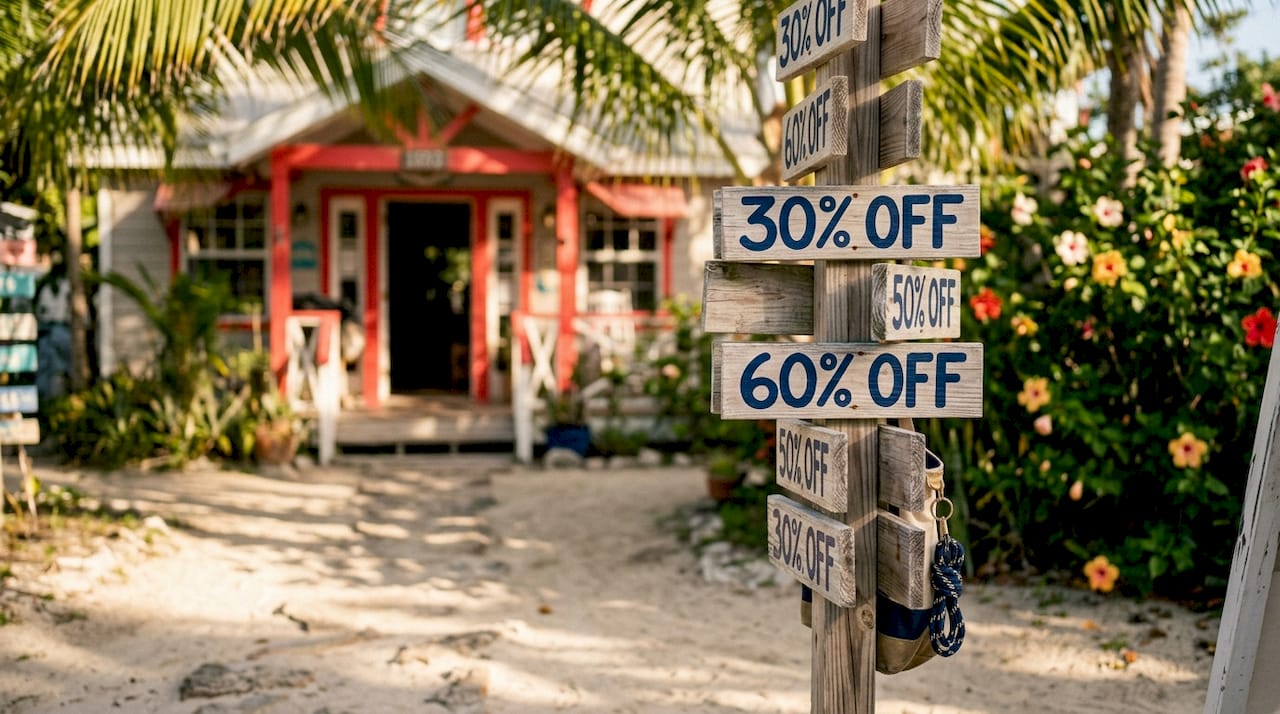
The most common form is a flat percentage reduction off the peak nightly rate, typically in the 30–60% range. A home that rents for $800 per night in july might list for $320–$560 per night in january. That gap is significant enough to change what kind of property you can afford.
Extended stay discounts add another layer. Weekly discounts run 10–15% and monthly discounts can reach 25–40% on top of the already reduced off-season base rate. A traveler staying 30 days in an off-season rental can realistically access savings that compound well beyond the headline nightly rate.
Last-minute flash discounts are a third category. Property managers who have open inventory close to the check-in date often drop rates by 10–15% for last-minute bookings to avoid a vacant week. This approach rewards flexible travelers who can commit on short notice.
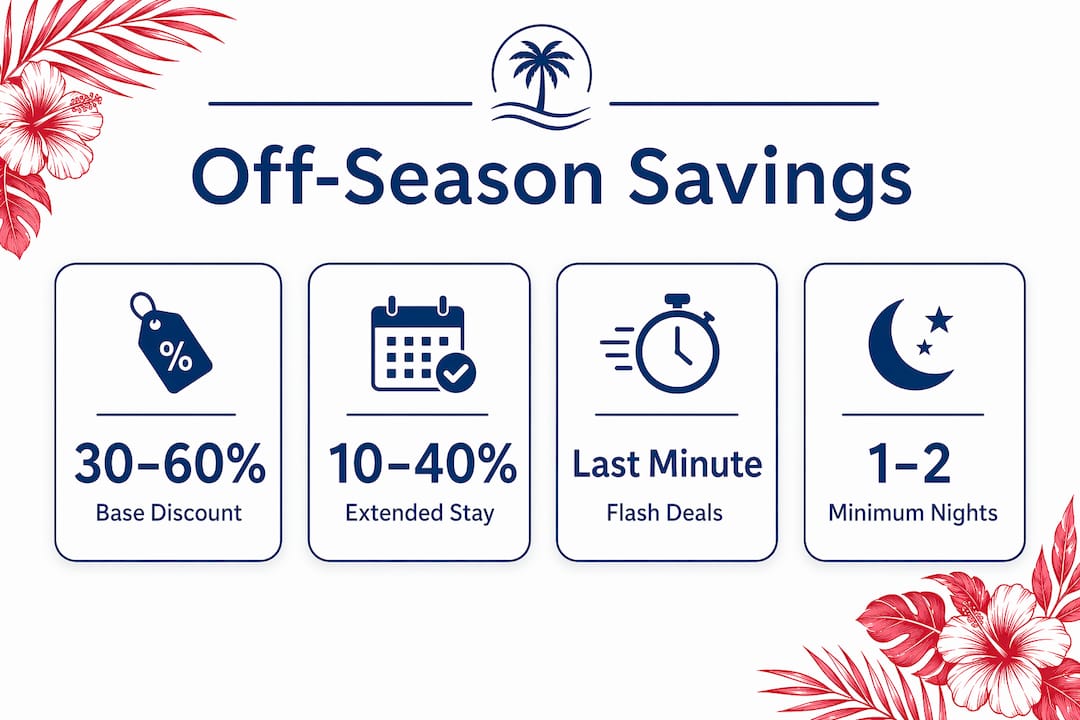
Minimum stay requirements also change. During peak season, many beachfront homes require 5–7 night minimums. Off-season minimums often drop to 1–2 nights, which makes a quick long weekend at the beach genuinely affordable rather than a logistical stretch.
Snowbird packages and remote worker deals are a growing category. Some property managers offer long-term leases of 90 or more days that may qualify for tax exemptions on short-term occupancy taxes, adding financial value beyond the nightly rate reduction.
Pro Tip: Ask the property manager directly about monthly rates and any tax treatment for stays over 90 days. These details rarely appear on the listing page but can represent hundreds of dollars in additional savings.
What are the benefits and trade-offs of booking off-season?
The financial case for off-season travel is clear. A 30–60% reduction in nightly rates means you can either spend less on the same property or afford a significantly nicer home for your usual budget. A family that normally books a modest two-bedroom cottage can step into a beachfront home with a private pool for the same total spend during the off-season.
Beyond price, the experience itself changes. Beaches are quieter. Parking is easy. You can walk into a restaurant without a reservation. For travelers who find peak-season crowds exhausting, the off-season delivers a version of the beach vacation that feels more like the brochure and less like a theme park.
The trade-offs are real and worth naming honestly. Fewer restaurants and attractions stay open during low-demand months, and water temperatures are cooler. If your idea of a beach vacation centers on swimming and a full lineup of dining options, a january trip to a temperate coastal town may disappoint. Weather risk is also higher. Rain and wind are more common in off-peak months at many destinations.
A low nightly rate is only a true value if it fits your goals. Matching the off-season experience to what you actually want from a beach trip is the real skill.
Property maintenance is another factor. Off-season is when managers schedule repairs and upgrades, which is good for the long-term quality of the property but potentially disruptive if work is happening next door or on the property itself. Always ask what maintenance is planned during your stay before you confirm a booking.
Pro Tip: Call the property manager and ask two specific questions: “Is any construction or maintenance scheduled near this property during my dates?” and “Which local restaurants stay open year-round?” Those two answers tell you most of what you need to know.
How can travelers maximize savings on off-season beach rentals?
The single most effective move is to book directly with the owner or property manager. Rental platforms charge service fees that can add 12–15% to the total cost. Booking direct eliminates that fee entirely, and it opens the door to negotiation on rate, minimum stay, and extras like early check-in.
Shoulder seasons deserve serious attention. The weeks from late september through october and from mid-april through may offer a balance of reduced rates and pleasant weather at many American coastal destinations. You get meaningful beach rental savings without the full trade-offs of deep winter travel.
Last-minute booking is a legitimate strategy for travelers with flexibility. Monitoring open inventory in the two weeks before a desired check-in date regularly surfaces flash discounts. A dedicated article on last-minute rental deals walks through exactly how this window works and what to watch for.
Extended stays amplify every other discount. Combining an off-season base rate with a monthly discount and a direct booking arrangement produces the deepest savings available in the vacation rental market. If you can work remotely or have a flexible schedule, a 30-day off-season stay at a Gulf Coast property can cost less per night than a budget hotel room in a major city.
Research the destination’s specific off-season calendar before you commit. Market variation means the best discount window at one beach may be entirely different from another. Captiva Island, for example, has its own seasonal rhythm shaped by Florida’s climate and the preferences of its typical visitor. Understanding that rhythm helps you time your booking for maximum value.
Pro Tip: For family beach house bookings, ask about multi-week packages. Property managers often create custom rates for families who want two or three weeks rather than a standard seven-night stay.
Key Takeaways
Off-season beach rental discounts deliver the most value when travelers match their timing, stay length, and booking method to the specific market they are targeting.
Point | Details |
Core discount range | Off-season rates run 30–60% below peak, with occupancy falling to 20–50% at most coastal properties. |
Extended stays multiply savings | Monthly discounts of 25–40% stack on top of base off-season rates for the deepest total savings. |
Book direct to save more | Bypassing rental platforms removes service fees and opens room to negotiate rate and terms. |
Match destination to season | Off-season definitions vary by market; research local timing rather than assuming standard calendar months. |
Verify before you book | Confirm planned maintenance and which amenities stay open to avoid surprises during your stay. |
Why off-season travel rewards the traveler who pays attention
The travelers who get the most out of off-season beach rentals are not just chasing the lowest number on a listing page. They are reading the destination. They know which months bring reliable weather even outside peak season. They understand that a quieter beach is not a lesser beach. It is often a better one.
I have seen travelers book the cheapest available week and arrive to find a construction crew working on the neighboring property, the best local seafood restaurant closed until march, and water too cold for anyone in the family to swim. The rate was genuinely low. The experience was not what they wanted.
The off-season works best when you treat it as a deliberate choice rather than a default fallback. Pick a destination where the off-season climate still suits your travel style. Captiva Island in the fall, for instance, offers warm Gulf water well into november, far fewer crowds than winter or spring, and the kind of unhurried pace that makes a beach vacation feel like an actual rest. That combination is hard to find at peak rates.
Verify the details, negotiate directly, and stay longer than you think you need to. The savings compound with every extra night, and the experience of having a beautiful stretch of beach nearly to yourself is something peak-season travelers simply do not get.
— Josh
Captiva-island off-season rentals worth booking now

Captiva-island, operated by American Realty of Captiva with over 30 years of local expertise, lists a full range of vacation rentals available during the off-season at reduced rates. The collection includes private beachfront homes, properties with pools, and family-sized houses that become genuinely accessible when peak-season demand fades. Booking directly with the Captiva-island team means no platform service fees and a conversation with people who know the island’s seasonal calendar well. If you want to experience Captiva Island at its most tranquil, the off-season window is the right time to look.
FAQ
What is the typical discount for an off-season beach rental?
Off-season beach rental rates are typically 30–60% lower than peak season prices. Occupancy at coastal properties drops to 20–50% during these periods, which drives property managers to reduce rates to attract bookings.
When is the off-season for beach rentals in Florida?
Florida’s Gulf Coast off-season generally falls in late summer, with a softer shoulder period from august through early october. Winter months attract snowbirds, so true low-demand windows vary by specific destination and property type.
Do off-season rentals have shorter minimum stay requirements?
Off-season minimum stays often drop to 1–2 nights compared to the 5–7 night minimums common during peak season. This makes short weekend trips to the beach far more affordable and practical.
Is it better to book early or last-minute for off-season deals?
Both strategies work for different travelers. Booking early secures your preferred property at the base off-season rate. Last-minute bookings in the two weeks before check-in can yield flash discounts of 10–15% on top of already reduced rates.
Are there extra savings for longer off-season stays?
Extended stay discounts add meaningful value. Weekly discounts typically run 10–15%, while monthly stays can qualify for discounts of 25–40% on top of the base off-season rate, making longer trips the most cost-effective option.
Recommended
Comments