
Why Luxury Beachfront Commands a Premium Price

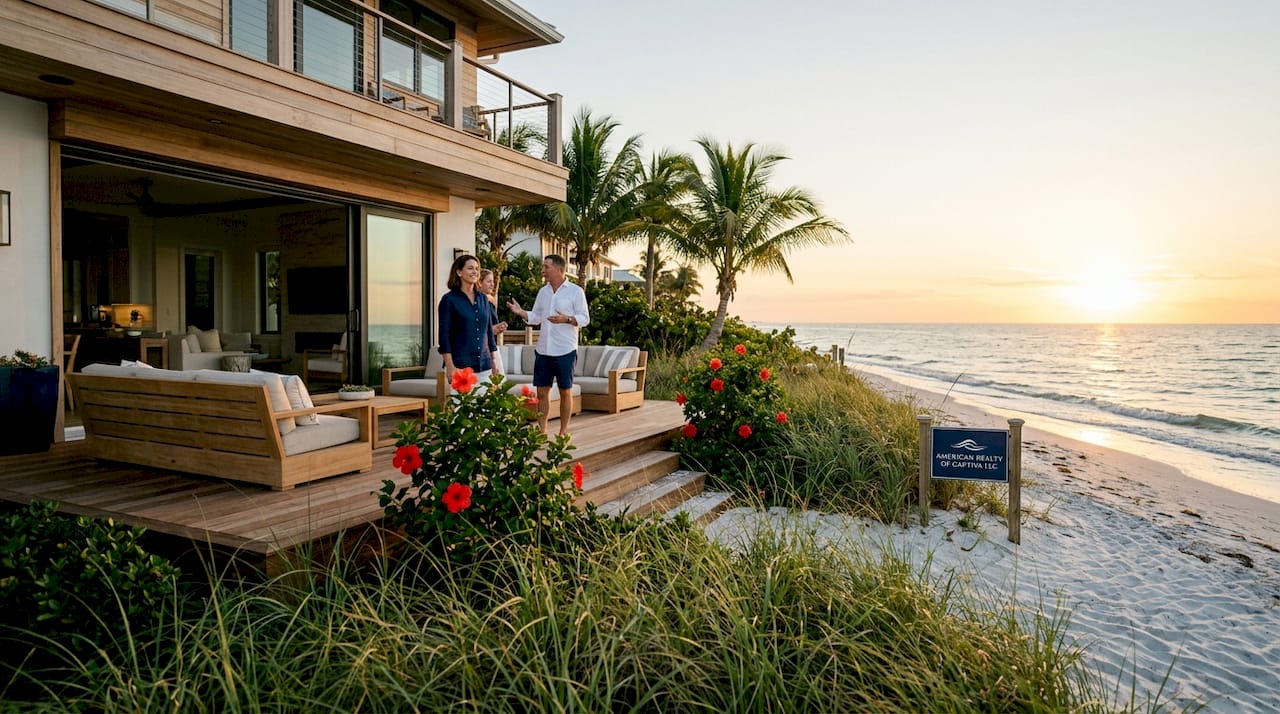
Luxury beachfront property is defined by its direct access to a finite stretch of coastline that no amount of capital can replicate or expand. That scarcity is the single most powerful reason why luxury beachfront commands premium price levels that consistently outpace inland and even bayfront alternatives. According to Realtor.com’s 2026 market data, homes on the ocean are priced roughly 29% higher than landlocked homes in the same area. That gap is not a quirk of the market. It reflects a convergence of geographic scarcity, lifestyle value, coastal resilience, and location prestige that together produce a pricing structure unlike any other real estate category.
Why luxury beachfront commands premium price: the scarcity factor
The supply of true beachfront land is fixed. Coastal regulations across Florida, Hawaii, and California restrict new development within protected shoreline zones, meaning the inventory of genuine oceanfront parcels does not grow to meet demand. When supply is capped and buyer interest intensifies, price is the only variable that adjusts. This is the foundational pricing mechanism for every luxury beachfront market in the country.
Affluent buyers from Miami to Malibu compete for the same narrow band of properties, and that competition is not softening. Douglas Elliman analysts note that luxury beachfront homes appreciate higher and faster than inland properties despite the additional insurance and maintenance costs that come with coastal ownership. The implication for investors is clear: scarcity protects value over time in a way that no amenity package alone can replicate.
Florida’s Gulf Coast illustrates this dynamic with particular clarity. On Captiva Island, for example, the number of true beachfront parcels is genuinely limited by the island’s geography. Buyers cannot simply wait for new inventory to appear. They either pay the market rate or they step back from the beachfront category entirely. That reality keeps prices firm even during broader market corrections.
The 29% premium cited by Realtor.com is a national average, which means some markets exceed it significantly. High-profile beachfronts in South Florida and Hawaii routinely command premiums well above that figure. Understanding why beachfront over inland is not just a lifestyle preference but a structural pricing reality is the starting point for any serious investment analysis.
What direct beach access and luxury amenities add to the price
Step off the back deck of a true beachfront home and your feet are in the sand. That immediacy is not a small thing. It shapes how guests experience a property, how long they stay, and how much they are willing to pay per night. The unobstructed ocean horizon view, the sound of waves at night, the ability to walk to the water at sunrise without crossing a road or a parking lot: these are the experiential drivers that separate beachfront from every other coastal category.
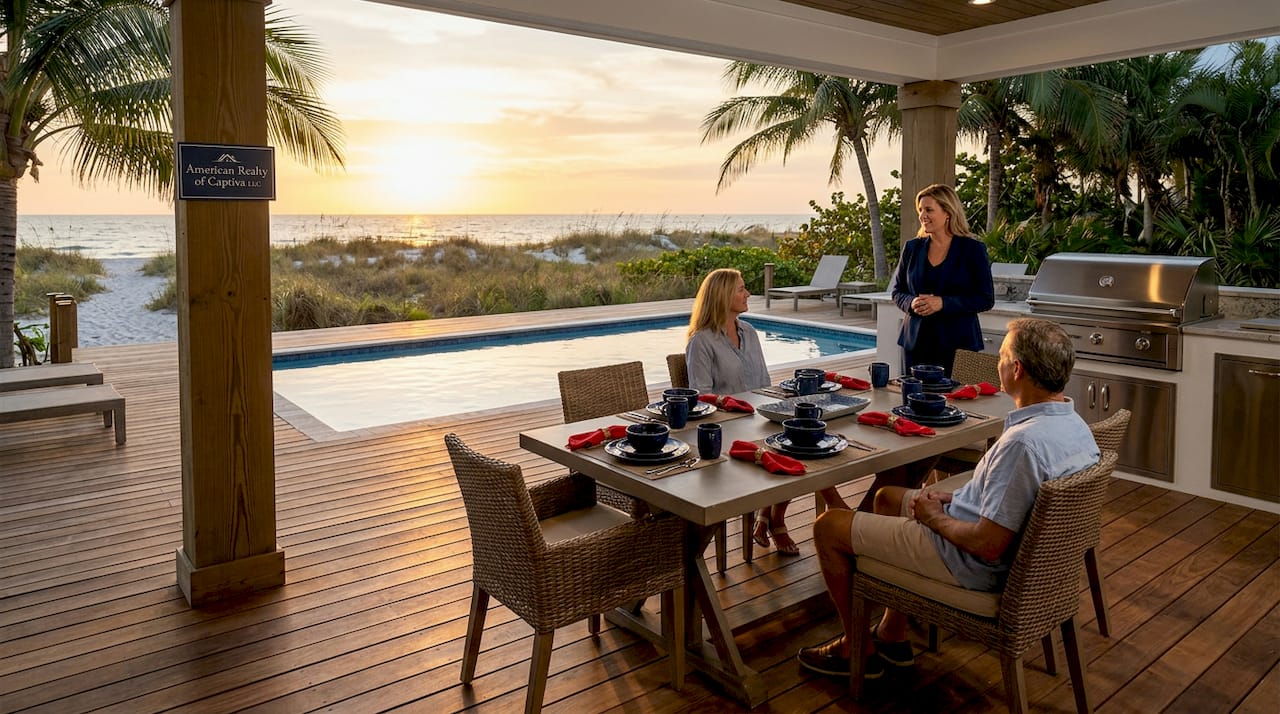
Luxury amenities compound that base value. Private pools, expansive screened lanais, chef-grade kitchens, and upscale outdoor living spaces are standard expectations in the premium beachfront segment. Guests and buyers in this category are not comparing a beachfront home to a hotel room. They are comparing it to other beachfront homes, and the one with the private pool and the direct sand access wins the booking. Understanding how a luxury beach rental differs from a hotel helps clarify why guests pay a significant premium for the privacy and space that only a standalone beachfront home provides.
The table below shows how beachfront and bayfront properties compare across the key value drivers that affect pricing decisions.
Value driver | Beachfront | Bayfront |
Sand and surf access | Immediate, direct | Requires travel or boat |
Views | Open ocean horizon | Calm bay, marina, or mangrove |
Privacy | High, especially on private islands | Moderate, varies by lot |
Rental demand | Peak season premium rates | Steady, calmer guest profile |
Price premium | Higher vs. inland average | Moderate vs. inland average |
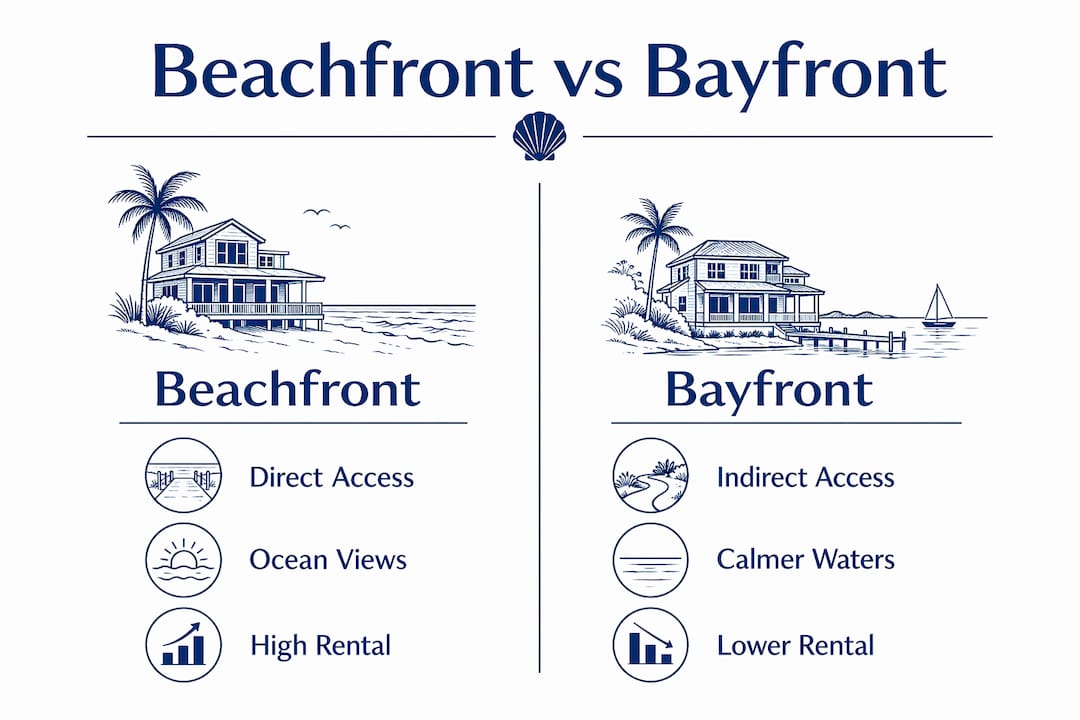
Rental income potential is a meaningful part of the investment case. Beachfront homes in top Florida markets generate peak-season rates that bayfront or inland luxury homes cannot match. That income stream, when modeled over a five to ten year hold period, often justifies the higher acquisition cost. Luxury rental pricing in beachfront markets follows a structure that rewards direct access and premium amenities with measurably higher nightly rates.
Pro Tip: When evaluating a beachfront rental investment, calculate the premium nightly rate differential between beachfront and bayfront comparables in the same market. On Captiva Island, that gap often covers a meaningful share of annual carrying costs.
How coastal resilience and flood risk shape beachfront pricing
Not every beachfront property carries the same price, and flood risk is one of the clearest reasons why. Properties in FEMA Special Flood Hazard Areas that were inundated during Hurricane Harvey experienced an additional 10.8% price penalty post-event relative to non-inundated properties in the same zone. That penalty compounds when buyers have access to detailed hazard scores. Springer Nature’s 2026 research shows that detailed flood risk data can produce value declines of up to 37% for inundated properties after a salient flood event. The market, in other words, prices risk with increasing precision as information becomes available.
This creates a meaningful distinction between beachfront properties that look similar on the surface. A home with a well-engineered seawall, elevated construction, and natural storm buffers holds its value through a weather event far better than an unprotected property two lots away. A 2026 study published in Scientific Reports found that optimal seawall heights in six U.S. coastal cities are approximately one to two meters for effective storm protection. That finding matters for pricing because buyers and their insurers are increasingly aware of it.
Nature-based defenses add measurable financial value as well. A UC Santa Cruz study published in the Review of Finance found that mangrove proximity in coastal Florida adds $20,000 to $40,000 of preserved value per $1 million home by reducing storm damage exposure. That is not an aesthetic benefit. It is a quantifiable risk mitigation premium that the market recognizes and prices accordingly.
Risk factor | Price impact | Source |
FEMA flood zone inundation post-Harvey | 10.8% additional penalty | Springer Nature 2026 |
Detailed hazard score disclosure post-event | Up to 37% value decline | Springer Nature 2026 |
Mangrove proximity (per $1M home) | +$20,000 to $40,000 preserved value | UC Santa Cruz 2025 |
Optimal seawall protection (1-2m) | Positive price stabilization | Scientific Reports 2026 |
Pro Tip: Before acquiring any beachfront property, request the full FEMA flood zone designation history and any available detailed hazard score reports. A property that has never been inundated in a named storm carries a materially different risk profile than one that has, even if both sit on the same beach.
Sea level rise is forcing urban coastal markets to invest in seawall construction over the coming decades. That investment will alter the protection profile and pricing of individual parcels in ways that are already beginning to show up in forward-looking valuations. Investors who factor resilience into their underwriting today are buying ahead of a market shift that most buyers are still ignoring.
How location and market dynamics create price differences within beachfront
Two beachfront homes can sit on the same stretch of coast and carry very different price tags. Location prestige, local market dynamics, and the specific character of a place all contribute to that variance. Miami Beach commands a different premium than a quieter Gulf Coast barrier island, not because one has better sand but because the social cachet, the density of amenity infrastructure, and the depth of the buyer pool differ substantially.
Beach addresses command premiums due to scarcity, resort energy, and immediate public beach access in ways that bayfront alternatives cannot fully replicate. That said, bayfront properties on Captiva Island offer their own distinct appeal: calm water, protected anchorage, and a quieter pace that attracts a specific type of buyer or renter. The bayfront homes category is not a consolation prize. It is a different product serving a different preference, and it prices accordingly.
Tourism intensity and rental demand shape pricing within the beachfront category as well. A beachfront property in a market with strong year-round visitor traffic generates more rental income than one in a seasonal-only destination. That income potential is capitalized into the purchase price, which is why top Florida Gulf Coast markets like Captiva Island sustain high valuations even as interest rates fluctuate. Florida’s vacation rental market has demonstrated consistent resilience through economic cycles, which gives investors confidence that rental income projections are grounded in durable demand rather than a single boom cycle.
Exclusivity is the final pricing lever. A beachfront home on a private island or a gated coastal community carries a premium that reflects the controlled access and the curated neighbor profile as much as the water view. Buyers in this segment are paying for what they will not have to share, and that privacy commands its own price.
Key takeaways
Luxury beachfront properties command premium prices because scarcity, direct access, resilience attributes, and location prestige combine to create a value proposition that no inland or bayfront alternative can fully replicate.
Point | Details |
Scarcity drives the base premium | Ocean homes average 29% above inland comparables, with top markets exceeding that figure significantly. |
Direct access and amenities justify rates | Immediate sand access and private pools produce rental income that inland properties cannot match. |
Resilience is a priced attribute | Seawalls, mangrove proximity, and flood zone history each carry measurable dollar impacts on value. |
Flood risk discounts are real and growing | Detailed hazard data can produce value declines of up to 37% for inundated properties post-event. |
Location prestige varies within the category | Market character, tourism depth, and exclusivity create meaningful price differences between beachfront parcels. |
What I’ve learned about pricing luxury beachfront after years on the water
After spending years working with beachfront properties on Captiva Island, I have come to believe that most buyers and investors underweight resilience and overweight aesthetics when they first approach this market. The view is real. The lifestyle is real. But the price you pay five years from now when you want to sell or refinance will be shaped far more by your flood zone designation, your seawall condition, and your storm history than by the quality of your sunset.
The investors who do best in this category are the ones who treat coastal resilience as a core underwriting variable, not an afterthought. They ask about FEMA designations before they ask about finishes. They look at the mangrove buffer and the seawall height before they look at the kitchen. That discipline does not make the purchase less enjoyable. It makes it more defensible.
I also think the 2026 market is rewarding specificity. Generic beachfront exposure is not enough. The properties that are holding value and generating strong rental returns are the ones that combine genuine direct access with premium amenities and a credible resilience story. On Captiva Island, that combination exists in a way that is genuinely rare. The island’s geography, its protected status, and the quality of its existing housing stock make it one of the more defensible beachfront markets in Florida for a buyer who is thinking beyond the next vacation season.
— Josh
Explore beachfront homes on Captiva Island with American Realty of Captiva
The factors that drive luxury beachfront pricing are not abstract when you are standing on the sand in front of a well-built Gulf Coast home with a private pool and an unobstructed water view. American Realty of Captiva has spent over 30 years matching discerning travelers and investors with properties that deliver exactly that combination.
Whether you are looking for a true beachfront vacation rental with direct sand access or want to explore the full range of premium Captiva listings, the team at American Realty of Captiva brings local expertise and a curated inventory that reflects the pricing principles covered in this article. Properties with private pools, direct beach access, and proven rental histories are available now. Reach out directly to discuss your goals and find the right fit for your 2026 plans.
FAQ
What makes luxury beachfront properties cost more than inland homes?
Luxury beachfront properties cost more because coastal land supply is fixed by geography and regulation, while demand from affluent buyers continues to grow. Realtor.com data shows ocean homes average 29% above inland comparables in the same area.
How does flood risk affect beachfront property values?
Flood risk produces measurable price penalties. Properties inundated during Hurricane Harvey in FEMA Special Flood Hazard Areas saw an additional 10.8% price decline relative to non-inundated properties, with detailed hazard scores pushing declines as high as 37%.
Do natural features like mangroves add financial value to beachfront homes?
Yes. UC Santa Cruz research found that mangrove proximity adds $20,000 to $40,000 of preserved value per $1 million home in coastal Florida by reducing storm damage exposure. That protection is priced into the market, not just appreciated aesthetically.
How does beachfront differ from bayfront in terms of pricing?
Beachfront properties command higher premiums than bayfront alternatives due to direct sand access, open ocean views, and stronger rental demand. Bayfront homes offer calmer water and privacy but do not carry the same scarcity premium or peak-season rental rates.
Is luxury beachfront a sound long-term investment despite insurance costs?
Expert commentary from Douglas Elliman confirms that luxury beachfront homes appreciate higher and faster than inland properties over time, even accounting for elevated insurance and maintenance costs. The key is selecting properties with strong resilience profiles and documented rental income histories.
Recommended
Comments