
How to Screen a Vacation Rental Management Company


Screening a vacation rental management company means evaluating its credentials, fee structures, guest screening protocols, and contract terms before handing over the keys to your property. Done well, this process protects your investment, keeps occupancy high, and spares you from costly surprises buried in fine print. Most owners focus only on the headline commission rate and miss the factors that actually determine whether a manager is worth the money. This guide covers the full rental property screening process so you can make a confident, well-informed choice.
How to screen vacation rental management companies effectively
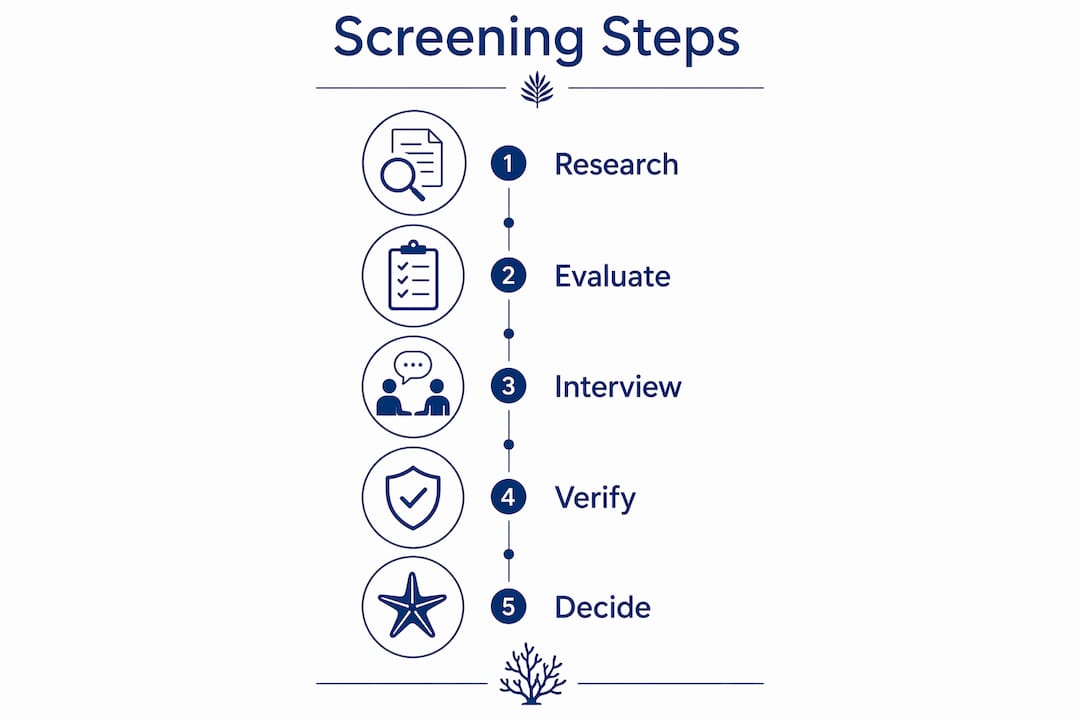
The industry term for this process is vendor due diligence, and it applies as much to short-term rental management as it does to any professional service relationship. When you screen a vacation rental management company, you are assessing four core dimensions: reputation and portfolio, technology and software integration, guest screening capabilities, and contract transparency.
Reputation starts with verifiable data. Ask for a current portfolio of managed properties, occupancy rates over the past 12 months, and references from at least three active owners. Companies like Vacasa publish general performance claims, but you want property-specific numbers, not marketing averages. A manager with 20 well-run homes in your market is often a stronger choice than a national operator with 10,000 properties and a regional call center.

Technology integration tells you how a company handles the operational load. Platforms like Hostaway and Chekin connect property management systems with listing channels, automated messaging, and guest verification tools. A manager who still relies on manual spreadsheets for pricing or maintenance tracking will cost you time and bookings. Ask directly which software they use and how it connects to major listing platforms like Airbnb and Vrbo.
Guest screening capabilities deserve their own conversation. Screening software such as Autohost, Superhog, Authenticate, and Haven each offer multi-factor identity verification and AI-driven risk scoring to flag high-risk bookings before they are confirmed. This matters because fast risk detection allows hosts to cancel problematic reservations without penalty, and on platforms like Airbnb, that window can be as short as 24 hours.
Tool | Core feature | Best for |
Autohost | AI risk scoring and ID verification | High-volume direct bookings |
Superhog | Guest identity and damage protection | OTA and direct hybrid managers |
Haven | Pre-booking screening for direct reservations | Direct booking workflows |
Chekin | Online check-in and compliance verification | European and US markets |
Authenticate | ID verification and background checks | Premium property managers |
Pro Tip: Ask every candidate manager to walk you through a real guest screening scenario, step by step. How they answer tells you more than any brochure.
What to look for in management contracts and fees
Vacation rental management contracts combine a service agreement with a personalized proposal, and the base management fee rarely tells the full story. Vacasa, for example, advertises a base fee of 25 to 35 percent, but the effective cost frequently rises to 35 to 45 percent or higher once maintenance reserves, insurance charges, and add-on fees are factored in. Experienced owners model the all-in annual cost across every line item before comparing proposals side by side.
The contract structure itself reveals how a company thinks about the owner relationship. Typical management scopes include listing optimization, guest communication, dynamic pricing, cleaning coordination, maintenance oversight, compliance management, and performance reporting. If any of these are listed as optional add-ons rather than included services, your effective rate climbs fast.
Red flags in contracts are worth knowing before you sit down to read one. Long lock-in periods and punitive termination fees are the most common warning signs. Reputable operators offer month-to-month terms or short initial commitments with clearly stated exit fees. Vague service level agreements, undefined owner access windows, and missing handover provisions are equally concerning. If the contract does not specify how your property data, booking history, and guest records transfer to you upon exit, negotiate that language in before signing.
Pro Tip: Request a sample contract before any formal proposal. A company that hesitates to share one is telling you something important.
Contract element | What to confirm | Red flag |
Base management fee | Percentage of gross rental revenue | Fee applies to taxes and cleaning charges |
Termination clause | Notice period and any exit fee | Penalties exceeding 30 days’ revenue |
Maintenance reserves | Monthly amount and approval threshold | No owner approval required for repairs |
Owner access | Blocked dates and booking priority | No guaranteed owner access windows |
Exit and handover | Data transfer and booking transition | No handover provisions at all |
Understanding luxury rental pricing structures helps you benchmark whether a proposed fee schedule reflects genuine market value or inflated margins.
How do guest screening processes work in direct bookings?
Guest screening for direct bookings is the process of gating eligible reservations through identity verification and host approval before a booking is confirmed. This is distinct from the protections offered by OTAs like Airbnb or Vrbo, which handle their own verification layers. When a manager takes direct bookings on your behalf, they bear more of the risk, and their screening workflow becomes your first line of defense.
The 2026 direct booking screening workflow typically runs in three stages. First, the guest submits identity documents and payment details. Second, the screening software runs a risk score using AI-driven algorithms that cross-reference ID data, booking patterns, and behavioral signals. Third, the host or manager reviews the score and either confirms or declines the reservation. Platforms like Haven are built specifically for this workflow, integrating screening directly into the booking confirmation step.
One distinction that often gets blurred is the difference between guest screening and damage protection insurance. Screening is pre-stay risk assessment, while damage protection covers claims after the stay ends. Both are necessary, and a strong manager bundles and explains both layers clearly. If a company presents damage protection as a substitute for screening, that is a gap in their risk management approach.
“A rental agreement is only as strong as the process behind it. Signed, stored, and audited agreements reduce disputes and reinforce every screening decision a manager makes.”
Clear rental agreements set out guest responsibilities, payment terms, and penalties in writing, and they work best when paired with a repeatable workflow that includes audit trails. Ask any candidate manager how they store signed agreements and whether owners can access them on demand. You can also review how vacation rental search tools work to understand how the booking and screening process connects from the guest’s perspective.
Pro Tip: Layer your protections. Combine identity verification software, a signed rental agreement, a refundable damage deposit, and noise monitoring devices for the most complete risk coverage.
How does operational scope affect your choice of manager?
Short-term rental management typically covers listing optimization, guest communication, revenue-based pricing, cleaning, maintenance, compliance, and reporting, with commission ranges running from 15 to 30 percent of rental revenue. What that percentage covers varies significantly between companies, and the gap between a 15 percent and a 25 percent manager is not always what it appears. A lower rate with thin service coverage often costs more in owner time and missed revenue than a higher rate with full operational support.
Responsiveness is the operational quality that owners most often underestimate during the screening process. Ask each candidate how quickly they respond to guest inquiries, maintenance requests, and owner questions. Request their average response time data and ask for a sample of their owner reporting dashboard. A manager who cannot show you clear, regular reporting is one who will leave you guessing about your own property’s performance.
Verifying reputation takes more than reading Google reviews. Call two or three current owner references and ask specific questions: How often do you hear from your manager without prompting? Have there been any maintenance disputes, and how were they resolved? Would you sign with them again? The answers to those three questions reveal more than any sales presentation. You can also read about what a vacation rental manager does to build a clear picture of the service scope you should expect.
Pro Tip: Check the manager’s own property listings on Airbnb and Vrbo. The quality of their photos, descriptions, and guest reviews reflects exactly how they will present your home.
Key takeaways
Choosing the right vacation rental manager requires evaluating fees, contracts, guest screening technology, and operational quality together, not in isolation.
Point | Details |
Screen beyond the headline fee | Model the all-in annual cost including reserves, insurance, and add-ons before comparing proposals. |
Demand contract flexibility | Prioritize month-to-month terms and clearly defined exit and handover provisions. |
Verify guest screening tools | Confirm the manager uses software like Autohost, Haven, or Superhog for identity verification and risk scoring. |
Separate screening from insurance | Guest screening is pre-stay risk assessment; damage protection covers post-stay claims. Both are required. |
Check operational references | Call current owner clients and ask about responsiveness, reporting quality, and dispute resolution. |
What I’ve learned from watching owners choose the wrong manager
The most common mistake I see is treating the management fee as the primary decision variable. An owner compares a 20 percent rate against a 28 percent rate, chooses the lower number, and then spends the next year chasing the manager for maintenance updates and wondering why occupancy is flat. The fee is a starting point, not a conclusion.
The second mistake is skipping the contract review. I have seen agreements that give managers the right to book the property during owner-reserved dates, charge maintenance markups of 15 percent or more, and retain guest data after the relationship ends. None of those terms are illegal. They are just buried in language that most owners do not read carefully enough. Operational SLAs and exit provisions are the clauses that protect you most, and they are the ones most often left vague.
Technology matters more than most owners realize going in. A manager using AI-powered screening software and a modern property management system will outperform a manual operation at almost every metric: response time, occupancy rate, and dispute resolution. That said, technology is only as good as the people running it. The best outcome is a manager who combines strong software with genuine local knowledge and a personal commitment to your property.
My honest recommendation is to treat this process like hiring a business partner, because that is what it is. Verify credentials, read the contract in full, call the references, and ask the hard questions before you sign anything.
— Josh
Manage your Captiva property with confidence

American Realty of Captiva has managed luxury beachfront and bayfront vacation homes on Captiva Island for over 30 years, and that depth of local experience shows in every aspect of how they work. Their fee structures are transparent, their guest screening processes are thorough, and their contracts are built around owner flexibility rather than lock-in terms. If you are ready to explore what professional, full-service management looks like for a premium island property, browse the available Captiva rentals to see the quality of homes they represent. For owners considering direct booking advantages and personalized service, the American Realty of Captiva team is a natural first conversation.
FAQ
What does it mean to screen a vacation rental management company?
Screening a vacation rental management company means evaluating its reputation, fee structure, contract terms, guest screening protocols, and operational scope before signing an agreement. The goal is to confirm the company will protect your property and maximize your rental income.
What is a typical management fee for short-term rentals?
Manager commissions typically range from 15 to 30 percent of rental revenue, though the effective rate often rises higher once maintenance reserves, insurance, and add-on charges are included. Always model the all-in annual cost, not just the headline percentage.
How do I know if a manager’s guest screening is strong enough?
Ask which screening software they use and how it integrates with their direct booking workflow. Tools like Autohost, Superhog, and Haven use multi-factor identity verification and AI risk scoring to flag high-risk guests before a booking is confirmed.
What contract terms should I watch out for?
Long lock-in periods, high termination fees, vague service level agreements, and missing handover provisions are the most common red flags. Prioritize contracts that offer month-to-month terms and clearly define how your data and bookings transfer if you exit.
Is guest screening the same as damage protection insurance?
No. Guest screening is a pre-stay risk assessment process, while damage protection insurance covers claims after the stay ends. A well-run management company provides both and explains how each layer works.
Recommended
Comments