
List Vacation Home Rental Platforms by Traveler Type


Choosing among the many vacation home rental platforms available today can feel like standing in front of a menu with a hundred options and no descriptions. You came to relax, not to research. Yet the platform you book through shapes almost everything: the privacy of your space, the reliability of the listing, the fees buried at checkout, and how much help you get if something goes wrong. This guide walks you through the main types of rental platforms, compares how they work for different traveler needs, and gives you a clear way to decide which one fits your next trip.
Table of Contents
Key takeaways
Point | Details |
Three platform types exist | Rental platforms fall into mass marketplaces, professionally managed sites, and curated niche options. |
Total cost varies widely | Always compare the final checkout price including fees, taxes, and cleaning charges across platforms. |
Privacy requires verification | Confirm a listing is an entire home, not a private room, especially for families and couples. |
Professional management reduces risk | Managed platforms offer more consistent quality and reliable calendar management to avoid double-bookings. |
Match platform to trip type | Families, couples, and solo travelers each benefit from different platform strengths and inventory types. |
List vacation home rental platforms by category
When travelers talk about vacation rental sites, they are usually referring to what the industry calls vacation rental listing services or online rental marketplaces. These platforms let property owners advertise their homes and let guests browse, compare, and book directly. Rental platforms in 2026 fall into three distinct categories: mass marketplaces, professionally managed platforms, and curated or niche platforms. Understanding this structure before you search saves you time and a fair amount of frustration.
Mass marketplaces are the largest category. They carry the most inventory, cater to the widest range of budgets, and give you the most filtering options. Professionally managed platforms sit in the middle ground, offering hotel-like consistency with the space and privacy of a home rental. Curated and niche platforms take a narrower approach, focusing on a specific type of traveler or experience, whether that is luxury, outdoor adventure, or home swapping.
Each category comes with real trade-offs. Mass marketplaces give you variety but can feel inconsistent from one listing to the next. Professionally managed sites cost more but remove much of the guesswork. Curated platforms offer a tighter experience but limit your choices. Knowing which type you need before you start searching is the single most useful thing you can do.
Pro Tip: Before you open any booking site, write down your three non-negotiables for the trip: privacy level, budget range, and one must-have amenity. Filtering with that clarity will cut your search time in half.
How the top mass marketplaces compare
Mass marketplaces are where most people start, and for good reason. They hold enormous inventory and let you compare hundreds of properties in one place. But each platform within this category has a distinct identity worth knowing.
Airbnb built its reputation on variety and unique stay types. With over 7 million listings worldwide, it offers everything from a private room in a city apartment to a treehouse in the mountains. This breadth makes it excellent for solo travelers or couples who want something different. For families needing full privacy, the platform requires extra care: you must confirm the listing is labeled “entire home” and not a shared space.
Vrbo takes a sharper focus. It specializes in whole-home rentals, which makes it naturally better suited for families, groups, and anyone who does not want to share a kitchen or entryway with the host. That emphasis on whole-home privacy is a meaningful advantage when you are traveling with children or planning a multi-family trip. Vrbo’s guest fees run between 6% and 15% of the booking total on a sliding scale, with larger bookings typically sitting at the lower end of that range.
Booking.com leans toward international travel and apartment-style stays. Its 28 million global properties include a large number of hotel-managed apartments, which makes it feel more standardized than Airbnb or Vrbo. If you are traveling abroad and want predictable quality without committing to a full hotel, Booking.com earns its place on your shortlist. Expedia rounds out the mass marketplace group with its bundling capability: you can combine flights, car rentals, and a vacation home under one booking, which occasionally surfaces discounts that booking each piece separately would not.
Platform | Best for | Home type focus | Notable feature |
Airbnb | Unique stays, solo and couple trips | Mixed: rooms and homes | Largest inventory worldwide |
Vrbo | Families and groups | Whole-home only | Strong privacy guarantee |
International travel | Apartments and hotels | 28M+ global properties | |
Expedia | Bundle travelers | Mixed | Flight and rental packages |
Pro Tip: Run the same dates on at least two platforms before booking. Service fees and cleaning charges vary enough that the same property type can cost $80 to $150 more on one site versus another for a weekend stay.
What professionally managed platforms offer
Professionally managed vacation rental platforms occupy a category that most travelers overlook, yet they solve the two biggest pain points in the rental experience: inconsistency and poor communication. These platforms function more like hospitality brands than simple listing services.
Vacasa is the most prominent example in the United States. It manages 35,000 professionally maintained rentals with local support staff on call for every property. If the air conditioning fails at 11 pm, someone responds. That level of accountability is rare with individual hosts on mass marketplaces. The properties tend to be fully equipped, inspected before each stay, and held to consistent standards across the portfolio.

Homes and Villas by Marriott Bonvoy occupies a slightly higher tier. It targets travelers who want the square footage and privacy of a vacation home combined with the brand trust and points earning of a major hotel program. For frequent travelers who already accumulate Marriott points, this platform adds real financial value on top of the property itself.
The trade-off is price. Professionally managed rentals typically cost more per night than comparable listings on Airbnb or Vrbo. The premium reflects the staffing, inspection protocols, and the operational overhead of managing a property like a business. Whether that premium is worth it depends on your risk tolerance and how much a disrupted stay would cost you in stress, especially on a family trip or a special occasion.
Professionally managed rentals also use channel management software to sync availability across multiple booking sites, which dramatically reduces the chance of a double-booking error that leaves you scrambling the week before your trip.
Pro Tip: If you are booking a high-cost trip like a two-week beach stay or a destination anniversary, the peace of mind from a professionally managed property is worth pricing. Run the comparison with eyes open, not just on nightly rate.
Curated and niche platforms worth knowing
Beyond the mainstream options, a growing set of niche platforms serve travelers with specific priorities. These are not replacements for the major sites but useful tools once you know what kind of experience you are after.
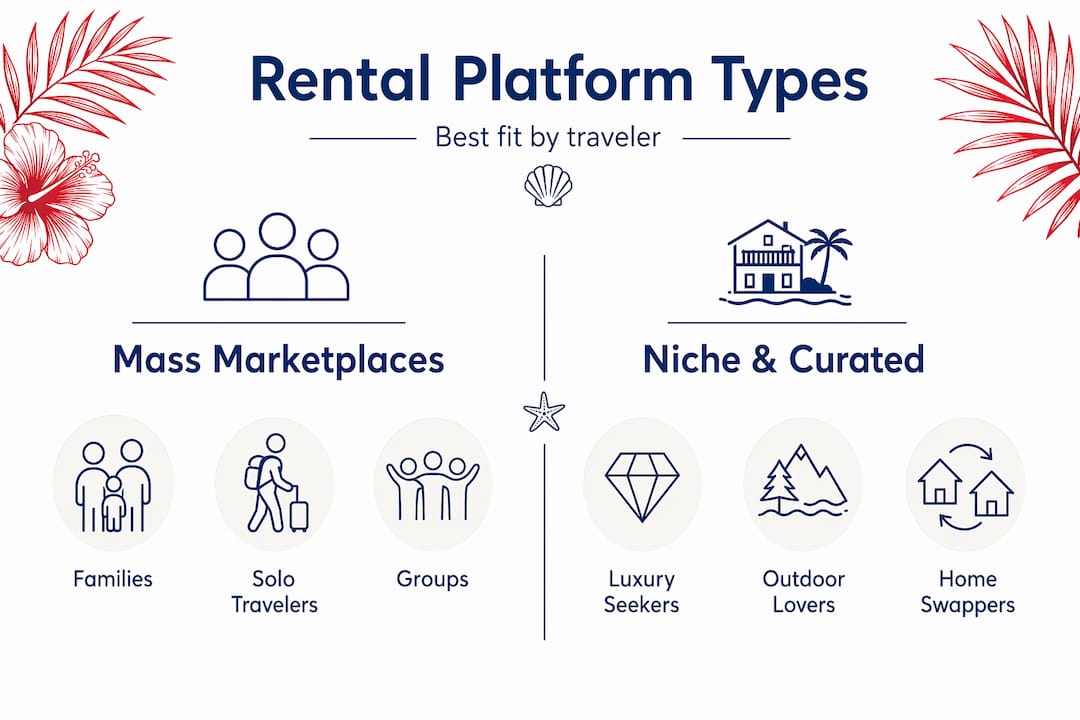
Plum Guide applies an editorial lens to vacation rentals. It admits fewer than 3% of submitted homes, focusing on the top tier of properties that meet its strict quality criteria for design, comfort, and location. If luxury and quality assurance matter more to you than price or volume of options, Plum Guide removes a lot of the guesswork that comes with scrolling through hundreds of listings. You can read more about finding the best types of high-end rentals when quality is your primary filter.
HomeExchange works on an entirely different model. Members list their own homes and arrange reciprocal stays with other members, either simultaneously or using a point-based system for asynchronous exchanges. The cost is essentially a membership fee, making it attractive for budget-conscious travelers who own property and travel frequently. It rewards flexibility and trust, not luxury.
Hipcamp fills the gap for outdoor-oriented travelers. It lists campsites, glamping setups, cabins, and farm stays on private land, offering access to spaces you would not find through traditional vacation rental search tools. For families who want a secluded outdoor stay or a trip that feels genuinely off the grid, Hipcamp surfaces options that Airbnb and Vrbo simply do not carry.
Other niche platforms serve pet-friendly travel, accessible travel, surf-centric destinations, and sailing charters. The pattern across all of them is the same: they sacrifice breadth for a focused, higher-quality match to a specific traveler profile.
Practical steps for comparing any platform
Once you understand the categories, the work of actually comparing platforms comes down to a few disciplines that most travelers skip.
1. Compare total checkout cost, not nightly rate. The nightly price shown in search results is almost never what you pay. Final costs vary significantly once cleaning fees, service fees, and local taxes are added at checkout. A property listed at $180 a night can easily total $320 per night for a short stay once all charges are included. Always click through to the full price breakdown before comparing options.
2. Verify the privacy type of the listing. On platforms that mix room rentals and whole-home rentals, confirming the property is labeled “entire home” is non-negotiable for families and couples who need exclusive use of the space. An “entire home” listing means no shared entrances, no host present, and no shared common areas.
3. Read the cancellation policy before you book. Policies range from fully flexible (full refund if you cancel 48 hours before check-in) to strict non-refundable terms. This detail matters more than most travelers realize until a trip falls through.
4. Check when the calendar was last updated. On platforms with individual hosts, stale calendars are common. A property that appears available may have been booked on another platform. Professionally managed properties handle cross-platform calendar syncing more reliably, but it is worth confirming with the host on any independent listing.
5. Use a price aggregator for a second opinion. Tools designed to pull listings from multiple vacation rental platforms simultaneously can reveal price gaps and availability windows that browsing each site separately would miss. They are especially useful when your dates are flexible and you want to find the lowest-cost window. Understanding how vacation rental search tools work can sharpen your approach considerably.
My honest take on choosing the right platform
I have booked enough rentals across enough platforms to know that the choice of where you book matters as much as which property you choose. Here is what I have actually learned from doing this repeatedly.
I always start with the trip type, not the platform. A large family reunion needs a whole-home rental with a reliable host or professional manager. A couple’s long weekend can afford to be more adventurous with a unique Airbnb listing. I stop trying to use the same platform for every trip, and the quality of each stay improved noticeably.
I learned the hard way that lowest nightly rate is a trap. A $120-a-night listing with a $200 cleaning fee and a strict no-refund policy is a worse deal than a $160-a-night managed property with flexible cancellation. Understanding how luxury rental pricing is structured changed how I evaluate listings across every price tier.
My strongest advice: do not let platform familiarity drive your decision. Most travelers default to one site because they have used it before, not because it is the best fit for the trip they are planning. Matching the platform type to the trip type is what separates a smooth stay from a stressful one.
— Josh
Find your ideal Captiva Island rental
If you have been thinking about a beachfront family vacation or a quiet couple’s retreat, Captiva-island offers something that the large booking platforms cannot fully replicate: 30 years of local expertise, direct booking, and a hand-selected portfolio of luxury homes on one of Florida’s most treasured barrier islands.
From beachfront homes with direct Gulf access to pool homes built for families who want space and privacy, the rentals available through American Realty of Captiva are managed with the care and consistency that large online rental marketplaces rarely match. Seasonal promotions and direct booking incentives are available throughout the year. Browse all available Captiva rentals and let the island do the rest.
FAQ
What are the main types of vacation home rental platforms?
Vacation rental platforms fall into three categories: mass marketplaces like Airbnb and Vrbo, professionally managed platforms like Vacasa, and curated or niche sites like Plum Guide and Hipcamp. Each type serves different traveler priorities.
Which platform is best for family beach rentals?
Vrbo is generally the strongest choice for families because it focuses exclusively on whole-home rentals, offering full privacy and no shared spaces with other guests or hosts.
How do I compare total costs across rental platforms?
Always view the full price breakdown at checkout, including service fees, cleaning charges, and local taxes. The nightly rate shown in search results rarely reflects what you will actually pay.
What does “entire home” mean on a vacation rental site?
An “entire home” listing means you have exclusive use of the full property with no shared entrances or common areas. This is distinct from a private room listing, where guests share spaces with the host or other renters.
Are professionally managed rentals worth the higher price?
For high-value or longer trips, professionally managed rentals reduce the risk of booking problems, inconsistent quality, and unresponsive hosts. The added cost often reflects genuine operational improvements in cleanliness, support, and calendar reliability.
Recommended
https://mm88bc.com/ làm mình chú ý đến cách những lựa chọn được thể hiện khi phần lớn thao tác diễn ra trên điện thoại. Mình thường bắt đầu với Bắn cá rồi chuyển sang Xổ số để quan sát cách các danh mục được sắp xếp trong không gian màn hình nhỏ. Khi thay đổi khu vực, mình tập trung vào trình tự mở nội dung và cách quay lại phần tổng quan. Những điểm điều hướng chính trở thành mốc giúp mình xác định hướng tiếp theo. Sau nhiều lần, mình dần ghi nhớ các nhóm nội dung theo chức năng thay vì vị trí từng nút. Với mình, thói quen này giúp việc khám phá trên mobile có trình tự…
F8bet.luxury giúp tôi đánh giá khả năng tiếp cận nội dung hướng dẫn trong quá trình tìm hiểu. Tôi quan sát cách tiêu đề được đặt, cách chia đoạn và vị trí các liên kết tham khảo. Khi truy cập Đá gà F8bet, tôi chú ý đến việc chuyển từ nội dung chính sang những phần thông tin liên quan có dễ thực hiện hay không. Tôi cũng thử quay lại trang trước để kiểm tra khả năng tìm lại vị trí ban đầu. Nội dung hướng dẫn được trình bày mạch lạc có thể hỗ trợ người dùng tự tìm hiểu mà không phải dò tìm nhiều lần. Theo đánh giá của tôi, cách tổ chức thông tin nên giúp…
mb66.black khiến mình chú ý đến khả năng quay lại đúng phần vừa sử dụng sau khi xen vào một chức năng khác. Mình có thể đang xem nổ hũ, chuyển sang lịch sử để đối chiếu thông tin rồi trở về nội dung trước đó. Khi các khu vực có vị trí và chức năng dễ phân biệt, mình không phải xây dựng lại hành trình từ trang đầu mỗi lần đổi hướng. Qua vài lần, những điểm cần quay về cũng trở nên quen hơn. Với mình, trải nghiệm dễ theo dõi không chỉ nằm ở lúc đi đến một khu vực mới mà còn ở việc mình có thể xử lý nhu cầu phát sinh rồi tiếp tục…
Go88en encourages me to examine how a category remains understandable when several individual choices appear close together. I often start by observing the general arrangement before opening more detailed content. Card Games becomes useful for this purpose when I look at titles such as Sâm Lốc and Mậu Binh. I pay attention to their placement within the selection and the relationship between individual names and the broader heading. The interface arrangement is another detail I consider when returning to the category overview. I want to see whether the original position remains easy to recognize after exploring different entries.
Casino Hi88 khiến tôi quan tâm đến cách người dùng chuyển từ việc tìm hiểu danh mục sang theo dõi nội dung trực tiếp. Tôi bắt đầu ở trang chính, tìm khu vực casino và quan sát các bước cần thực hiện trước khi mở một bàn. Sau đó, tôi tập trung vào cách hình ảnh người chia bài, âm thanh và các góc quay được giới thiệu để xem chúng có giúp người dùng theo dõi thuận tiện hay không. Điều tôi ưu tiên không phải số lượng hiệu ứng xuất hiện trên màn hình, mà là khả năng phân biệt diễn biến chính với những thành phần giao diện xung quanh. Khi muốn chuyển sang nội dung khác, tôi…