
Top Alternatives to Rentbyhost.com for Travelers & Hosts
- Josh Wheeler
- 12 hours ago
- 10 min read


If you’re searching for rentbyhost.com alternatives that put you in direct contact with hosts and keep fees low, the clearest options fall into four categories, as detailed in this Alternatives to Airbnb for Hosts: Maximize Your Income guide: credit-based home-exchange networks, host-direct marketplaces, mid-to-long-term rental platforms, and local direct-booking options like Captiva-island for beachfront stays.
Home-exchange networks (Kindred, HouseSwapp): No nightly fees; you earn credits by hosting and spend them when you travel.
Host-direct marketplaces (Vrbo, Booking.com, Furnished Finder): Broad reach with varying commission structures; some allow direct host messaging before payment.
Mid/long-term platforms (Expedia, Furnished Finder for 30-plus-day stays): Better per-night value for extended trips; less focused on weekend getaways.
Local direct-booking (Captiva-island): Skip the platform middleman entirely; book beachfront and bayfront homes on Captiva Island, Florida, with personalized service and no third-party service fee layered on top.
Table of Contents
What are the best rentbyhost.com alternatives at a glance?
The table below maps each category to its ideal traveler or host situation, so you can match your needs without reading every fine-print page.
Category | Best for | Booking model | Typical fees | Guest protections |
Home-exchange networks | Budget travelers, flexible dates | Credit-based; no nightly charge | Per-trip cleaning/service fee | Optional swap insurance; mutual vetting |
Host-direct marketplaces | Families, short stays, broad search | OTA-managed or host-direct contact | Guest service fee + host commission | Platform refund policy; ID verification |
Mid/long-term platforms | Month-plus stays, relocating renters | Lease-style or extended-stay booking | Subscription or per-listing fee | Tenant application tools; less vacation-focused |
Luxury-brand rental programs | Upscale travelers, branded assurance | Managed by hospitality brands | Premium pricing; lower hidden fees | Brand-backed quality standards |
Direct local booking: Captiva-island | Beachfront/bayfront Florida stays | Direct with American Realty of Captiva | No third-party service fee layered on | 30-plus years local expertise; personalized support |
Captiva-island operates as a direct-booking platform for luxury homes on Captiva Island, Florida. You can browse available rentals and speak with a local specialist rather than navigating a generic platform queue.
How do the key differences affect your cost, control, and safety?
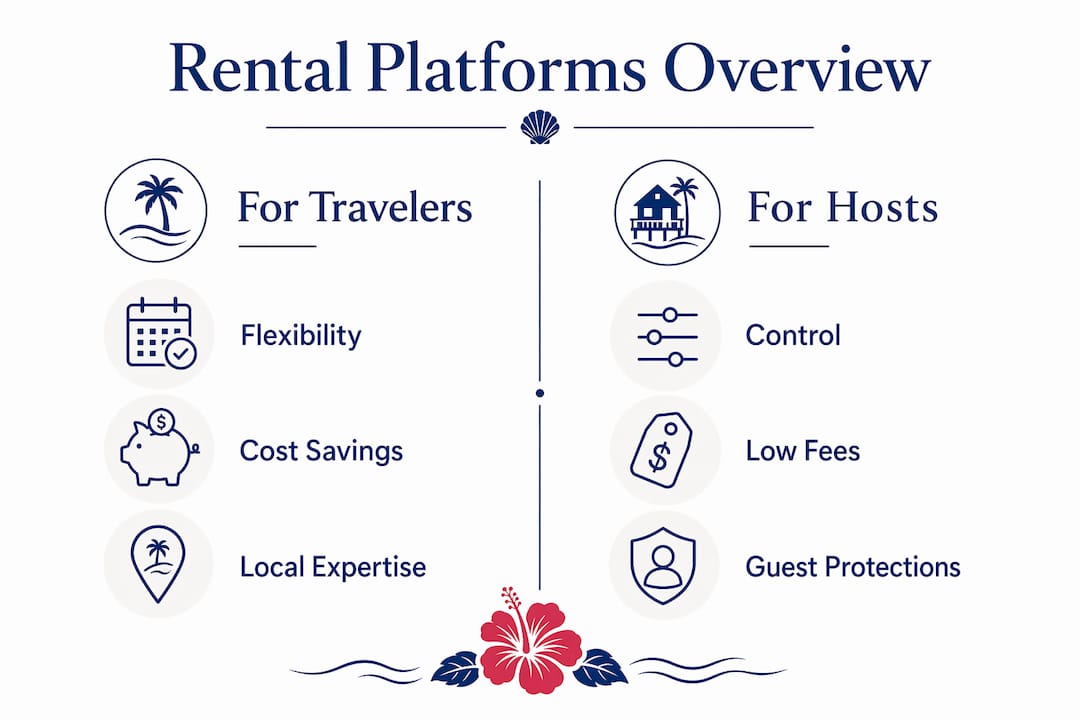
Fees, payment flow, and guest protections are the three dimensions that change a booking outcome most. Everything else, reach, interface, calendar sync, is secondary once you understand how money moves and who holds it.
Common fee types and who pays them:
Guest service fee: Charged to the traveler on top of the nightly rate; typically a percentage of the subtotal on OTA platforms.
Host commission: Deducted from the host’s payout; ranges from a small percentage on some platforms to a larger cut on full-service OTAs.
Cleaning fee: Usually set by the host; appears at checkout and can significantly raise the effective per-night cost on short stays.
Subscription or listing fee: Some platforms charge hosts a flat annual or monthly fee instead of per-booking commissions, which can lower per-trip costs for active hosts.
Credit card or reservation fee: Smaller administrative charges that appear on direct-booking platforms; typically lower than OTA service fees.
Broad-market platforms prioritize distribution and channel management, which is genuinely useful for reach, but that reach comes at the cost of added booking fees or commissions layered onto both sides of the transaction.
The clearest fee-saving strategy is removing the intermediary. Home-exchange networks replace nightly charges with a per-trip cleaning or service fee. Host-direct contact on smaller platforms cuts the guest service fee. Local direct-booking platforms like Captiva-island eliminate the third-party markup entirely.
Audience and reach. Large OTAs like Vrbo, Booking.com, and Expedia attract millions of monthly visitors, which benefits hosts who need broad exposure. Niche platforms attract a more targeted audience: Furnished Finder draws traveling nurses and corporate renters; Marriott Homes & Villas appeals to loyalty-program members who want brand-backed quality assurance. Smaller host-direct sites attract travelers who already know what they want and are willing to search a bit harder for it.
Host control. On full-service OTAs, the platform sets or heavily influences cancellation policies, payment timing, and dispute resolution. On host-direct or smaller platforms, owners set their own terms, respond to guests personally, and keep more of each booking dollar. That control is worth something, especially for owners who want to create a personalized vacation rental experience rather than compete on price alone.

Payment handling and dispute resolution. OTA-managed payments hold funds in escrow until after check-in, which protects both sides. Host-direct platforms vary: some use integrated payment processors with escrow-like holds; others rely on the host to collect payment independently, which raises the stakes for verification. Dispute resolution on large platforms tends to be structured but slow; on smaller or direct platforms, it depends entirely on the host’s responsiveness and the platform’s stated policy.
Guest protections. Verification, refund policies, and insurance options differ sharply by platform. Vrbo and Booking.com offer structured refund tiers and host ID checks. Home-exchange networks like Kindred and HouseSwapp rely on mutual vetting and optional swap insurance rather than platform-managed escrow. Always confirm the cancellation policy in writing before you pay anything.
When should you choose home-swapping, mid-term sites, or luxury programs?
Not every trip calls for the same platform. The right choice depends on how long you’re staying, how much flexibility you have, and what kind of experience you’re after.

Home-swapping networks
Home-swapping works best for travelers with flexible dates who want to stay in real homes without paying nightly rates. Kindred uses a credit-based model: new members start with 5 credits, can book up to 5 nights before hosting, and earn credits by welcoming guests into their own home. You pay a per-trip cleaning or service fee, but there’s no nightly bill. HouseSwapp takes a reciprocal approach, matching members for simultaneous or sequential key exchanges, with optional swap insurance available for added peace of mind.
The trade-off is real. You need a home worth listing, and you need to be comfortable with strangers staying in it. Dates must align, which limits spontaneity. For travelers who can plan ahead and offer a desirable home, though, the savings over a week-long OTA booking are substantial.
Mid-to-long-term platforms
For stays of 30 days or more, platforms built around lease-style rentals often deliver better per-night value than nightly vacation sites. Tools like Zillow Rentals and Apartment List offer integrated applications, payment portals, and affordability filters designed for renters who need a home base for a month or a season, not a weekend. Furnished Finder sits in the middle: it targets traveling professionals who need furnished mid-term housing and connects them directly with hosts, often with lower platform fees than mainstream OTAs.
These platforms are less useful for a five-night beach trip. They shine for corporate relocations, travel nurses, remote workers, or anyone who wants a real home for an extended stretch.
Luxury and brand-backed programs
Marriott Homes & Villas and similar hospitality-brand programs appeal to travelers who want the comfort of a private home with the reliability of a hotel brand behind it. Quality standards are enforced, properties are vetted, and loyalty points sometimes apply. The per-night cost is higher, but the hidden-fee surprises are fewer. For families booking a high-value trip where a bad experience would be costly, that assurance has genuine worth.
How do you pick the right platform before booking or listing?
The single most useful rule: confirm fee transparency and payment flow before you commit to anything. A platform that shows you the full cost upfront, including cleaning, service, and any reservation fees, is worth more than one with a lower headline rate and a surprise at checkout.
Selection checklist:
Fee transparency: Is the total cost shown before you enter payment details?
Payment flow: Does the platform hold funds in escrow, or does money go directly to the host?
Cancellation protection: Is the policy written, specific, and accessible before booking?
Host and property verification: Are hosts ID-verified? Are photos recent and accurate?
Calendar sync: Can the host sync calendars across platforms to avoid double-bookings?
Reviews: Are guest reviews recent, detailed, and from verified stays?
Questions to ask a host or platform before you commit:
What is the total cost, including all fees and cleaning charges?
How and when is payment collected, and is it held in escrow?
What happens if I need to cancel, and what is the refund timeline?
How are disputes handled, and who do I contact if something is wrong at the property?
Can you share recent photos, and has anything changed since the listing was last updated?
Are you ID-verified on this platform, and can I see your review history?
Red flags to walk away from:
No written cancellation policy, or a policy that only exists in a chat message
A host asking for payment outside the platform, via wire transfer or gift card, with no escrow
Few or no reviews, or reviews that are vague and undated
Listing photos that look professionally staged but don’t match the property description
For hosts evaluating vacation rental platforms by traveler type, the same logic applies in reverse: choose a platform whose audience matches your property, and read the host agreement carefully before listing.
How do home-swapping networks actually work?
The credit-based model replaces the nightly-rate transaction with something closer to a community exchange. You list your home, welcome guests, and earn credits. Those credits let you book stays at other members’ homes without paying a nightly rate. The only cash outlay is a per-trip cleaning or service fee, which covers operational costs rather than profit for a platform middleman.
Kindred provides new members initial credits to allow booking before hosting their own home. Once you host a stay, you earn more credits to spend on future trips. HouseSwapp works on a reciprocal key-exchange model: members match dates and swap homes, with optional insurance available to cover unexpected issues during the stay.
Trust is the currency that makes swapping work. Before any exchange, both parties typically share verified photos, confirm home details, and communicate logistics directly. That pre-travel conversation builds a relationship that a purely transactional booking rarely creates.
Practical tips for first-time swappers:
Complete your profile fully: verified ID, accurate photos, and an honest description of your home’s quirks.
Start with a local or regional swap to reduce travel complexity on your first exchange.
Confirm check-in logistics, key handoff, and house rules in writing before the swap date.
Ask about swap insurance options; some networks offer it as an add-on for a small fee.
Pro Tip: Offer flexible dates in your listing. Members who can accommodate a range of arrival windows get matched faster and earn credits more consistently than those locked into a single weekend.
What’s the right platform for your situation?
Budget travelers with flexible schedules and a home worth listing will find home-exchange networks the most cost-effective option available. The per-trip fees are modest, and the nightly-rate savings over a week-long stay are hard to match on any OTA. For families or couples planning a specific trip to a specific destination, a host-direct marketplace or a local direct-booking platform gives more control over dates, amenities, and communication. For month-plus stays, a mid-term specialist like Furnished Finder or a long-term rental portal will almost always deliver better per-night value than a nightly vacation site.
Hosts who want to reduce commissions have two practical paths: list on a platform that charges a flat subscription instead of per-booking commissions, or build enough direct-booking traffic to reduce OTA dependence over time. For hosts with properties in specific destinations, a local direct-booking platform that already attracts the right audience is often more valuable than broad OTA exposure at a higher commission rate. You can find more on this in our guide to Florida vacation rental alternatives.
Before you pay or hand over keys, verify the listing, confirm the cancellation policy in writing, and use a payment method with buyer protection. That applies whether you’re booking through a large OTA or a community-driven swap network.
Key Takeaways
The clearest fee-saving strategy across all vacation rental alternatives is removing the intermediary: home-exchange networks, host-direct platforms, and local direct-booking options each reduce what you pay compared to full-service OTAs.
Point | Details |
Home-exchange saves the most | Credit-based networks like Kindred eliminate nightly fees; you pay only a per-trip cleaning or service fee. |
Match platform to stay length | Mid-term platforms suit 30-plus-day stays; nightly marketplaces work best for short trips. |
Verify before you pay | Confirm cancellation policy, payment escrow, and host ID checks on any platform before committing. |
Host-direct reduces commissions | Flat-subscription or direct-booking platforms cut per-booking commissions for hosts compared to full-service OTAs. |
Captiva-island for Florida direct booking | Captiva-island offers beachfront and bayfront homes on Captiva Island with no third-party service fee and over 30 years of local expertise. |
A note on what these platforms actually promise
The gap between a platform’s marketing and what a traveler actually experiences often comes down to one thing: how disputes are handled. Large OTAs have structured processes, but those processes can be slow and impersonal. Home-exchange networks rely on community trust, which works beautifully when both parties communicate well and breaks down when they don’t. The platforms that consistently earn repeat bookings are the ones where the host, not just the platform, is genuinely invested in your experience.
What gets underestimated in most platform comparisons is the value of local knowledge. A platform can show you a map pin and a photo gallery. It cannot tell you that a particular stretch of beach is calm enough for young children at low tide, or that a bayfront home catches the best evening light from the west-facing lanai. That kind of detail comes from people who know the place, not algorithms that rank listings by conversion rate.
For travelers who want that layer of local expertise alongside a direct-booking option, a platform built around a specific destination will almost always outperform a generic OTA for the same property.
Captiva-island: direct beachfront booking with local expertise
If the article has made one thing clear, it’s that direct booking saves money and delivers a better experience when the host actually knows the property and the destination. Captiva-island does exactly that for beachfront and bayfront homes on Captiva Island, Florida.
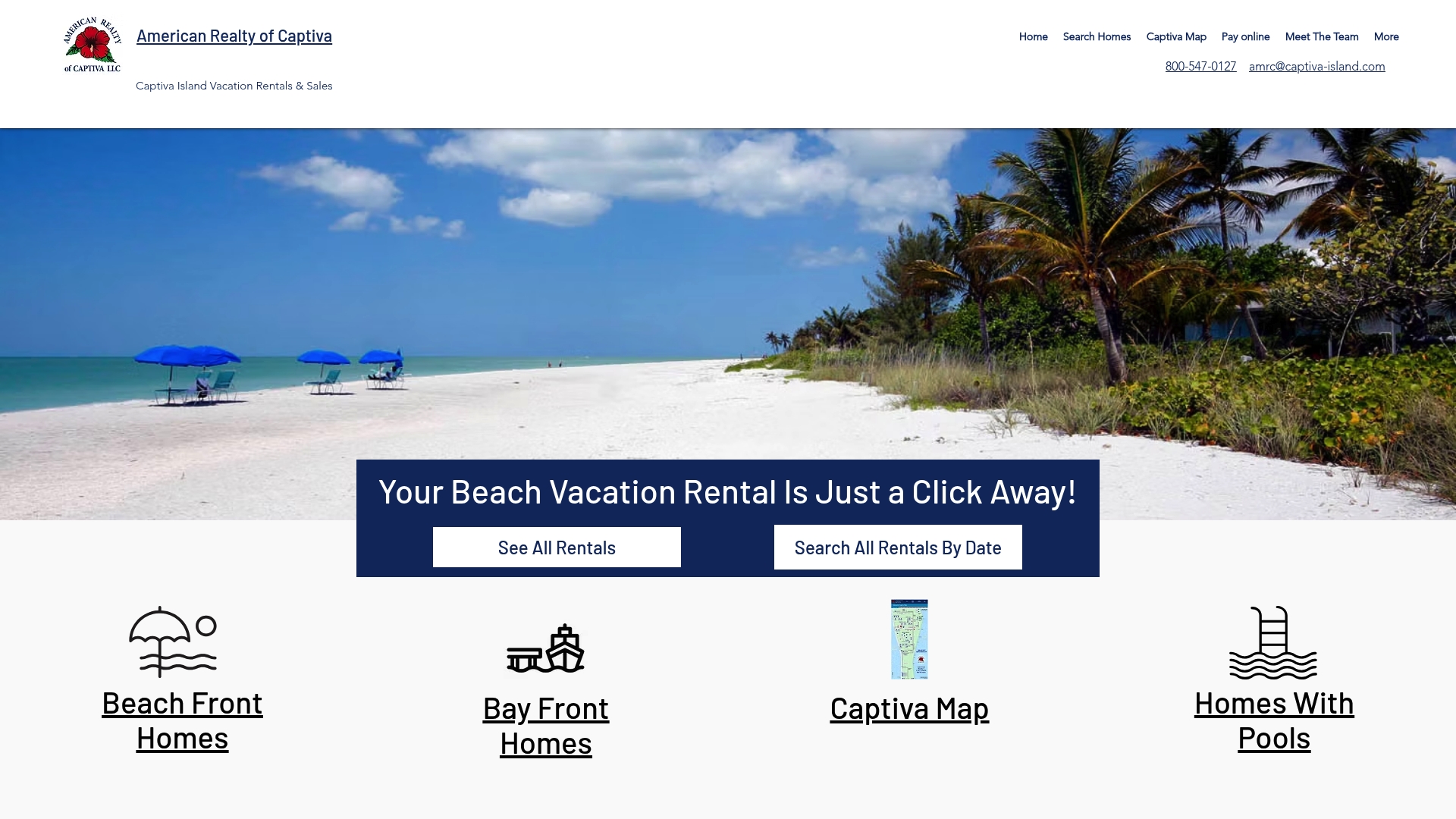
American Realty of Captiva has managed vacation rentals on the island for over 30 years. When you book through Captiva-island, you’re working with local specialists who know which homes have the best Gulf views, which pools stay shaded in the afternoon, and which properties are the right fit for a multigenerational family trip. There’s no third-party service fee layered on top of your booking, and seasonal discounts are available for travelers who plan ahead.
You can browse all available rentals or go straight to the beachfront homes collection to find the right property for your dates. Call or book online; either way, a local specialist picks up.
Recommended
Comments