
Six Captiva Neighborhoods for Families and Investors, with Rental Tips

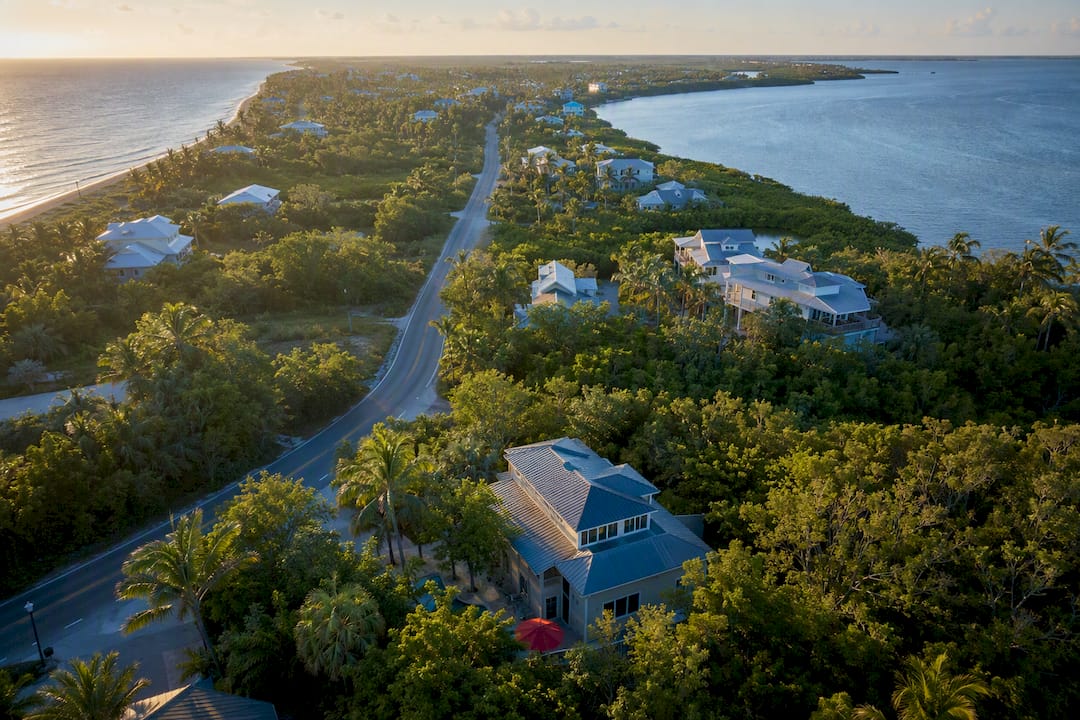
Captiva’s neighborhoods break into six clusters, each one earning its keep differently. Captiva Village suits families who want to walk to dinner. Land’s End Village fits low-maintenance condo living. Captiva Drive and Sunset Captiva serve buyers chasing privacy and estate-scale waterfront. South Seas delivers resort amenities and steady rental traffic, while the bayside communities reward anyone who values calm water over crashing surf.
TL;DR:
Neighborhoods along Captiva Drive and Sunset Captiva offer estate-scale water frontage and private docks, catering to buyers seeking privacy and luxury rental potential.
Captiva Village and the Bayside neighborhoods prioritize walkability and calm water, making them ideal for families with young children and boaters preferring quieter channels.
Resort communities like South Seas have strong rental demand but may impose restrictions, requiring buyers to verify rental program rules beforehand.
Flood zone designations and hurricane risks vary by neighborhood, so confirming insurance requirements and elevation certificates is essential for buyers.
Limited on-island services mean all long-term residents and families rely on trips to Sanibel or Fort Myers for groceries, healthcare, and schools.
Table of Contents
What Counts as a Captiva Neighborhood, and Why It Matters
Captiva Island runs less than a mile wide and about six miles long, yet it holds roughly 18 distinct neighborhoods packed into that narrow strip of sand and mangrove. That density of naming is unusual for such a small footprint, and it exists for a reason: on an island this size, every neighborhood sits close to the Gulf, but the experience of that proximity varies sharply from one pocket to the next.
A home in Captiva Village puts you steps from a restaurant table. A home tucked into a bayside pocket puts you closer to a dolphin sighting than a sunset crowd. Neighborhood labels here generally map to one of four experiences: beachfront, bayside, resort cluster, or village center.
Before narrowing your search, weigh these factors against how you’ll actually use the property:
How much walking access to dining, shops, and the Chapel by the Sea matters to your routine
Whether you want privacy or the energy of a village center nearby
How close you need to be to a public or deeded beach access point
Whether young kids need calm water nearby instead of open Gulf surf
Captiva Village and the Captiva Beach Community
Captiva Village is the island’s social hub, home to the Bubble Room, the Mucky Duck, and Captiva Cantina, plus the Captiva Historical Society and the small shops that give the island its lived-in charm. Families who want to park the golf cart and walk everywhere gravitate here first.
Just off the village core sits the Captiva Beach community, centered around Wightman Lane, with roughly 64 residential units and easy proximity to the post office, village restaurants, and Chapel by the Sea. It’s a smaller, quieter footprint than the village itself, but close enough that you’re never more than a short golf cart ride from dinner.
Best for: families and vacationers who want walkability without giving up quiet evenings
Watch for: village center foot traffic during peak season, which can mean longer waits at popular restaurants
Captiva Drive: Beachfront and Bayfront Estate Corridor
Captiva Drive is the island’s spine, and the stretch of it running along the Gulf and Pine Island Sound holds some of the most valuable real estate on the island. Listings along this corridor regularly show private docks, extensive water frontage, and lot sizes that dwarf anything you’d find near the village center, illustrated by estate-scale listings that showcase the segment’s ceiling.
Buying here usually means trading walkability for privacy and boat access. These are the properties suited to multi-generational family compounds or high-end rental products that command premium weekly rates.
Best for: buyers prioritizing privacy, dock access, or estate-level rental income
Trade-off: fewer neighbors, but also fewer sidewalks to the nearest coffee shop
Land’s End Village: Condo Living at the Northern Tip
At Captiva’s northern tip, Land’s End Village offers 68 residences in two and three-bedroom layouts, with panoramic views across Redfish Pass and Pine Island Sound. The community’s amenities do a lot of the lifestyle lifting: a private pool, hot tub, tennis and pickleball courts, and a workout room mean owners get resort-style perks without single-family upkeep.
That combination, panoramic water views paired with shared amenities, is exactly what draws owners who want a maintenance-light alternative to a standalone estate. Golf carts make the short run into the village painless, so you’re never fully cut off from restaurants and shops.
Best for: owners who want condo simplicity with beachfront-caliber views
Investor note: association rules govern shared amenities and guest access, so confirm rental terms before assuming income projections
South Seas Island Resort Cluster
The South Seas resort area concentrates pools, tennis courts, and a working marina into one walkable footprint, and that density of amenities translates directly into strong, steady vacation-rental demand. It’s the closest thing Captiva has to a full resort experience.
The trade-off is control. Resort-cluster ownership can come with rental-program rules or restrictions that limit how freely you manage your own unit, so investors need to check the fine print before assuming they can rent it out however they like.
Best for: travelers who want amenities on tap and owners comfortable working within a resort’s rental structure
Confirm before buying: whether the unit is enrolled in a mandatory or optional rental program
Sunset Captiva and the Island’s Estate Pockets
Sunset Captiva and similar estate pockets represent the top of Captiva’s market: larger lots, custom finishes, and private docks built for serious boats rather than kayaks. Example Gulf-front listings in this tier show resort-caliber amenities alongside the kind of annual tax and insurance visibility that comes with owning barrier-island real estate at this scale.
Buyers here should expect higher carrying costs in exchange for genuine privacy and legacy-property potential.
Best for: buyers seeking a family legacy home or a luxury compound for high-end vacation rental
Reality check: custom finishes mean custom maintenance schedules, budget accordingly
Bayside Neighborhoods: Calmer Water, Different Wildlife
Bayside pockets along Pine Island Sound trade Gulf surf for glassy water, and that swap comes with its own rewards. Dolphins and manatees show up more reliably in these calmer channels, and sunrise over the bay has a different feel than sunset on the beach, softer, quieter, less performative.
Families with boats or young kids who aren’t ready for open Gulf waves often prefer bayside for exactly this reason.
Best for: boating families and buyers who want a quieter shoreline over crowd-facing beach frontage
Trade-off: less classic “beach walk” access, more dock and channel access
Buying vs. Renting: Timelines, Renovations, and Due Diligence
Captiva’s luxury rental market runs hot in season, and competitive units typically need professional-grade finishes and staging to hold their place among comparable listings. If you’re buying with rental income in mind rather than pure personal use, budget for upgrades before you assume top-tier weekly rates.
Work through these steps before closing:
Confirm the community’s rental rules and whether the unit inherits any existing reservation obligations
Check flood zone designation and get a current insurance estimate, not a five-year-old one
Ask for a sample profit-and-loss statement if the property already operates as a rental
Review the property management transition plan if you’re switching companies after closing
Verify association bylaws around short-term rental minimums, especially in condo communities like Land’s End Village
Pro Tip: Ask any seller for the last two years of actual rental performance, not a projection. A real P&L tells you more about a property’s earning ceiling than any listing description ever will.
What Professional Rental Management Actually Delivers
A good management company handles the parts of ownership that eat weekends: reservation logistics, guest communication, housekeeping standards, and maintenance response times fast enough to keep a five-star review intact after a broken air conditioner.
A professional management company with extensive experience in the market typically offers practical tools: a map-based, preference-driven property search and direct booking that cuts out unnecessary friction, plus seasonal discounts that help fill shoulder-season calendars. If you want a closer look at what a manager should be doing behind the scenes, what a rental manager actually does breaks it down further, and marketplaces like Smoky Mountain Cabin Rentals show how the same management fundamentals play out in a completely different vacation market.
Before hiring anyone, request:
A sample P&L from a comparable property
Typical weekly rates broken out by season, not an annual average
Written cleaning and maintenance contract terms
Pro Tip: If a management company won’t show you seasonal rate breakdowns before you sign, that’s a signal worth taking seriously.
Historical Background and Evolution of Captiva Neighborhoods
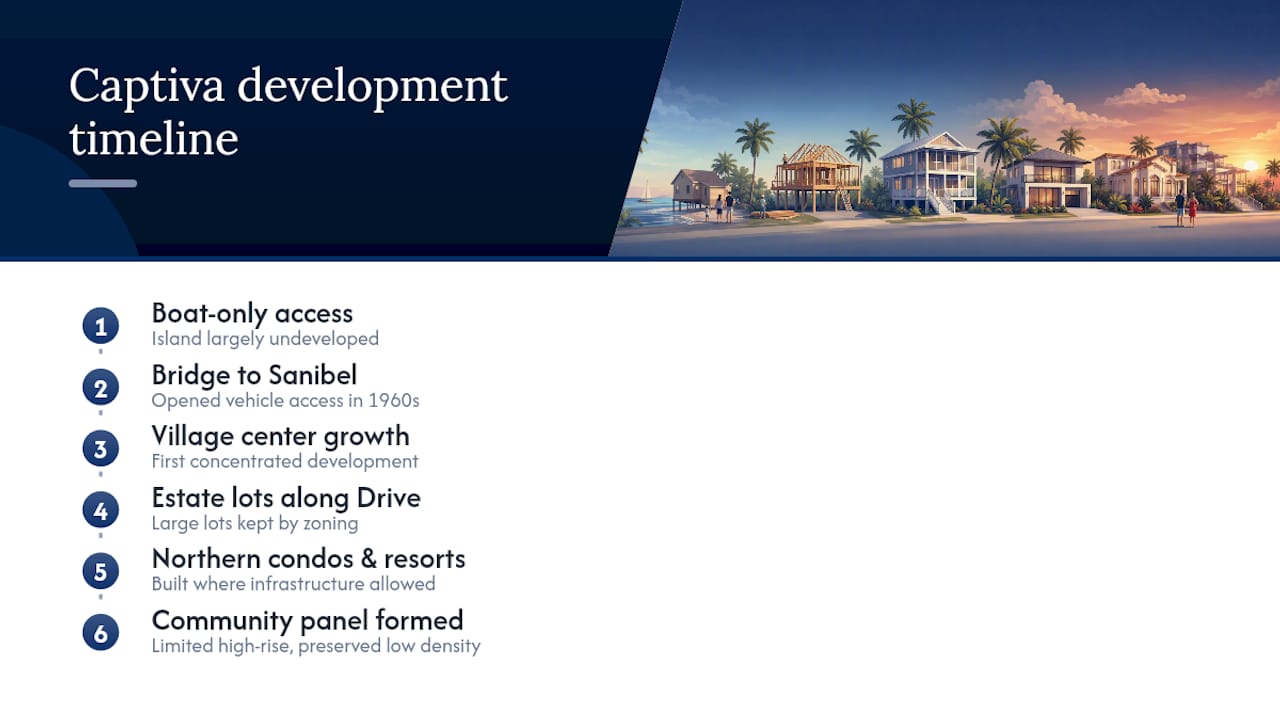
Captiva’s development history is short by mainland standards but distinct. The island stayed largely undeveloped through much of the 20th century, reachable only by boat until a bridge connected it to Sanibel in the 1960s. That late arrival of vehicle access shaped everything that came after: instead of the strip-mall sprawl common to Florida’s coast, Captiva grew in scattered pockets, village center first, then estate lots along Captiva Drive, then condo development at the northern tip once demand justified it.
Land’s End Village and the South Seas resort cluster both emerged from this later wave, built to serve a growing vacation market rather than year-round settlement. Meanwhile, the Captiva Community Panel formed specifically to keep that growth from running unchecked, prioritizing the island’s low-density character and dark night skies over the kind of high-rise development that reshaped other Gulf Coast barrier islands.
The result is a neighborhood map that reflects decision-making, not accident. Village center density stayed low intentionally. Estate lots along the drive stayed large because zoning kept them that way. Condo communities cluster where infrastructure could support them without overwhelming the island’s narrow roads. Anyone comparing Captiva to a typical resort town should notice this restraint. It’s the reason the island still feels small even as its property values climbed into luxury territory.
Demographic Profile and Resident Lifestyle by Neighborhood
Captiva’s year-round population is small, and most neighborhoods lean heavily toward seasonal residents, second-home owners, and vacation renters rather than a conventional commuter demographic. Retirees and part-time residents dominate ownership in bayside communities and Land’s End Village, drawn by low-maintenance condo living and calm water access. Estate pockets along Captiva Drive and Sunset Captiva skew toward affluent families who use the property a handful of weeks a year and rent it the rest.
Captiva Village carries a different rhythm. Its lifestyle centers on foot traffic, service workers, small business owners, and short-term visitors cycling through restaurants and shops, so the neighborhood feels more transient day to day even though many of its condo owners return every season.
Across all six clusters, the common thread is a golf-cart culture. Residents and long-term guests move around the island by cart rather than car for most daily errands, which shapes the pace of life more than any single amenity. Family life tends to concentrate in the village and Captiva Beach community, where children can walk or cart to the beach without crossing major roads, while estate buyers on Captiva Drive prioritize privacy over neighborhood social life. This isn’t a place with a traditional daytime population; it’s a place where the population shifts by season and even by the week.
Getting Around Captiva and to the Mainland
Golf carts function as the island’s primary local transportation, and most neighborhoods are built around that assumption rather than car culture. Roads are narrow, parking is limited near the village, and a cart covers the distance between any two points on the island in a few minutes.
Reaching Captiva from the mainland requires crossing onto Sanibel first via the Sanibel Causeway, then continuing north on Sanibel-Captiva Road until it becomes Captiva Drive. There’s no bridge directly from the mainland to Captiva itself, only through Sanibel, which means every trip to Fort Myers, the airport, or a mainland grocery store involves that same causeway crossing.
Southwest Florida International Airport sits roughly 30 to 40 minutes from the island depending on traffic and causeway conditions, making Captiva accessible for a long weekend without requiring an overnight mainland stay first. Boat access remains a factor too, especially for bayside and Captiva Drive properties with private docks, and some residents use boats for errands or dining trips to Sanibel and Pine Island rather than driving.
Because the island has no traffic lights and limited through-traffic, connectivity within Captiva itself is rarely the bottleneck. The causeway crossing and seasonal traffic on Periwinkle Way over on Sanibel are where trip times stretch, something worth factoring into any plan built around tight dinner reservations or early flights.
Schools, Healthcare, and Everyday Services Nearby
Captiva itself has no schools, grocery stores, or hospitals, a fact that shapes how families and long-term residents plan their week. Most day-to-day services live on Sanibel, a short drive south across the causeway, or further out on the mainland in Fort Myers.
Families with school-age children living on Captiva year-round typically enroll in Lee County public schools, with the nearest options based in Fort Myers and surrounding mainland communities rather than on Sanibel or Captiva. For healthcare, urgent care and a small medical clinic operate on Sanibel, but anything beyond routine care means a drive to Fort Myers hospitals and specialist offices.
Grocery shopping follows the same pattern. Sanibel carries a couple of full-service grocery stores, while Captiva itself relies on a small market and the village’s restaurants for anything beyond a quick supply run. Most long-term residents build grocery and pharmacy runs into a weekly mainland trip rather than expecting to find everything on-island.
This isn’t a drawback so much as a defining feature of the lifestyle. Captiva trades convenience for seclusion, and anyone considering a long-term stay, whether buying or renting for a season, should plan around that trade rather than being surprised by it once they’ve settled in.
Environmental Factors: Wildlife Areas and Storm Risk
Much of Captiva’s undeveloped land sits within protected conservation areas, and that protection is deliberate. The Captiva Community Plan sets building-height and density limits specifically to preserve the island’s barrier-island ecology and dark night skies, which is why you won’t find high-rise towers competing with the tree line here.
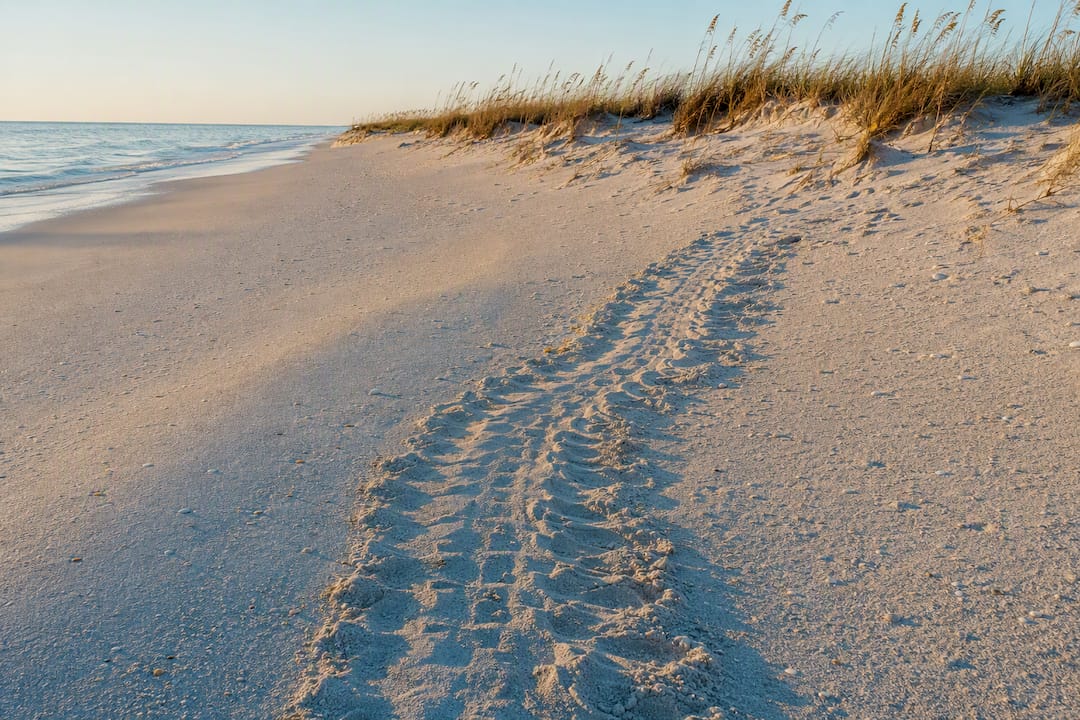
That ecology includes nesting sea turtles on Gulf-front beaches during summer months, dolphins and manatees in the calmer bayside channels, and shorebird populations that use the island’s mangrove edges as feeding grounds. Buyers and long-term renters near conservation-adjacent parcels should expect seasonal restrictions, particularly around beachfront lighting during turtle nesting season.
Storm risk is the other half of this equation. As a barrier island, Captiva sits directly in the path of Gulf hurricanes, and flood zone designation varies meaningfully by neighborhood, waterfront estate parcels along Captiva Drive often carry different flood insurance requirements than interior or bayside properties. Anyone buying should confirm FEMA flood zone status and elevation certificates before closing, since insurance costs and rebuilding requirements can differ sharply between a Gulf-front lot and a bayside one just a few hundred yards away.
How I Weigh These Trade-Offs for Families, Weekenders, and Investors
My rule of thumb is simple: match the neighborhood to how you’ll actually spend your days, not to how the listing photos look. Families who want to walk to dinner belong in Captiva Village. Anyone tired of yard work belongs in Land’s End Village. If privacy and scale matter more than convenience, Captiva Drive or Sunset Captiva makes sense, and if resort amenities top your list, South Seas delivers them at the cost of some rental flexibility.
Before committing to any of it, tour at least one beachfront property and one bayside property in the same trip. The contrast tells you more than either visit alone. Then start browsing what’s actually available through Captiva-island’s property search.
— Josh
Ready to Explore Captiva’s Neighborhoods for Yourself?
Reading about Captiva’s neighborhoods only gets you so far. A map-based, preference-driven search lets you filter by traits such as village proximity, bayfront calm water, or privacy, so you can compare real available homes instead of guessing from photos.
Seasonal discounts and direct-booking incentives may allow you to explore a neighborhood, such as a bayside home for a quiet week, before making any larger investment decision. Browse beachfront homes along Captiva Drive if privacy and estate-scale space are the priority, or check bayfront rentals if calmer water and wildlife viewing matter more to your family. An experienced local team can answer specific questions about association rules or rental performance in various clusters covered here. Start comparing available dates on Captiva-island’s rental search and see which neighborhood actually fits your next trip.
Sources
FAQ
How Many Neighborhoods Does Captiva Island Have?
Captiva is comprised of roughly 18 distinct neighborhoods packed into an island less than a mile wide and about six miles long.
Which Captiva Neighborhood Is Best for Families with Young Kids?
Captiva Village and the nearby Captiva Beach community offer the most walkable, low-key setup for families, with restaurants, shops, and calm bayside options all within golf-cart distance.
Is Land’s End Village a Good Choice for Rental Income?
Land’s End Village’s 68 residences and shared amenities appeal to renters seeking panoramic views without single-family upkeep, but confirm association rental rules before assuming specific income figures.
Can I Rent My Property Freely in the South Seas Resort Cluster?
Not always. South Seas-area properties can carry resort rental-program rules, so check the specific enrollment terms before buying with rental income in mind.
Do I Need a Boat to Enjoy the Bayside Neighborhoods?
No, but it helps. Bayside neighborhoods reward boat owners with calmer water and better wildlife viewing, though you can still enjoy the quieter shoreline and dolphin sightings without one.
How Do I Start Comparing Available Captiva Rentals?
Captiva-island’s map-based rental search lets you filter by neighborhood, beachfront or bayfront location, and seasonal availability to compare real listings directly.
Recommended
Comments