
How to Manage a Remote Vacation Rental Property

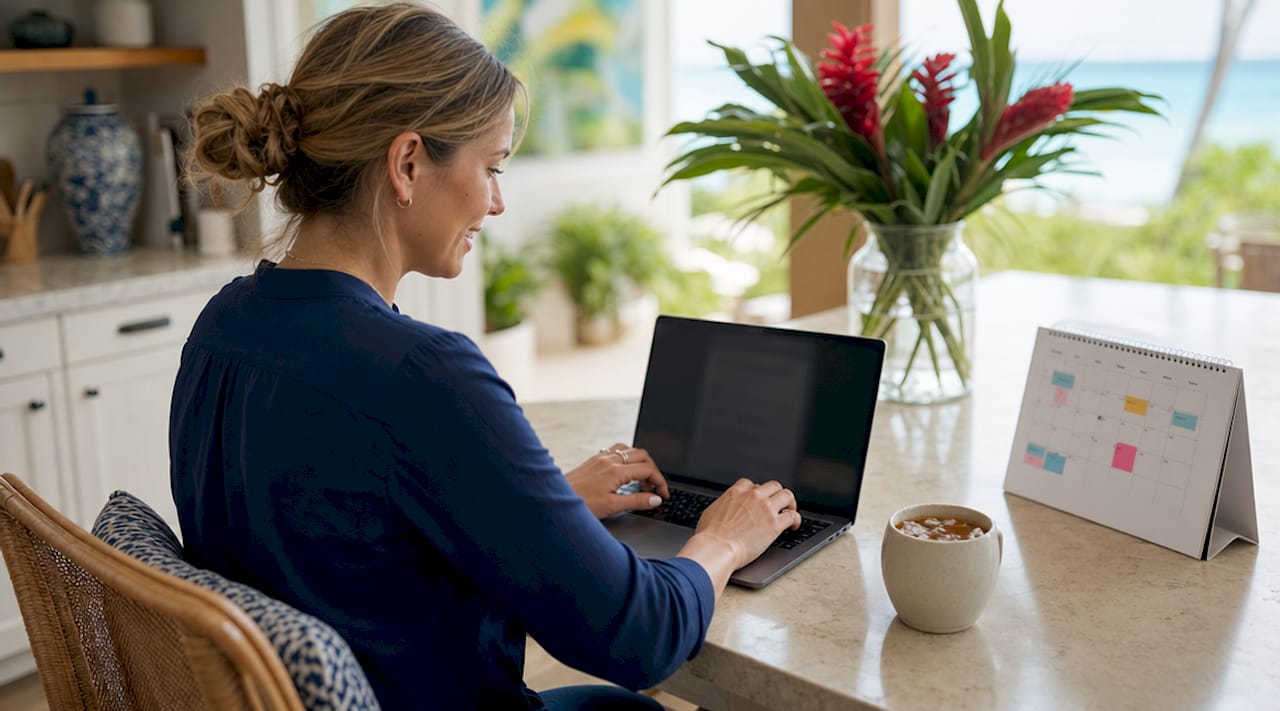
Managing a remote vacation rental property means running a profitable short-term rental business from anywhere in the world by combining the right technology, automated workflows, and trusted local partners. This approach, often called remote property management in the industry, is fully achievable for owners of one to five properties who are willing to invest two to five hours per week and build the right systems. The payoff is real. Owners who get this right protect their margins, deliver consistent guest experiences, and free themselves from the daily grind of on-site oversight. The tools that make it possible, from property management software to smart locks and AI-powered messaging, have matured significantly heading into 2026.
What are the essential tools for managing a vacation rental remotely?
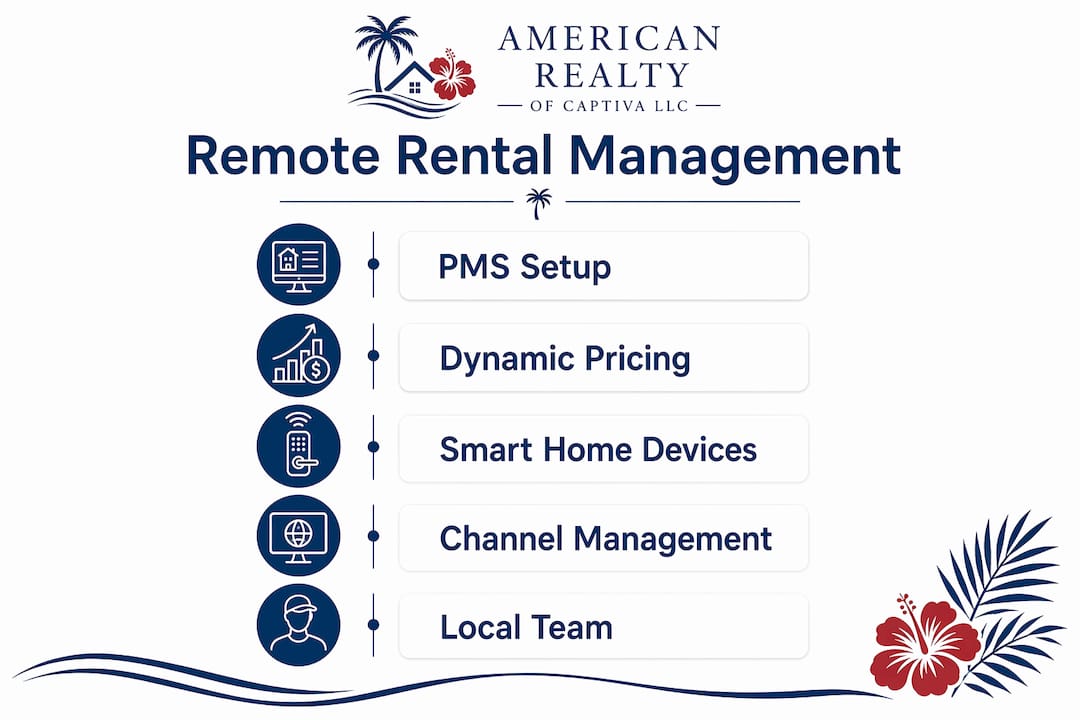
A Property Management System (PMS) is the operational hub of any remote vacation rental setup. Think of it as the control panel that connects your listings, calendar, guest communications, and pricing into one place. Manual workflows cause lost revenue and operational errors that compound quickly when you are not on site to catch them. Platforms like Guesty, Hostaway, and Lodgify each offer channel management, automated messaging, and reporting in a single dashboard.
Dynamic pricing tools sit directly on top of your PMS and do the heavy lifting for revenue optimization. Tools like PriceLabs analyze local demand, competitor rates, and seasonal patterns to adjust your nightly rate automatically. Dynamic pricing increases revenue by 20 to 40 percent without any operational changes on your end. That is the kind of gain that pays for your entire tech stack within the first month.
Smart home devices complete the physical layer of remote management. A smart lock from August or Schlage lets you issue unique entry codes to each guest and cleaning crew without ever mailing a key. Noise monitors from Minut alert you to potential parties before they become damage claims. Smart home technology also raises the perceived value of your listing, which supports higher nightly rates.
Channel management integration is the final piece. Listing on Airbnb, VRBO, and Booking.com simultaneously multiplies your exposure, but it creates double-booking risk without a synchronized calendar. Your PMS handles this by pushing availability updates to all platforms in real time.
Tool Category | Purpose | Example Platforms |
Property Management System | Central hub for bookings, messaging, and reporting | Guesty, Hostaway, Lodgify |
Dynamic Pricing | Automated rate optimization | PriceLabs, Wheelhouse |
Smart Access | Keyless entry and remote monitoring | August, Schlage, Minut |
Channel Manager | Multi-platform calendar sync | Built into most PMS platforms |
AI Messaging | Automated guest communication | Hospitable, Boring Host |
Pro Tip: Build your tech stack in layers. Start with a PMS, add dynamic pricing in month two, and layer in smart home devices by month three. Trying to implement everything at once leads to configuration errors and a frustrating guest experience.
How to build a reliable local network for cleaning and maintenance
No amount of software replaces the person who physically turns over your property between guests. Cleaning requires a 3 to 4 hour turnover and is the single biggest operational bottleneck for remote owners. The solution is not just hiring one cleaner. It is building a bench.
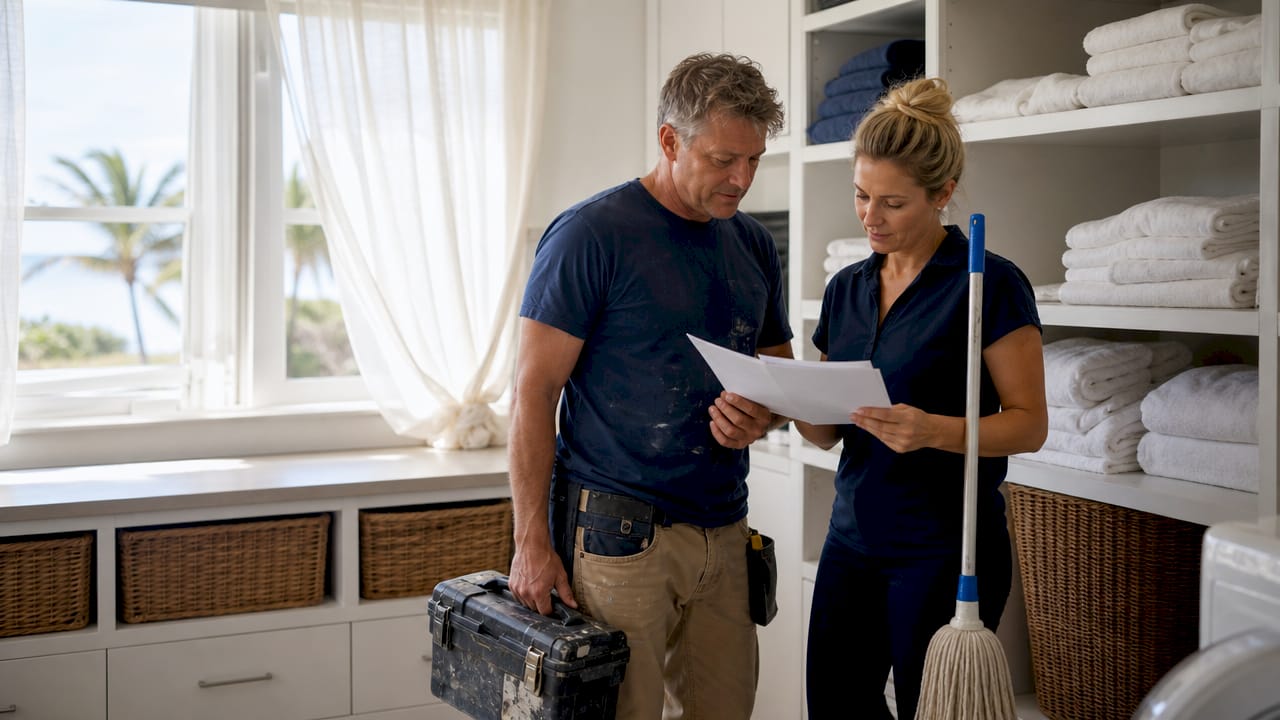
Your local network should include at least two cleaning crews who can cover for each other, a licensed handyman available within 24 hours, and a plumber and electrician on speed dial. Platforms like Breezeway let you assign cleaning tasks, share digital checklists, and receive photo verification of completed work, all without a phone call. This kind of structured accountability is what separates owners who scale from those who burn out.
For maintenance, a command-and-control system with pre-vetted contractors on retainer prevents the emergency markup problem. When a pipe bursts at 11 p.m. and you call an unknown plumber, you pay whatever they ask. When you have a vetted contractor who knows your property, you pay a fair rate and get faster service. Local agent inspections, which typically run $200 to $500 per visit, are worth every dollar for catching issues before guests arrive.
A few practices that protect your property and your reviews:
Require photo documentation from every cleaning crew after each turnover. This creates a timestamped record that protects you in dispute situations and keeps your team accountable without micromanagement.
Schedule a quarterly walkthrough by a local agent or property inspector. Guests rarely report minor issues like a dripping faucet or a worn-out mattress. A proactive inspection catches these before they show up in a one-star review.
Keep a small reserve fund of $500 to $1,000 per property for emergency repairs. Remote owners who lack this buffer end up making reactive decisions under pressure, which almost always costs more.
Pro Tip: Ask your cleaning crew to flag any maintenance issues they notice during turnover. Give them a simple digital form to submit observations with photos. This turns your cleaners into an early warning system and saves you from expensive surprises.
How to automate guest communication, pricing, and booking management
Automation in remote vacation rental management follows a clear sequence, and getting the order right matters. Here is how to set it up properly.
Configure your PMS messaging templates. Write pre-arrival messages that go out 48 hours before check-in with door codes, parking instructions, and your digital guidebook link. Write a mid-stay check-in message for day two. Write a checkout reminder and a post-stay review request. Tools like Hospitable and Boring Host handle this with AI that personalizes each message using guest name and booking details.
Set up dynamic pricing rules. Connect PriceLabs or Wheelhouse to your PMS and define your floor price, ceiling price, and minimum stay requirements by season. Review the pricing calendar weekly for the first month, then monthly once you trust the logic. Vacation rental pricing strategy has a direct impact on both occupancy and average nightly rate.
Sync your calendars across all platforms. Use your PMS as the single source of truth. Never manually block dates on individual platforms. One missed sync creates a double booking, and double bookings damage your Superhost or Premier Host status on Airbnb and VRBO.
Create a digital guidebook. Platforms like Hostfully and Touch Stay let you build a mobile-friendly guide with Wi-Fi passwords, appliance instructions, local restaurant recommendations, and emergency contacts. This reduces guest questions by a significant margin and improves review scores.
Test the full guest journey yourself. Book a one-night stay at your own property using a secondary account. Walk through every automated message, the check-in process, and the guidebook. You will find gaps that no amount of planning reveals.
Automation Stage | Tool Options | Outcome |
Pre-arrival messaging | Hospitable, Boring Host | Fewer guest questions, smoother check-in |
Dynamic pricing | PriceLabs, Wheelhouse | 20 to 40% revenue increase |
Calendar sync | PMS channel manager | Zero double bookings |
Digital guidebook | Hostfully, Touch Stay | Higher review scores |
Post-stay review request | Automated via PMS | More consistent review volume |
The most common mistake in communication automation is writing templates that sound robotic. Guests notice. Write your messages in the same warm, personal tone you would use if you were texting a friend who just arrived at your home.
How to troubleshoot challenges and decide when to hire a property manager
Remote management works beautifully until it does not. Recognizing the warning signs early saves you from a slow erosion of reviews and revenue.
The clearest signal that your current system is failing is a pattern of guest complaints about the same issue. One complaint about a slow Wi-Fi router is a maintenance ticket. Three complaints in a month mean your local contact is not following through, and your reviews are about to reflect that. Owners who rely on unstructured communication instead of integrated technology consistently face burnout and revenue loss.
Scaling beyond five properties with a self-managed model is where most owners hit a wall. Managing under five properties with two to five hours per week is realistic. Beyond that threshold, the coordination complexity grows faster than the revenue, unless you add virtual support. Services like Corzly provide virtual operational partners who manage guest messaging, OTA updates, and daily coordination, reducing owner workload by 50 to 80 percent. That kind of leverage changes the math on scaling.
The financial tradeoff is worth understanding clearly. Professional property managers charge 10 to 40 percent of revenue, with tech-driven management models starting as low as 10 to 18 percent. If your property earns $60,000 per year and a manager charges 20 percent, you pay $12,000 for hands-off ownership. For a passive investor living far from the property, that is often the right trade. For an owner who wants to stay involved and maximize margin, a hybrid model using AI tools and a local coordinator is the better path.
“The third option, self-managing with AI, offers the best return on investment for most owners spending two to four hours weekly.” — Boring Host, 2026 Vacation Rental Playbook
Key takeaways
Successful remote vacation rental management requires a PMS as your operational core, a vetted local team for physical tasks, and automated workflows for pricing and guest communication.
Point | Details |
PMS is your foundation | Choose a platform like Guesty or Hostaway before adding any other tool. |
Dynamic pricing pays for itself | Tools like PriceLabs can increase revenue by 20 to 40 percent with no extra effort. |
Local network prevents emergencies | Pre-vetted contractors and backup cleaning crews protect your reviews and your property. |
Automation reduces workload | Virtual partners and AI messaging can cut owner workload by 50 to 80 percent. |
Know when to outsource | Self-manage up to five properties; consider hybrid or full management beyond that threshold. |
What I have learned from watching remote owners succeed and struggle
I have spent years observing how vacation rental owners approach remote management, and the pattern is consistent. The owners who thrive treat their rental like a systems operator treats a production line. They build the process once, test it thoroughly, and then trust it. The owners who struggle treat every guest interaction as a unique event that requires their personal attention.
The most underrated investment in this business is time spent building your local team before your first booking. Most owners do it backward. They list the property, get their first reservation, and then scramble to find a cleaner. That reactive start sets a tone that is hard to shake. The owners I have seen succeed on Captiva Island and similar premium markets spend two to three weeks before launch just meeting local service providers, testing smart locks, and walking through the guest journey themselves.
The role of a vacation rental manager is often misunderstood by owners who think they can replicate it with software alone. Technology handles the repeatable tasks beautifully. It does not handle the guest who locks themselves out at midnight or the cleaning crew that cancels two hours before a checkout. Those moments require a human being with local knowledge and a sense of ownership. Build that relationship first, and the technology becomes a multiplier rather than a crutch.
One more thing worth saying plainly: the time commitment estimates you read online are almost always optimistic. Two to five hours per week assumes your systems are already built and running smoothly. In the first three months, expect ten to fifteen hours per week. That investment front-loads the work so the ongoing operation stays light.
— Josh
Explore Captiva Island vacation rentals with professional support
If you are considering a vacation rental investment on Captiva Island, or you already own a property here and want to understand what professional management looks like in practice, American Realty of Captiva has spent over 30 years managing premium beachfront and bayfront homes in this market. The team understands what remote owners need: reliable local oversight, consistent guest experiences, and a property that earns well season after season.
Captiva-island offers a curated selection of luxury vacation rentals that reflect the standard of care remote owners should expect from their own properties. Browsing the portfolio gives you a clear picture of what well-managed vacation homes look like from a guest perspective, which is the most useful benchmark you can have. For owners interested in learning more about management support or listing options, the American Realty of Captiva team is a natural first conversation.
FAQ
What does it cost to manage a vacation rental remotely?
Professional property managers charge 10 to 40 percent of rental revenue, with tech-driven models starting at 10 to 18 percent. Self-managing with AI tools and a local team costs significantly less and suits owners with under five properties.
How many hours per week does remote management require?
Owners with established systems typically spend two to five hours per week managing under five properties. The first three months of setup require considerably more time as you build workflows and local partnerships.
What is the best software for remote vacation rental management?
Platforms like Guesty, Hostaway, and Lodgify serve as full-service PMS options for remote owners. Pairing any of these with PriceLabs for dynamic pricing and Hospitable for automated messaging covers the core operational needs. You can also explore integrated operator tools designed specifically for growing rental portfolios.
How do I handle maintenance issues when I am not on site?
A pre-vetted contractor list combined with a platform like Breezeway for maintenance tickets and photo documentation handles most issues without your direct involvement. Local agent inspections at $200 to $500 per visit catch problems before guests do.
When should I hire a professional property manager instead of self-managing?
Hire a professional manager if you own more than five properties, live more than a few hours from the property, or want fully passive income. For owners who want to stay involved and protect their margin, a hybrid model using AI tools and a local coordinator delivers the best financial outcome.
Recommended
Comments