
Types of Vacation Rental Investment Properties: 2026 Guide


Vacation rental investment property is defined as a residential or unique accommodation unit purchased or leased with the primary intent of generating short-term rental income through platforms like Airbnb or VRBO. The types of vacation rental investment properties you choose shape every financial outcome: your average daily rate, your occupancy ceiling, your regulatory exposure, and your long-term portfolio growth. Choosing the wrong property type for a given market is the single most common reason investors underperform. This guide breaks down each major category with data-backed income context, guest profile insights, and regulatory considerations so you can make a confident, strategy-driven decision.
1. Types of vacation rental investment properties explained
The short-term rental (STR) industry groups investment properties into four primary physical categories: single-family homes, condominiums and apartments, multi-family units, and unique stays. Luxury villas occupy a premium tier within the single-family category. No universal best type exists across all markets. Success depends on matching the property type to local demand, regulation, and your target guest profile.

Practitioners also separate physical unit type from licensing category, which is a distinction most new investors miss entirely. A property’s physical form tells you about its layout and amenities. Its licensing category, such as home sharing, home letting, or secondary letting, tells you what you are legally permitted to do with it and how your income model must be structured.
Pro Tip: Research the licensing category that applies to your target property before you analyze income projections. The license type determines your operational model, not just your compliance checklist.
2. Single-family homes
Single-family homes (SFH) are the most widely recognized vacation rental format and the easiest entry point for first-time STR investors. They attract families and groups who want privacy, outdoor space, and the feel of a home rather than a hotel room. Matching guest demographics to property type is the most direct lever for maximizing occupancy and nightly rates.
SFHs with pools are particularly strong performers. Suburban houses with pools yield cash-on-cash returns of 8% to 14%, with comparatively lower regulatory risk than urban properties. That return range reflects a property type that is broadly accessible, widely understood by guests, and relatively straightforward to manage. On Captiva Island, beachfront single-family homes command premium rates precisely because they combine the privacy of a home with direct water access, a combination that hotels simply cannot replicate.
For investors targeting family travelers, a multi-bedroom vacation home with dedicated living space and a private yard consistently outperforms comparably priced hotel rooms on guest satisfaction scores and repeat booking rates.
3. Condominiums and apartments
Condominiums appeal to a different guest profile entirely. Business travelers, couples, and solo adventurers favor the lock-and-leave simplicity of a condo, along with shared amenities like pools, gyms, and concierge services. Urban and resort-area condos listed on Airbnb and VRBO often achieve higher occupancy rates than SFHs in the same market because they serve a broader, year-round demand base.
The trade-off is control. Condo associations frequently impose restrictions on short-term rentals, including minimum stay requirements, guest registration rules, and outright STR bans. Before purchasing a condo for vacation rental use, review the homeowners association (HOA) bylaws carefully. Many investors have discovered post-purchase that their unit is ineligible for short-term rental under association rules, which eliminates the income model entirely.
Condos also carry HOA fees that reduce net operating income. Factor those fees into your underwriting before comparing condo returns to SFH returns on a gross basis.
4. Multi-family properties
Multi-family properties, including duplexes, triplexes, and small apartment buildings, offer a structural advantage that single units cannot: multiple simultaneous income streams from one acquisition. Multi-family units deliver 25% to 40% higher cash-on-cash returns compared to single units, driven by operational efficiencies and market diversification across multiple tenants or guests.
The investor who owns a duplex on a beach road can rent both units during peak season, occupy one unit personally during shoulder season, and still generate income from the other. That flexibility is a genuine risk management tool. If one unit sits vacant, the other continues producing revenue.
Multi-family STR properties also scale more efficiently. Cleaning crews, property managers, and maintenance contractors can service multiple units in a single visit, reducing per-unit operating costs. The complexity is higher upfront, but the economics reward investors who can manage that complexity well.
5. Unique stays: cabins, treehouses, and beyond
Unique stays represent the highest-ceiling category in the STR market, and also the most operationally demanding. Top treehouse listings earn $150,000 to $200,000 annually, with average daily rates reaching up to $1,300 for premium rural properties. Those numbers attract attention, but they represent the top percentile of a category where most properties earn far less.
Millennials and experience-seeking travelers drive demand for unique stays. Cabins, yurts, shepherd’s huts, and converted barns all fall into this category. Guests pay a premium for novelty and story, not square footage. A well-designed 400-square-foot treehouse can outperform a 2,000-square-foot suburban house on a per-night basis.
Regulatory exposure is the hidden risk. Unconventional structures like yurts and shepherd’s huts are regulated as short-term lets and are not exempt from licensing and planning requirements simply because of their unconventional form. Investors must verify local zoning and licensing rules before building or acquiring unique stay properties.
6. Luxury villas and high-end properties
Luxury villas occupy the premium tier of vacation rental options and attract guests who expect privacy, premium finishes, and curated experiences. The luxury beach rental model differs fundamentally from hotel hospitality: guests pay for exclusivity, space, and the ability to set their own pace rather than conform to hotel schedules.
High-end properties on platforms like Airbnb Luxe and VRBO Premier Host command ADRs that can exceed $2,000 per night in prime coastal or mountain markets. The guest profile skews toward high-net-worth families, corporate retreat groups, and destination wedding parties. These guests book longer stays, leave higher reviews when expectations are met, and generate significant ancillary revenue through add-on services.
The investment threshold is higher, and so is the operational standard. Luxury guests have zero tolerance for maintenance failures or inconsistent service. Investors in this category should budget for professional property management, premium furnishings, and proactive maintenance programs. For a deeper look at what separates high-performing properties in this tier, Captiva-island’s guide to high-end vacation rentals covers the specific features that drive bookings.
7. How property types compare in income and occupancy
The table below summarizes key financial and operational metrics across the main vacation rental property types.
Property type | Typical ADR range | Cash-on-cash return | Best guest profile | Operational complexity |
Single-family home (with pool) | $250 to $600 | 8% to 14% | Families, groups | Moderate |
Condominium | $150 to $400 | 5% to 10% | Couples, business travelers | Low to moderate |
Multi-family unit | Varies by unit | 25% to 40% above SFH | Mixed | Moderate to high |
Unique stay (treehouse, cabin) | $300 to $1,300 | Variable, high ceiling | Millennials, experience seekers | High |
Luxury villa | $800 to $2,000+ | Variable, market-dependent | High-net-worth families | Very high |
Mid-term rentals of 30 to 90 days can earn 1.5x to 2x long-term rental rates with less frequent turnover. That metric matters for investors who want STR-level income without the weekly cleaning and guest communication cycle. Multi-family properties are particularly well-suited to a mixed strategy: short-term rent one unit, mid-term rent another.
Pro Tip: Use dynamic pricing tools like PriceLabs or Wheelhouse to adjust nightly rates in real time based on local demand signals. Static pricing is the fastest way to leave revenue on the table.
8. What regulatory and licensing rules mean for your investment
Regulatory frameworks are not uniform, and they affect different property types in different ways. The Scottish Government defines four licensing categories for short-term lets: home sharing, home letting, secondary letting, and a combined home letting plus home sharing license. Only one license type is issued per premises, which means changing your operational model may require a new license application or even a property reconfiguration.
In England, planning permission for holiday homes depends on usage and neighborhood impact rather than architectural form alone. Two identical buildings on the same street may face different planning outcomes based on how they are let. From 2025 onward, holiday accommodations in England are taxed under the residential landlord framework after the Furnished Holiday Letting (FHL) tax regime was abolished, which changes the net income calculation for many investors.
The practical implication is clear. Licensing category shapes your compliance obligations and business strategy more than the physical property type does. An investor who buys a charming cottage and plans to run it as a secondary let may discover that the local authority only permits home sharing on that premises. Research local STR ordinances, licensing requirements, and planning rules before you sign a purchase contract.
9. Matching property type to your investment goals
Choosing the right vacation rental format starts with three questions: Who is your target guest? What is your market’s demand profile? And what is your budget for acquisition and operations?
Budget-conscious investors entering the STR market typically start with a single-family home or a condo in a high-demand tourist area. These properties offer predictable income, manageable operations, and a clear path to refinancing once cash flow is established. Investors with larger capital reserves and a tolerance for complexity should consider multi-family properties or luxury villas, where the return ceiling is significantly higher.
Market selection matters as much as property type. Coastal markets like Captiva Island, Florida favor beachfront single-family homes and luxury villas because the guest base is affluent and seasonally concentrated. Mountain and rural markets favor unique stays and cabins because the guest base is experience-driven. Urban markets favor condos and apartments because the demand is year-round and driven by business travel alongside leisure.
Diversification across property types is a legitimate risk management strategy for investors building a portfolio rather than a single asset. A portfolio that includes one SFH, one multi-family duplex, and one unique stay spreads regulatory risk, guest demographic risk, and seasonal demand risk across three distinct income streams. Understanding rental platforms by traveler type helps investors market each property to the right audience from day one.
Key takeaways
The most effective vacation rental investment strategy pairs the right property type with the right market, the right guest profile, and a clear understanding of local licensing requirements.
Point | Details |
No universal best type | Match property type to local demand, regulation, and target guest profile for best results. |
Multi-family returns lead | Multi-family units deliver 25% to 40% higher cash-on-cash returns than single units. |
Unique stays have the highest ceiling | Top treehouse listings earn $150K to $200K annually, but carry high operational complexity. |
Licensing category is decisive | One license per premises in many jurisdictions shapes your entire operational model. |
Regulatory research comes first | Planning rules and tax regimes affect net income before a single guest books a night. |
What I have learned after watching investors choose the wrong property type
The most expensive mistake I see investors make is falling in love with a property before they understand the regulatory environment around it. A beautiful beachfront cottage in a market that has just introduced secondary letting restrictions is not a vacation rental investment. It is a liability dressed in ocean views.
The data on unique stays is seductive. Treehouse listings earning $200,000 a year make headlines. What those headlines omit is that unconventional structures face the same licensing scrutiny as any other short-term let, and that the operational demands of a remote treehouse are genuinely different from managing a suburban SFH. The investors who succeed with unique stays are those who treat them as hospitality businesses, not passive income assets.
My honest read on the market in 2026 is this: single-family homes with pools in coastal markets remain the most reliable entry point for investors who want strong returns without extreme operational complexity. Multi-family properties are the smartest scaling vehicle for investors who have already proven their management systems. Luxury villas reward patience and professionalism. And unique stays reward creativity, but only when paired with rigorous due diligence on local rules and genuine hospitality instincts.
The investors who build durable portfolios are not chasing the highest ADR. They are matching property type to market reality, guest expectation, and their own capacity to deliver a consistently excellent experience.
— Josh
Explore Captiva-island’s vacation rental portfolio
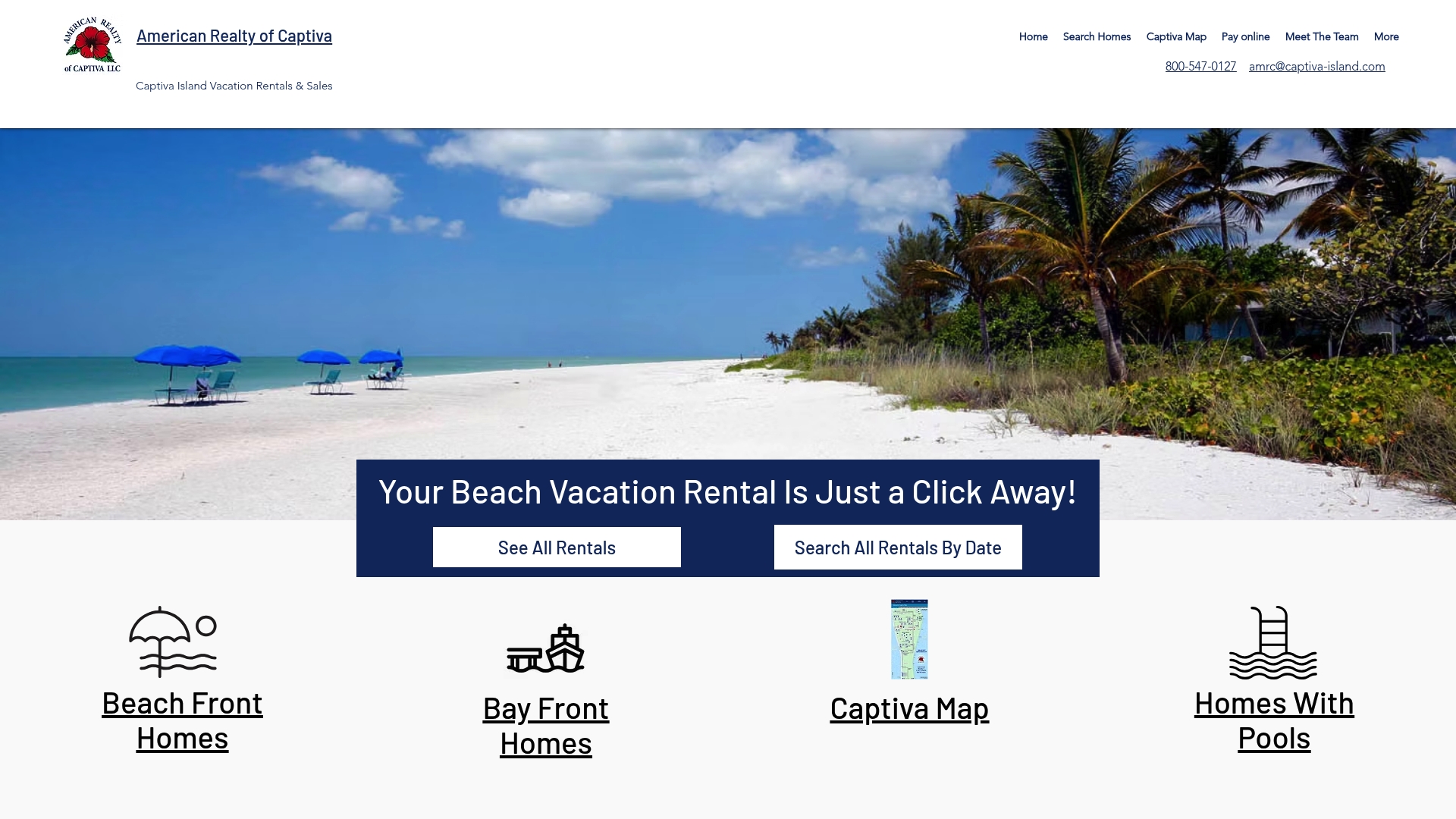
Captiva-island, operated by American Realty of Captiva with over 30 years of local expertise, offers one of Southwest Florida’s most carefully curated selections of vacation rental homes. Whether you are researching beachfront single-family homes, pool properties, or bayfront retreats, the full rental listings give you a clear picture of what premium coastal inventory actually looks like in practice. Investors evaluating Captiva Island as a target market will find properties that reflect real guest demand: private pools, direct water access, and the kind of tranquil setting that drives repeat bookings season after season. Browse the portfolio and speak directly with the American Realty team to get grounded, market-specific guidance.
FAQ
What is a vacation rental investment property?
A vacation rental investment property is a residential or unique accommodation unit purchased to generate income through short-term guest rentals, typically listed on platforms like Airbnb or VRBO. The property type, location, and licensing category together determine its income potential and regulatory requirements.
Which property type generates the highest vacation rental income?
Unique stays like treehouses have the highest income ceiling, with top listings earning $150,000 to $200,000 annually, but multi-family properties deliver the most consistent cash-on-cash returns at 25% to 40% above single-unit properties.
Do I need a license for every type of vacation rental property?
Yes. Most jurisdictions require a license for all short-term rental property types, including unconventional structures like yurts and shepherd’s huts. Licensing authorities typically issue one license per premises, so your operational model must align with the permitted license category for that property.
How do I choose between a condo and a single-family home for vacation rental?
Condos suit investors targeting couples and business travelers in urban or resort markets, while single-family homes perform best for families and groups in coastal or suburban markets. HOA restrictions on short-term rentals are the primary risk factor for condo investments and must be verified before purchase.
What are the main types of vacation property revenue streams?
The primary revenue streams for vacation rental properties include nightly rental income, mid-term rental income at 1.5x to 2x long-term rates, and ancillary services such as early check-in fees, experience packages, and concierge add-ons. Multi-family properties generate multiple simultaneous income streams from a single acquisition.
Recommended
Một điều mình thấy khá ổn ở https://shbetz.net/ là lúc dùng trên điện thoại, các mục được sắp xếp tương đối gọn nên việc chuyển qua nhiều nội dung khác nhau không tạo cảm giác quá rối. Có hôm mình xem xổ số rồi mở thêm game bài, thao tác nhìn chung vẫn khá nhẹ. Điều mình chú ý thêm là nền tảng có nhiều lớp bảo mật nên lúc dùng tài khoản cá nhân cũng cảm thấy yên tâm hơn.
Nhìn trên màn hình máy tính, cổng game sunwin cho mình khá nhiều không gian để quan sát cách các phần của hệ thống được bố trí. Mình lần lượt xem Casino, Slot rồi game bài và nhận thấy từng nhóm được tách khá dễ nhận biết. Bên cạnh đó, nguồn còn đề cập phiên bản dành cho PC, iOS và Android. Với mình, việc có nhiều môi trường truy cập tạo thêm sự linh hoạt khi hoàn cảnh sử dụng thay đổi. Sau một thời gian, mình thấy trải nghiệm không bị phụ thuộc quá nhiều vào một thiết bị, trong khi cách tiếp cận các khu vực vẫn giữ được cảm giác tương đối quen thuộc.
Có lần mình thử sử dụng 78win theo đúng thói quen hằng ngày để xem giao diện có còn thuận tiện sau nhiều lần quay lại hay không. Mình mở Slot trước, sau đó chuyển sang Thể thao rồi xem thêm Casino Live và nhận ra mọi khu vực vẫn giữ cách sắp xếp quen thuộc. Điều đó giúp mình gần như không phải nhìn kỹ từng mục mới biết mình cần vào đâu. Theo mình, đây là kiểu giao diện càng sử dụng càng tạo cảm giác gần gũi.
Mình từng khá tò mò về khu bắn cá trên 78win nên dành thời gian xem qua nhiều trò khác nhau. Điều khiến mình chú ý là giao diện nhìn khá trực quan và các trò được sắp xếp tương đối rõ. Điều mình thích hơn là tổng thể hệ thống vẫn giữ được sự gọn gàng dù có khá nhiều nội dung cùng xuất hiện. Với mình, đây là điểm giúp trải nghiệm trở nên dễ chịu hơn
Dùng một thời gian rồi mình mới nhận ra luck8 có khá nhiều lớp thông tin được tổ chức theo hướng dễ tiếp cận. Lúc đầu mình chỉ quan tâm đến nội dung chính, nhưng về sau lại chú ý nhiều hơn đến các phần như thống kê, lịch thi đấu hay những thông tin được sắp xếp theo từng nhóm riêng. Nhờ vậy việc theo dõi không bị rối ngay cả khi hệ sinh thái có khá nhiều danh mục. Đây là một điểm mình ghi nhận được sau nhiều lần quay lại.